Soil Types & Properties Explained: Complete Guide for Students (Easy & Clear 2026)
Sand soil is well-aerated soil that has low absorption of water, clay soil is poorly aerated soil that has a high absorption of water, and silt soil is moderately aerated soil that has moderate absorption of water.
Types of soils
There are many types of soil, but some of the most common ones can be classified into two main categories: mineral soils and organic soils. Mineral soils are formed from the weathering of rocks and minerals, while organic soils are formed from the decomposition of plant and animal matter.
Soil types
The most common types of mineral soils and their properties
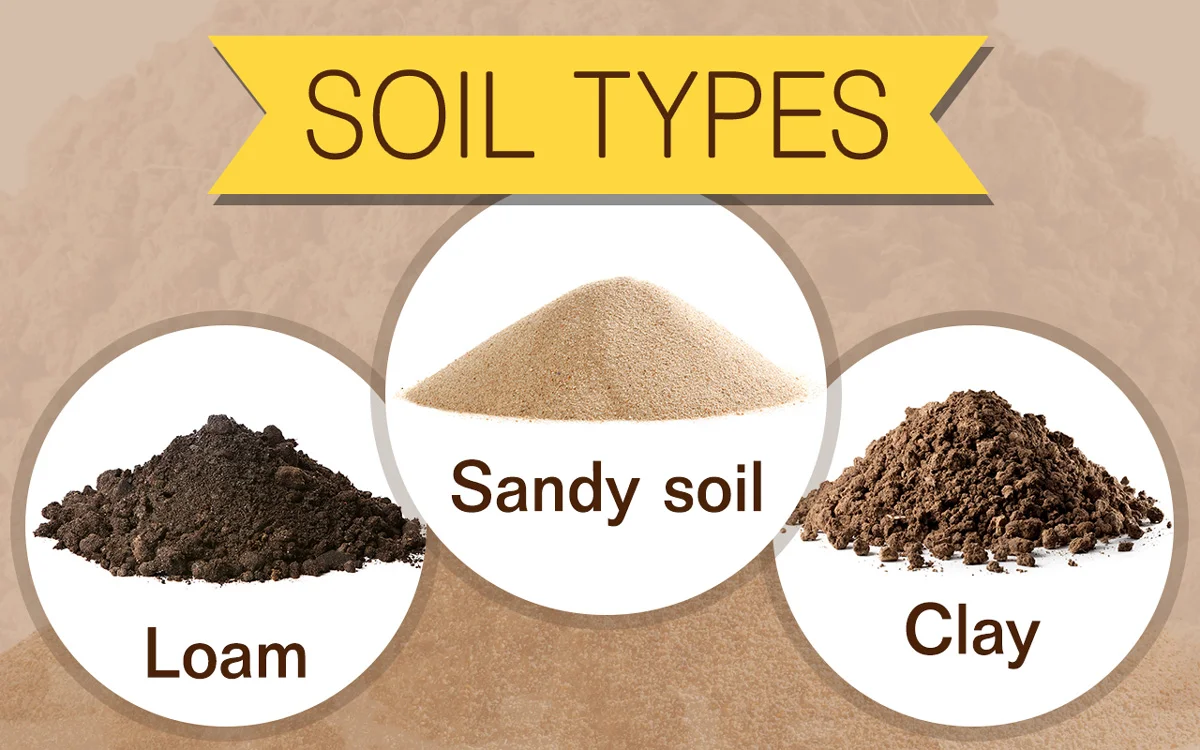
Sand: Sandy soil is composed of large particles that drain well and don’t hold much water. It is also low in nutrients and can be acidic. Sandy soil is easy to work with but can dry out quickly in hot weather. Sand feels gritty or coarse between your fingers. Sandy soil is well-draining and aerated, but it also tends to be low in nutrients and dries out quickly.
Clay: Clay soil is composed of very small particles that pack together tightly. Clay soil holds water well and is high in nutrients, but it can be difficult to work with and can become waterlogged. Clay soil is also slow to drain. Clay has the smallest particles of the three, and it feels sticky and plastic between your fingers. Clay soil holds moisture well, but it can also be difficult to work with and can become waterlogged.
Silt: Silt soil is composed of particles that are intermediate in size between sand and clay. Silt soil drains well and holds water moderately well. It is also moderately fertile. Silt particles are smaller than sand particles, but they are still large enough to feel smooth and floury between your fingers. Silt soil holds moisture well, but it can also be easily compacted.
Loam soil: It is a mixture of sand, silt, and clay. It is the most common type of soil and is considered to be the ideal soil for gardening because it has good drainage, aeration, and water-holding capacity, and it is also fertile.
Some common types of organic soils and their properties
Organic soils are formed from the decomposition of plant and animal matter. The most common type of organic soil is peat.
Peat: Peat soil is formed from the decomposition of mosses and other plants in waterlogged conditions. It is high in organic matter and holds water very well, but it is low in nutrients and can be acidic. Peat soil is often used as a soil amendment to improve the drainage and water-holding capacity of other soils.
Muck: Muck soil is similar to peat soil, but it is more decomposed and has a higher mineral content. Muck soil is more fertile than peat soil and can be used for growing plants.
In addition to the size of the particles, soil can also be classified by its color, which can give some clues about its fertility and drainage. For example, red soil is often low in nutrients and well-draining, while black soil is typically high in organic matter and fertile.
The type of soil in an area is determined by the underlying geology, climate, and vegetation. The properties of soil can affect what plants will grow well in an area. For example, sandy soil is good for drought-tolerant plants, while clay soil is good for plants that need a lot of water.
Properties of the soils
The particles of the sand soil are large, the particles of the silt soil are medium in size, and the particles of the clay soil are small in size.
The clay, silt, and sand soils are different in compactness; the particles of the clay soil are highly compacted (hard), the particles of the sand soil are weakly compacted (loose), and the particles of the silt soil are moderately compacted.
The sand soil is well-aerated soil, it has low absorption of water, the clay soil is poorly aerated soil that has a high absorption of water, and the silt soil is moderately aerated soil that has moderate absorption of water.
The well-aerated soil has non-compacted particles and vice versa. The clay soil is poorly aerated as it has highly compacted particles.
The sand soil has the fastest and greatest drainage of water and the lowest retention of water. The clay soil has the slowest drainage of water and the highest retention of water.
The silt soil has medium drainage of water and medium retention of water. The silt soil is rich in humus so, so it is highly fertile, and it is the most suitable soil for cultivation.
The clay soil is fertile, it has a medium amount of humus, and the sand soil is less fertile as it is poor in humus.
FAQs about the properties and types of soils
1. What are the main properties of soil?
Soil has several key properties that determine its quality and suitability for plant growth. These include texture (the size of soil particles like sand, silt, and clay), structure (how particles are arranged), color, porosity (air spaces), and water-holding capacity. Soil also contains organic matter and minerals that affect its fertility.
2. What is soil texture?
Soil texture refers to the proportion of sand, silt, and clay particles in the soil. Sandy soil has large particles, clay soil has very small particles, and silty soil has medium-sized particles. The texture affects drainage, aeration, and nutrient availability.
3. What are the different types of soil?
The main types of soil include:
- Sandy soil.
- Clay soil.
- Silty soil.
- Loamy soil (a mixture of sand, silt, and clay).
Each type has unique characteristics that influence plant growth and water retention.
4. What is sandy soil and its properties?
Sandy soil has large particles and feels gritty. It drains water quickly and has low nutrient retention. While it is easy to work with, it may not support plant growth well without added organic matter.
5. What is clay soil and its properties?
Clay soil has very fine particles and feels sticky when wet. It holds water well but drains poorly, which can lead to waterlogging. It is rich in nutrients but can be hard to cultivate.
6. What is loamy soil and why is it ideal?
Loamy soil is a balanced mixture of sand, silt, and clay. It has good drainage, retains moisture, and is rich in nutrients, making it the best soil type for most plants and agriculture.
7. How does soil color affect its properties?
Soil color can indicate its composition. Dark soil usually contains more organic matter and is more fertile, while lighter soils may have less organic material and fewer nutrients.
8. Why is soil important for living organisms?
Soil supports plant growth by providing nutrients, water, and anchorage. It is also home to many organisms like bacteria, fungi, and insects that help recycle nutrients and maintain soil health.
9. How can soil properties be improved?
Soil properties can be improved by adding organic matter (like compost), proper irrigation, crop rotation, and avoiding overuse of chemicals. These practices enhance fertility and structure.
You can follow Science Online on YouTube from this link: Science Online