
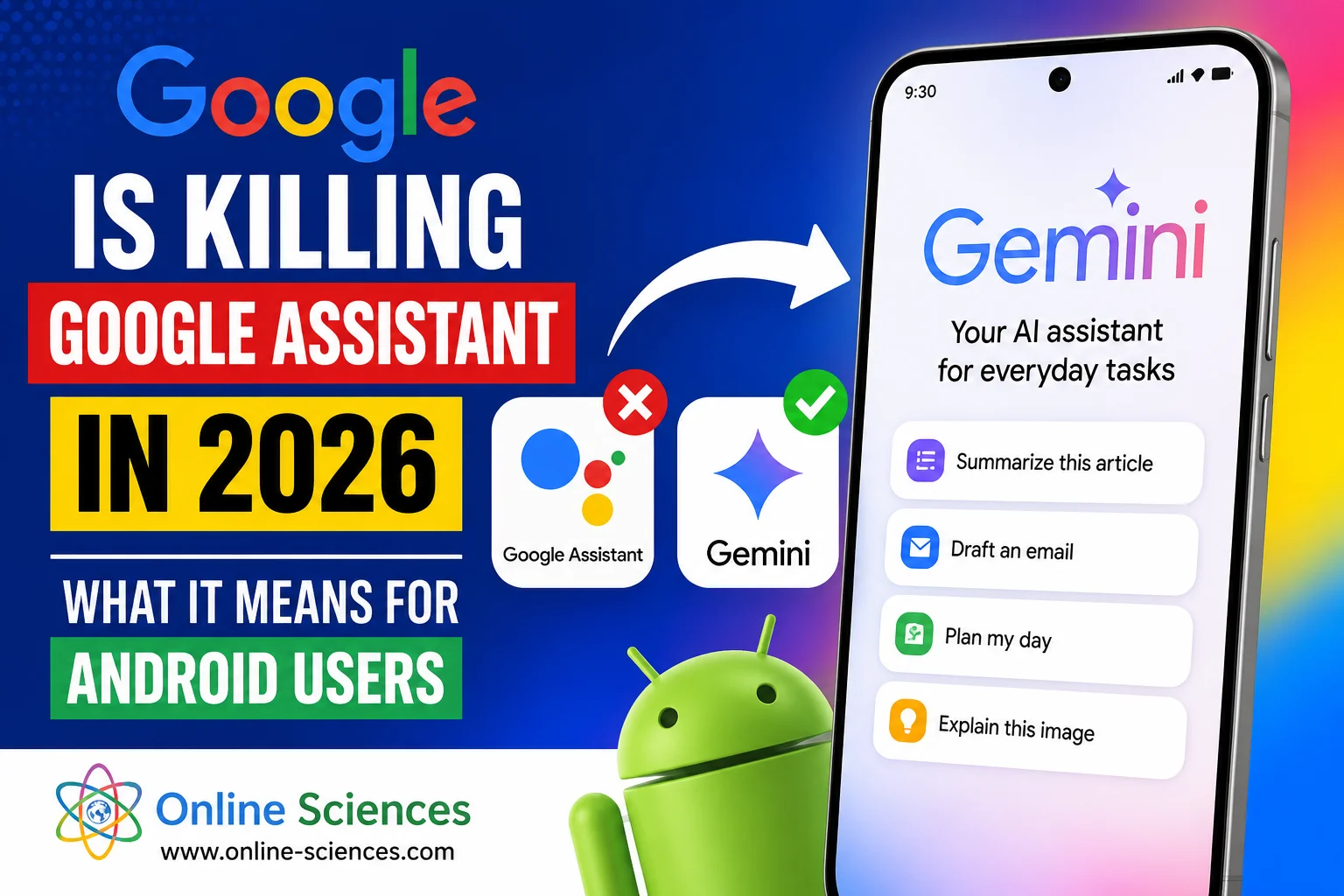
Google is Killing Google Assistant in 2026: What it Means for Android Users
Google is killing Google Assistant in 2026, marking the end of an era for one of Android’s most recognizable features. As artificial intelligence continues to evolve, Google is shifting its focus toward Gemini, a more advanced AI-powered assistant designed to offer deeper conversations, smarter recommendations, and enhanced productivity tools. The transition from Google Assistant to Gemini represents a major change for Android users, bringing powerful generative AI capabilities directly into smartphones, tablets, and other connected devices.
Gemini AI
Google Is Killing Google Assistant in 2026
Google is entering a new era of artificial intelligence by officially replacing Google Assistant with Gemini AI across Android devices. After nearly a decade of helping users set alarms, answer questions, control smart homes, and perform voice commands, Google Assistant is gradually being phased out in favor of a more powerful AI-powered experience.
The transition marks one of the biggest changes in Android’s history, as Gemini is designed to go far beyond traditional voice assistance. Instead of simply responding to commands, Gemini can understand context, generate content, summarize information, assist with productivity tasks, and engage in more natural conversations. For Android users, this means smarter interactions, improved personalization, and access to Google’s latest AI innovations.
Why is Google Replacing Google Assistant?
Google Assistant was launched in 2016 and quickly became one of the world’s most popular virtual assistants. However, advancements in generative AI have dramatically changed user expectations.
Modern AI models can:
- Understand complex requests.
- Hold natural conversations.
- Generate text and content.
- Analyze documents and images.
- Perform multi-step tasks.
- Provide personalized recommendations.
Google believes Gemini represents the future of digital assistants, offering capabilities that traditional assistants simply cannot match. By consolidating its AI efforts into a single platform, Google can deliver faster updates and more advanced features to users worldwide.
What is Gemini AI?
Gemini is Google’s next-generation artificial intelligence platform built to compete with leading AI systems. It combines advanced language understanding, reasoning, coding assistance, and multimodal capabilities.
Unlike Google Assistant, Gemini can:
- Summarize emails and documents.
- Draft messages and articles.
- Help with coding tasks.
- Analyze images and screenshots.
- Plan trips and schedules.
- Answer complex questions with greater context.
This makes Gemini more of an AI companion than a traditional voice assistant.
What Happens to Current Google Assistant Users?
For most Android users, the transition will happen automatically through software updates.
Google is expected to:
- Replace Google Assistant with Gemini on supported devices.
- Migrate many existing Assistant features.
- Keep basic voice controls available.
- Introduce new AI-powered tools through Gemini.
Users who currently rely on Google Assistant for alarms, reminders, navigation, smart home control, and voice commands should continue to have access to these core functions, often with improved capabilities.
Which Android Devices Will Support Gemini?
Most modern Android smartphones are expected to support Gemini, particularly devices with sufficient processing power and memory.
Supported categories may include:
- Recent Google Pixel phones.
- New Samsung Galaxy devices.
- Flagship Android smartphones.
- High-end tablets.
- Certain foldable devices.
Older phones may continue using limited Assistant functionality or receive a simplified Gemini experience depending on hardware capabilities. If you’re planning to upgrade your smartphone, choosing a Gemini-ready device can help future-proof your Android experience.
Features Android Users Can Expect
- More Natural Conversations: Gemini understands context better than Google Assistant. Users can ask follow-up questions without repeating information, creating a more human-like interaction.
- Advanced Productivity Tools: Gemini can assist with writing emails, summarizing meetings, creating notes, organizing schedules, and generating content. This transforms Android phones into powerful productivity assistants.
- Better Search Experience: Instead of receiving simple search results, Gemini can provide detailed explanations, summaries, and actionable insights.
- Enhanced Smart Home Control: Smart home users can expect improved automation and more conversational control over connected devices.
- AI-Powered Creativity: Gemini can help generate ideas, write content, brainstorm projects, and support creative workflows directly from Android devices.
How Gemini is Different from Google Assistant
Google Assistant was designed primarily as a voice-controlled digital assistant that could perform tasks such as setting alarms, sending messages, playing music, checking the weather, and controlling smart home devices. It focused on executing commands quickly and efficiently, making it a useful tool for everyday tasks. While Google Assistant could answer questions and hold basic conversations, its understanding of context and complex requests was relatively limited.
Gemini, on the other hand, is built on Google’s advanced generative AI technology and is designed to function as a true AI assistant rather than a simple voice-command tool. Gemini can understand complex instructions, analyze context, and provide detailed responses that feel more natural and conversational. Instead of just carrying out commands, it can help users brainstorm ideas, summarize documents, generate content, and solve problems across a wide range of topics.
Another major difference is Gemini‘s ability to handle multimodal inputs. While Google Assistant mainly relied on voice and text commands, Gemini can process and understand text, images, screenshots, and other forms of information. For example, users can upload an image and ask Gemini to explain its contents, identify objects, or provide insights based on what it sees. This capability makes Gemini significantly more versatile than Google Assistant.
Gemini also excels in productivity-related tasks. It can draft emails, create reports, summarize lengthy articles, organize information, and assist with planning projects. Google Assistant was effective for simple productivity functions like creating reminders or calendar events, but it lacked the advanced reasoning and content-generation abilities that Gemini offers.
When it comes to conversations, Gemini provides a much more human-like experience. It can remember context during a discussion, understand follow-up questions, and maintain the flow of a conversation without requiring users to repeat information. Google Assistant often treated each question as a separate request, making interactions feel less natural and more transactional.
For Android users, the transition from Google Assistant to Gemini represents a shift from a command-based assistant to an intelligent AI companion. Gemini not only performs everyday tasks but also helps users think, create, learn, and work more efficiently.
As Google continues investing in artificial intelligence. Gemini is expected to become the foundation of future Android experiences, offering capabilities far beyond what Google Assistant was originally designed to achieve. The biggest difference is that Gemini focuses on understanding and reasoning rather than simply executing commands.
Benefits for Android Users
The shift to Gemini offers several advantages:
- Smarter Interactions: Gemini remembers context during conversations, reducing repetitive commands.
- Increased Productivity: Users can complete more tasks directly from their smartphones without switching between apps.
- Personalized Assistance: AI-powered recommendations become more relevant based on user preferences and habits.
- Future AI Innovations: Google’s future AI updates will primarily focus on Gemini, ensuring users receive the latest capabilities.
Potential Concerns
Despite the benefits, some users may have concerns:
- Learning Curve: Long-time Google Assistant users may need time to adapt to Gemini‘s interface and capabilities.
- Device Compatibility: Some older devices may not support all Gemini features.
- Privacy Questions: As AI systems become more powerful, users will continue to seek transparency regarding data collection and privacy practices.
- Internet Dependency: Many advanced AI features require cloud processing and internet connectivity.
What This Means for the Future of Android
The retirement of Google Assistant represents a broader shift toward AI-first computing. Smartphones are evolving from simple communication devices into intelligent digital companions capable of understanding, reasoning, and assisting in increasingly sophisticated ways.
Gemini is likely only the beginning. Future Android experiences may integrate AI deeper into every aspect of the operating system, including search, messaging, productivity, photography, and smart home management.
Performance and User Experience
From a performance standpoint, Gemini delivers a more advanced AI experience compared to Google Assistant. The system can process complex requests, maintain conversational context, and perform multi-step actions with greater accuracy. While some AI tasks may require more processing power or cloud resources, Google continues to optimize Gemini for speed and responsiveness on Android devices.
Users with newer smartphones can expect smoother interactions, faster responses, and significantly improved AI capabilities compared to previous generations of digital assistants.
Final Verdict
Google’s decision to retire Google Assistant in 2026 marks a major turning point for Android users. Gemini AI is not simply a replacement—it is a complete reimagining of what a digital assistant can be. With advanced reasoning, content generation, smarter conversations, and enhanced productivity features, Gemini is positioned to become the center of the Android experience for years to come.
For most users, the transition will bring more powerful AI tools, better personalization, and a significantly more intelligent smartphone experience.
Frequently Asked Questions about Gemini AI
1. Is Google Assistant being discontinued in 2026?
Yes, Google is gradually replacing Google Assistant with Gemini AI across supported Android devices.
2. What is replacing Google Assistant?
Gemini AI is becoming Google’s primary AI assistant and will eventually replace Google Assistant for most users.
3. Will Google Assistant stop working completely?
Many Google Assistant features will be integrated into Gemini, allowing users to continue performing common tasks.
4. Can Gemini control smart home devices?
Yes, Gemini supports smart home controls and is expected to provide more advanced automation capabilities.
5. Is Gemini better than Google Assistant?
Gemini offers more advanced AI features, including reasoning, content creation, document summarization, and natural conversations.
6. Will older Android phones support Gemini?
Support depends on hardware requirements. Some older devices may receive limited functionality.
7. Is Gemini free to use?
Google offers free Gemini features, while advanced capabilities may require premium subscription plans.
8. Does Gemini require an internet connection?
Many advanced AI functions rely on cloud processing and typically require internet access.
9. Can Gemini write emails and generate content?
Yes, Gemini can create emails, articles, summaries, notes, and other types of content.
10. Should Android users switch to Gemini?
For most users, Gemini provides a more capable and future-focused AI experience than Google Assistant.
Gemini Takes Over: The End of Google Assistant in 2026! 🚀
Google is Killing Google Assistant in 2026: What It Means for Android Users 🚀
You can follow science online on YouTube from this link: Science online
Google Assistant Review 2026: Features, Pros, Cons and What It Can Do
Claude AI advantages, disadvantages, features and Is Claude better than GPT 4?
Claude Sonnet 4.5 features, advantages, disadvantages, Is Claude Sonnet 4 better than GPT 4?
Gemini AI review, advantages, disadvantages and Is Gemini AI better than ChatGPT?
ChatGPT review, features, advantages and disadvantages
Google Bard AI chatbot advantages, disadvantages, review, features and Bard vs ChatGPT
Artificial intelligence marketing (AI Marketing) importance, features & Chatbots
Applications of Artificial intelligence marketing, How ai is changing marketing & advertising
Benefits & application of Artificial intelligence in business, E-commerce and marketing
Applications of Artificial Intelligence (AI) in Banking and Finance