Sources and importance of energy, Examples of renewable and non-renewable resources of energy
The Sun is the main source of energy, and it is very important in our life, but there are resources of energy which are renewable sources of energy and non-renewable sources of energy. They are very important in our life.
Renewable resources of energy are the sources of energy that renew themselves.
Examples of renewable resources of energy:
-
Wind energy is used in rotating the windmills to generate electricity.
-
The rising and ebb tides energy is caused by the moon. The energy produced from rising the level of the sea and its returning back is used in rotating the turbines that operate the generators (dynamo) to produce electricity.
-
The waterfalls energy generates the energy that moves the turbines to operate the dynamo to get the electricity.
What are the machines that are rotated by renewable resources of energy?
-
The windmills work by wind energy.
-
The turbines that work by the waterfalls energy and rising and ebb tidies energy.
The non-renewable resources of energy are the sources of energy that may be exhausted by continuous use, and they do not renew themselves.
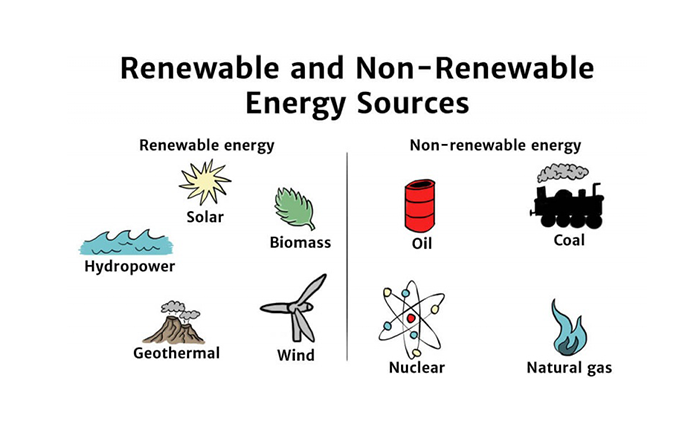
Examples of renewable and non-renewable energy resources
Examples of non-renewable resources of energy:
Coal, petroleum oil or its derivatives, and natural gas.
Natural gas is one of the cleanest forms of fuel because it causes less pollution to the environment, So the government exerts a great effort to increase its production.
The government gives more attention to the use of natural gas instead of gasoline.
What are the machines that are rotated by renewable resources of energy?
- Cars that work by benzene (derivative from petroleum) or natural gas.
- The aeroplanes that work by benzene (derivative of petroleum).
- The irrigating machines that work by kerosene.
FAQ about Sources and Importance of Energy
1. What is energy?
Energy is the ability to do work or cause change. It is essential for all living organisms and is used in many activities such as movement, heating, lighting, transportation, and operating machines.
2. What are the main sources of energy?
Energy comes from different natural sources, including:
- The Sun.
- Fossil fuels such as coal, oil, and natural gas.
- Wind.
- Water.
- Biomass.
- Geothermal heat from inside the Earth.
These sources are used to produce electricity, fuel vehicles, and power industries.
3. Why is energy important in our daily life?
Energy is important because it:
- Provides electricity for homes and industries.
- Powers transportation systems.
- Helps in cooking and heating.
- Operates machines and technology.
- Supports agriculture and food production.
Without energy, modern life would not function properly.
4. What are renewable energy resources?
Renewable energy resources are sources of energy that can be naturally replenished and do not run out quickly.
Examples include:
- Solar energy from the Sun.
- Wind energy from moving air.
- Hydropower from flowing water.
- Biomass energy from plants and organic waste.
- Geothermal energy from the heat inside the Earth.
5. What are non-renewable energy resources?
Non-renewable energy resources are sources that exist in limited amounts and take millions of years to form. Once used, they cannot be easily replaced.
Examples include:
- Coal.
- Petroleum (oil).
- Natural gas.
- Nuclear fuels such as uranium.
6. What are the advantages of renewable energy?
Renewable energy has many benefits:
- It is environmentally friendly.
- It produces less pollution.
- It is sustainable and abundant.
- It helps reduce dependence on fossil fuels.
7. What are the disadvantages of renewable energy?
Some limitations include:
- Energy production may depend on weather conditions.
- Initial installation costs can be high.
- Some systems require large areas of land.
8. What are the disadvantages of non-renewable energy resources?
Non-renewable resources have several drawbacks:
- They are limited and may run out.
- They cause air pollution and environmental damage.
- Their use contributes to climate change.
9. How can we conserve energy?
Energy can be conserved by:
- Using energy-efficient appliances.
- Turning off lights and devices when not in use.
- Using renewable energy sources.
- Improving public transportation and fuel efficiency.
10. Why is it important to shift to renewable energy in the future?
Switching to renewable energy helps:
- Protect the environment.
- Reduce pollution and greenhouse gases.
- Ensure a sustainable energy supply for future generations.
You can subscribe to Science Online on YouTube from this link: Science Online
What is the importance of the Sun (solar energy)?
The wind power advantages and disadvantages
The movement of the moon and the occurrence of the tide and the ebb phenomenon
Alternating current generator (Dynamo)-AC Generator & Effective value of the alternating current