Sex determination in humans and Abnormal chromosomal cases in humans
Sex determination in humans
By discovering sex chromosomes , Scientists decided that man is responsible for determining the sex of fetus , not the woman as was believed before , In the nucleus of human Somatic cells , There are 23 pairs of chromosomes , which are Autosomes ( somatic chromosomes ) and sex chromosomes .
Autosomes ( somatic chromosomes ) : Their number is 22 pairs ( 44 chromosomes ) and they are similar in both the male and female , Sex chromosomes : Their number is one pair ( 2 chromosomes ) and they are different in the male and female .
It can be possible to distinguish between human male and female cells as following :
Female cells
Each somatic cell contain 22 pairs of autosomes and one identical pair of sex chromosomes ( XX ) and their chromosomal structure ( 44 + XX ) .
They produce one type of ova , each of them contains the chromosome ( X ) , So , the chromosomal structure of the ovum is ( 22 + X ) .
Male cells
Each somatic cell contains 22 pairs of autosomes and one different pair of sex chromosome ( XY ) and their chromosomal structure is ( 44 + XY ) .
They produce two types of sperms in equal ratios , which are : Sperms contain chromosome ( X ) and their chromosomal structure is ( 22 + X ) , Sperms contain chromosome ( Y ) and their chromosomal structure is ( 22 + Y ) .
When mating two individuals , the following genetic analysis shows the possibilities of giving birth of males and females :
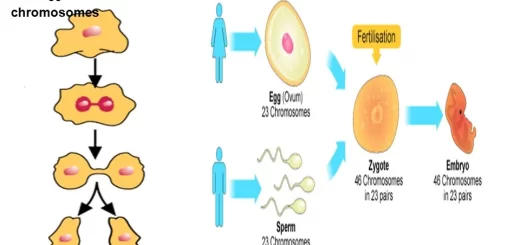
When an ovum ( 22 + X ) is fertilized by a sperm ( 22 + X ) , a female embryo is produced , When an ovum ( 22 + X ) is fertilized by a sperm ( 22 + Y ) , a male embryo is produced , So , Sperms ( male ) is responsible for determining the sex of embryo , not the ova ( female ) .
Chromosomes ( X ) differs from chromosome ( Y ) in size and type of genes each carries , The genes carried on the two chromosomes ( X ) and ( Y ) that responsible for sex determination work at the first months of pregnancy , where :
The fetus which carries ( Y ) chromosome begins after six weeks of starting pregnancy , to produce hormones stimulates the tissues of gonads ( which are undifferentiated ) to form the two testes , then the rest of male genital organs differentiate .
The fetus which does not carry ( Y ) chromosome : begins after 12 weeks of starting pregnancy in the formation of the two ovaries , then the rest of the female genital organs differeniate .
In some animals , sex is determined depending on the environmental conditions , Temperature that turtles’ eggs exposed to plays a role in determining sex , If eggs were laid near soil surface that has high temperature , eggs hatch females , If eggs were laid away from soil surface with low temperature , eggs hatch males .

Abnormal chromosomal cases
Abnormal chromosomal cases in humans
These abnormal cases take place as a result of a reduction or an increase in the number of sex chromosomes or autosomes at their formation during meiosis , This leads to formation of abnormal individuals after fertilization .
Sometimes during gamete formation by meiosis , the sex chromosomes are not equally distributed due to their adhering closely to each other .
Examples of the human abnormal cases : Klinefelter’s syndrome , Turner’s syndrome and Down’s syndrome ( Mongolism ) .
Klinefelter’s syndrome
It was discovered by Dr. Henery Klinefelter ( 1942 ) ,The reason of this case is due to fertilization of an abnormal ovum ( 22 + XX ) by a sperm ( 22 + y ) , The type of defective chromosomes is sex chromosomes , The chromosomal structure is ( 44 + XXY ) , Number of chromosomes is 47 .
The reason of disturbance in body : The presence of extra ( X ) chromosomes leads to disturbance in body sex hormones because the genes carried on chromosomes ( X ) express themselves in someway .
The sex : Abnormal male due to presence of chromosome ( Y ) .
Symptoms : A sterile male due to absence of sperm generating cells , Appearance of some feminine characteristics such as growth of breasts in size and tallness .
Turner’s syndrome
The reason of this case is due to the fertilization of an abnormal gamete ( ovum ) , ( 22 + 0 ) by a normal sperm ( 22 + X ) , The type of defective chromosomes is sex chromosomes , The chromosomal structure is ( 44 + X0 ) , Number of chromosomes is 45 .
The reason of disturbance in body : The lacking of the chromosome ( X ) with what it carries of genes of non-sexual characteristics leads to production of a female with several deformities .
The sex : abnormal female due to absence of chromosome ( X ) .
Symptoms : A female does not reach puberty due to lack of sufficient amount of hormones , Shortness , Some congential defects in the heart and kidneys .
Down’s syndrome ( Mongolism )
It was discovered by the British doctor Down ( 1866 ) , The reason of this case is due to Fertilization between a normal gamete and an abnormal gamete ( sperm or ovum ) carries a pair of chromosomes no. 21 .
The type of defective chromosomes is autosomes , The chromosomal structure is Male : ( 45 + XY ) , Female ( 45 + XX ) , Number of chromosomes is 47 .
The reason of disturbance in body is due to the presence of three copies of the chromosome no. 21 , The sex is abnormal male or female .
Symptoms : A retarded growth , Oval face , Mental retardation , Shortness , Flat back of head , Fingers and toes are short , Small ears and Convex eyes .
Sex-linked characteristics in humans and Drosophila insect
Reproduction , Types of sexual reproduction ( Conjugation , Reproduction by sexual gametes )