Atmospheric envelope, Characteristics & Importance of Troposphere layer, How does the troposphere affect weather?
The troposphere is a critical layer for life on Earth. It’s the home of our weather, and the air we breathe, and it influences our climate. The troposphere is the closest layer to Earth, and it’s where most of the weather happens.
Atmospheric envelope
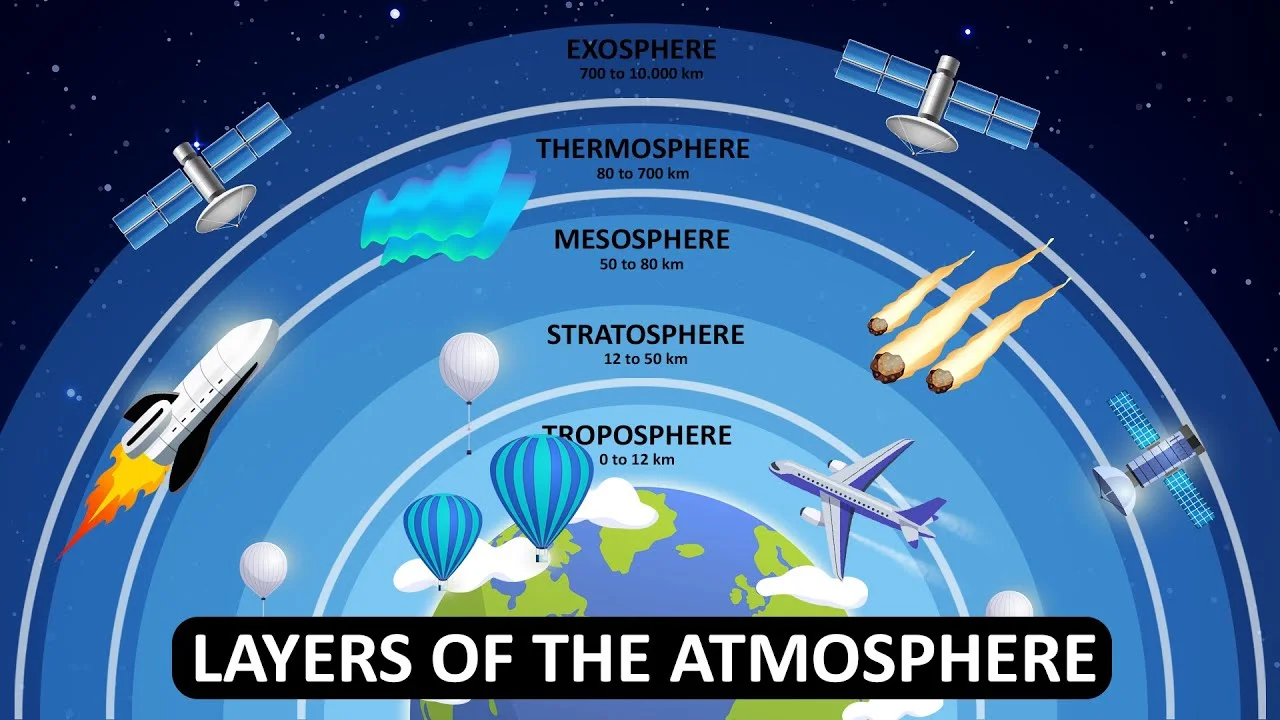
The atmospheric envelope consists of four layers above the sea level, which are the troposphere layer, the stratosphere layer, the mesosphere layer, and the thermosphere layer.
There is a region between each successive layer. In these regions, the temperature remains constant. There is the tropopause, which is the region between the troposphere layer and the stratosphere layer.
There is the stratopause, which is a region between the stratosphere layer and the mesosphere layer. There is the mesopause, which is the region between the mesosphere layer and the thermosphere layer.
Characteristics of the Troposphere Layer
Troposphere layer
The troposphere layer is the first layer of the atmospheric envelope. The troposphere layer is the disturbed layer because all the weather changes take place in it.
The troposphere layer extends for 13 km above the sea level to the tropopause. The thickness of the troposphere layer is 13 km, and it contains 99 % of the atmospheric water vapour that organizes the Earth’s temperature.
The troposphere layer is the lowest layer of Earth’s atmosphere, where nearly all weather conditions take place. The average height of the troposphere is 18 km in the tropics, 17 km in the middle latitudes, and 6 km in the polar regions in winter.
The temperature decreases at a rate (6.5 degree Celsius) for each (1 km) height until it reaches the lowest value of about (- 60 degree Celsius) at the tropopause. The air movement in this layer is vertical where, the hot air currents move upwards, while the cold air currents move downwards.
As you move up in the troposphere, it gets colder. This happens because the Earth’s surface warms the air below, and the heat transfers upwards. Air quality in the troposphere is directly affected by human activities, pollution sources, and natural processes.
The temperature difference between the bottom and top of the troposphere is what drives most weather phenomena. Warm air rises, cooler air sinks, and water vapor condenses to form clouds – all within the troposphere. This constant movement of air creates wind, rain, snow, thunderstorms, and other weather events we experience.
The atmospheric pressure in the troposphere layer decreases as we go up until it becomes 100 mb at its top. It contains about 75 % of the mass of the atmospheric air and aerosols. All the atmospheric phenomena, such as rain, wind, clouds, ………take place in this layer.
Almost all of the water vapor and the dust particles in the atmosphere are in the troposphere. The water vapor is key for weather formation, as it condenses to form clouds and precipitation. So, most clouds are found in this lowest layer, the bottom of the troposphere, right next to the surface of Earth, is called the boundary layer.
The lowest part of the troposphere, where the friction with the Earth’s surface influences airflow, is the planetary boundary layer. This layer is a few hundred meters to 2 km deep, depending on the landform and time of day. A top of the troposphere is the tropopause, which is the border between the troposphere and stratosphere.
Importance of the Troposphere layer
The temperature change with altitude in the troposphere is what drives most weather phenomena. Warm air rises, cooler air sinks, and water vapor condenses to form clouds. This circulation of air creates wind, rain, snow, thunderstorms, and all the other weather events we experience.
The troposphere plays a big role in Earth’s climate. The greenhouse effect, where certain gases in the atmosphere trap heat from the sun, mainly occurs in the troposphere. Tropospheric processes like the greenhouse effect and water cycle significantly influence Earth’s climate. Understanding them is essential for addressing climate change.
The troposphere contains the air we breathe, which contains the oxygen we need to survive. Air is a mixture of gases, including nitrogen, oxygen, and small amounts of other elements. The troposphere contains the water vapor for rain and the moderate temperatures that allow life to thrive. The troposphere is the Earth’s atmosphere‘s lowest layer, where we live and breathe.
Since weather happens in the troposphere, studying its conditions allows us to forecast weather patterns and prepare for potential hazards. Understanding the troposphere is essential for weather forecasting and climate studies. Scientists focus on conditions in this layer to predict weather patterns and understand how climate change might affect them.
The troposphere acts as a kind of natural filter for the Earth. It traps dust particles, ash, and some harmful gases from reaching the surface, protecting us from some of the harsh elements.
Do planes fly in the troposphere?
The troposphere is the lowest layer of Earth’s atmosphere, and planes fly in the troposphere, especially commercial airliners. Most commercial airplanes cruise in the upper troposphere, around 30,000 to 40,000 feet (about 9 to 12 km), just below or near the tropopause (the boundary between the troposphere and stratosphere).
This altitude is chosen because: The air is thinner (less drag), improving fuel efficiency. It is usually above the weather systems and turbulence found in the lower troposphere. It’s still low enough that jet engines can get enough oxygen to operate efficiently.
Small private planes and helicopters often fly lower in the troposphere. Military jets and some specialized aircraft may fly above the troposphere, into the stratosphere, depending on their design and mission. So, planes fly in the troposphere—especially commercial flights in its upper part.
FAQs about the Atmospheric Envelope
1. What is the atmospheric envelope?
The atmospheric envelope is the layer of gases that surrounds the Earth and is held by gravity. It protects life and supports the weather and climate.
2. What are the main components of the atmosphere?
The atmosphere mainly consists of:
Small amounts of carbon dioxide, water vapor, and other gases.
3. What are the layers of the atmospheric envelope?
The atmosphere is divided into layers:
4. Why is the atmosphere important?
- Provides oxygen for breathing.
- Protects Earth from harmful solar radiation.
- Regulates temperature.
- Enables the weather and water cycle.
FAQs about the Troposphere Layer
5. What is the troposphere?
The Troposphere is the lowest layer of the atmosphere, closest to Earth’s surface, where all weather phenomena occur.
6. What is the thickness of the troposphere?
- About 8 km at the poles.
- About 18 km from the equator.
7. What are the main characteristics of the troposphere?
- Contains about 75% of the atmosphere’s mass.
- Temperature decreases with altitude.
- Contains most of the water vapor.
- Weather changes occur here (clouds, rain, wind).
8. Why does temperature decrease with height in the troposphere?
Because the Earth’s surface absorbs heat from the Sun and warms the air above it, the air becomes cooler as altitude increases.
9. What is the tropopause?
It is the boundary between the Troposphere and the Stratosphere, where the temperature stops decreasing.
Importance of the Troposphere
10. Why is the troposphere important for life?
- Contains oxygen needed for living organisms.
- Supports weather systems and rainfall.
- Helps regulate Earth’s temperature.
11. How does the troposphere affect weather?
All weather phenomena like Rain, Clouds, Storms and Winds. occur in the Troposphere.
12. What is the role of water vapor in the troposphere?
Water vapor:
- Forms clouds.
- Causes precipitation.
- Plays a key role in the water cycle.
13. How does the troposphere help in regulating the climate?
It distributes heat around the Earth through air movement (winds), helping maintain a balanced climate.
The atmospheric envelope surrounds and protects Earth. It is divided into several layers, with the Troposphere being the lowest. The troposphere is crucial because it contains air, water vapor, and all the weather phenomena necessary for life.
You can subscribe to Science Online on YouTube from this link: Science Online
Atmospheric layers and pressure, Troposphere, Stratosphere, Mesosphere, and Thermosphere
Characteristics and Importance of the mesosphere layer