Properties and Measuring Devices of Mass: 10 Powerful Facts, Instruments, and Comparisons
Properties and measuring devices of mass are fundamental concepts in physics and chemistry. Learning how mass differs from weight and understanding the various instruments used to measure it helps students, researchers, and professionals perform accurate scientific experiments and practical measurements with confidence.
Properties and Measuring Devices of Mass
Properties and Measuring Devices of Mass
Mass is one of the most fundamental physical quantities in science. It represents the amount of matter contained in an object and remains constant regardless of its location in the universe. Understanding the properties and measuring devices of mass is essential in physics, chemistry, engineering, medicine, and everyday life.
What is Mass?
Mass is the quantity of matter present in an object. Unlike weight, which varies with gravitational force, mass remains the same whether an object is on Earth, on the Moon, or in outer space. The SI unit of mass is the kilogram (kg), although grams (g), milligrams (mg), and metric tons are also commonly used.
Properties and Measuring Devices of Mass
The mass is the amount of matter in an object. The mass of any matter is a fixed value. It does not change by changing the state of the matter or the place of the matter. The mass of an object increases when the amount of matter in it increases and vice versa.
All the matter have the mass whatever their physical state (solids, liquids, or gases). All the matter have the mass whatever their shapes (one piece, particles, powder, pure, or mixture).
All the matter have the mass whatever their places (in hand, on the moon, or any other planet). If you measure the mass of an object on the Earth’s surface, then measure the mass of the same object on the moon’s surface, you will notice that the mass does not change.
Measuring units of mass
The mass is measured by the gram, the kilogram, or the ton. The ton is used to measure very big masses. The gram (g) may equal the mass of one paper clip, and it is suitable for measuring small masses such as jewellery.
The kilogram (kg) equals the mass of one liter of distilled water at the normal temperature, and it is suitable for measuring large masses such as fruits and vegetables.
Measuring devices of mass
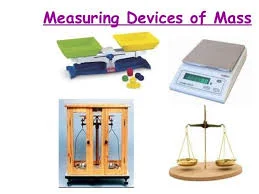
Mass is measured using different types of scales, such as two-arm and one-arm scales. A two-arm scale is divided into the balance scale and the sensitive two-arm scale. The balance scale is used to measure large masses, such as cheese and vegetables. The sensitive two-arm scale is used to measure small masses, such as gold and chemicals. The one-arm scale is divided into a one-arm digital scale and a one-arm scale with a pointer.
Properties of Mass
Mass has several important characteristics that distinguish it from other physical quantities.
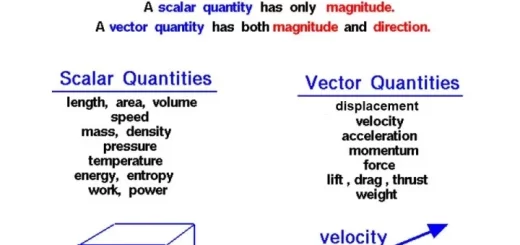
- Scalar Quantity: Mass has magnitude only and no direction. It can be expressed using a numerical value and a unit without specifying a direction.
- Constant Everywhere: One of the most important properties of mass is that it does not change with location. Whether an object is at sea level or on another planet, its mass remains unchanged.
- Measure of Matter: Mass indicates how much matter an object contains. Larger objects generally have greater mass than smaller ones, although density also plays a role.
- Causes Inertia: Mass is directly related to inertia, which is an object’s resistance to changes in motion. Objects with greater mass require more force to accelerate or stop.
- Additive Property: The total mass of a system equals the sum of the masses of its individual components.
Units of Mass
The most common units include:
- Kilogram (kg).
- Gram (g).
- Milligram (mg).
- Metric ton (t).
- Microgram (µg).
Scientists primarily use kilograms as the standard SI unit for accurate scientific measurements.
Measuring Devices of Mass
Different instruments are designed to measure mass with varying levels of precision depending on the application.
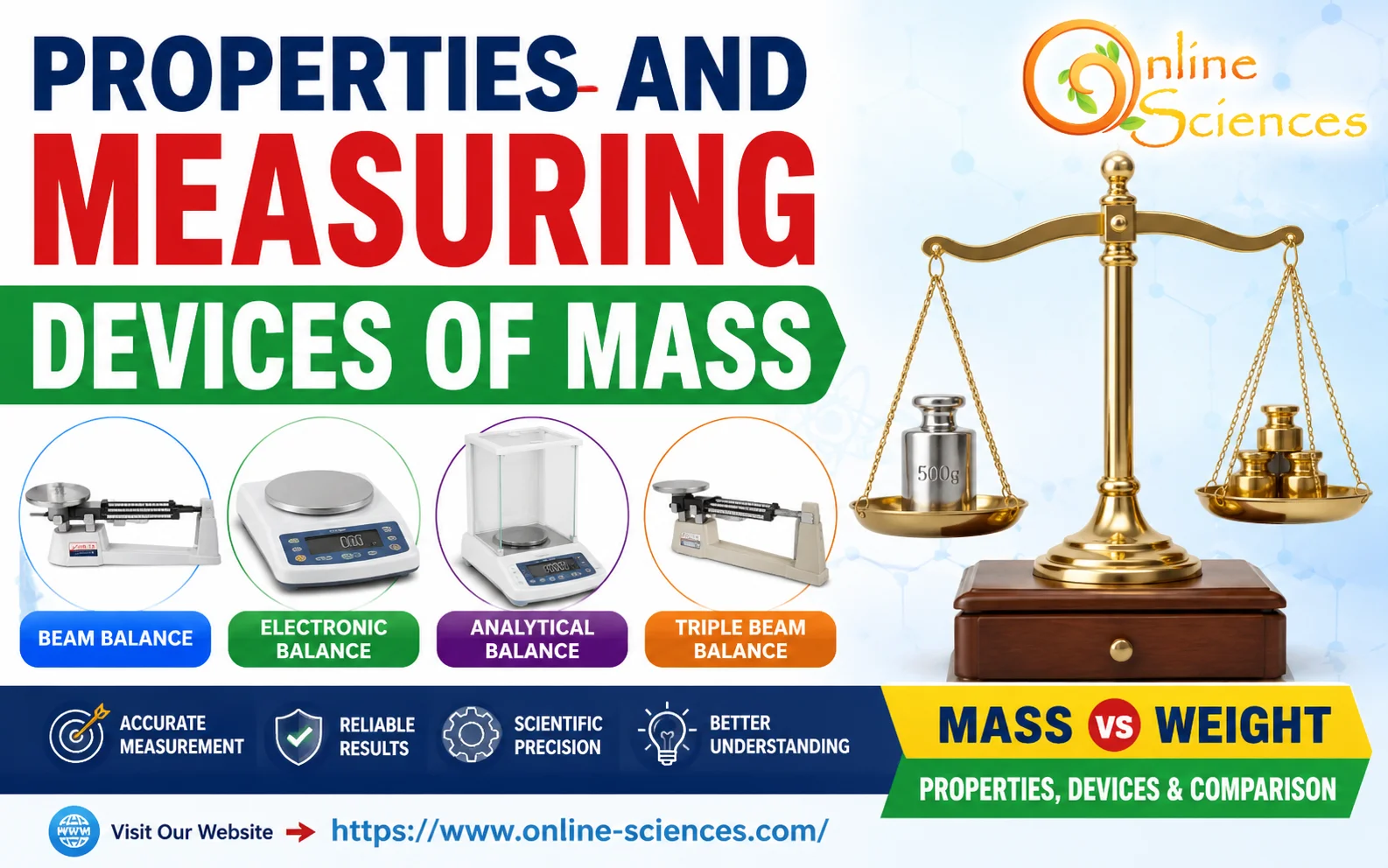
Beam Balance
A beam balance compares an unknown mass with standard masses placed on the opposite side. It provides accurate measurements because it compares masses directly rather than relying on gravity.
Advantages
- Highly accurate.
- Long-lasting.
- Does not require electricity.
Applications
- School laboratories.
- Physics experiments.
- Calibration laboratories.
Electronic Balance
An electronic balance uses sensors to determine mass quickly and accurately. It displays digital readings that reduce human error.
Advantages
- Fast measurements.
- High precision.
- Easy to operate.
Applications
- Scientific laboratories.
- Pharmaceutical industries.
- Universities.
Analytical Balance
An analytical balance is an extremely sensitive instrument capable of measuring tiny masses with exceptional precision.
Features
- Accuracy up to 0.0001 g.
- An enclosed chamber prevents air movement.
- Ideal for chemical analysis.
Applications
- Research laboratories.
- Pharmaceutical manufacturing.
- Chemical experiments.
Triple Beam Balance
The triple beam balance uses three sliding weights to determine mass accurately.
Benefits
- Affordable.
- Durable.
- Excellent for educational purposes.
Spring Balance
A spring balance actually measures weight, not mass. The measured weight can be converted into mass if the gravitational acceleration is known. It is commonly used in markets and industrial environments where approximate measurements are acceptable.
Laboratory Microbalance
Microbalances measure extremely small masses, often in micrograms.
Used In:
- Nanotechnology.
- Medical research.
- Advanced chemistry.
- Material science.
Applications of Mass Measurement
Accurate mass measurement is essential in many fields.
- Pharmaceutical drug preparation.
- Medical laboratories.
- Chemical manufacturing.
- Food production.
- Aerospace engineering.
- Scientific research.
- Jewelry manufacturing.
- Environmental testing.
Importance of Accurate Mass Measurement
Precise mass measurements ensure product quality, scientific accuracy, patient safety, and reliable industrial processes. Even tiny measurement errors can significantly affect laboratory experiments, medicine preparation, and engineering projects.
Frequently Asked Questions (FAQ) about Measuring Devices of Mass
1. What is mass?
Mass is the amount of matter contained in an object and is measured in kilograms or grams.
2. What is the SI unit of mass?
The SI unit of mass is the kilogram (kg).
3. Which instrument measures mass most accurately?
An analytical balance provides the highest accuracy for most laboratory applications, while a microbalance is used for extremely small masses.
4. Does mass change on the Moon?
No. Mass remains constant regardless of location, while weight changes because gravity differs.
5. Can a spring balance measure mass?
Not directly. A spring balance measures weight, which can be converted to mass if gravitational acceleration is known.
6. Why is an electronic balance widely used?
Electronic balances provide fast, accurate, and convenient digital measurements suitable for laboratories and industries.
7. Why is mass important in science?
Mass helps scientists calculate density, momentum, energy, chemical reactions, and many other physical and chemical properties.
Mass Measuring Devices
Choosing the right instrument for measuring mass depends on the required level of accuracy and the intended application. A beam balance is one of the most reliable traditional devices because it compares an unknown mass with standard masses, making it unaffected by changes in gravity. It is commonly used in educational laboratories and for calibration purposes, although it requires manual operation and is slower than digital alternatives.
A triple beam balance works on a similar principle but uses three sliding riders to determine the mass of an object. It is durable, affordable, and suitable for classroom experiments, offering moderate accuracy without the need for electricity. However, it is less precise than modern electronic balances and takes more time to read.
An electronic balance provides fast and accurate digital measurements using electronic sensors. It is widely used in scientific laboratories, pharmacies, and industrial settings because it is easy to operate and minimizes human reading errors. Unlike mechanical balances, it requires a power source and periodic calibration to maintain its accuracy.
An analytical balance is designed for highly precise measurements, often with a readability of 0.0001 grams. It is equipped with a protective enclosure to eliminate the effects of air currents and is essential for chemical analysis, pharmaceutical research, and scientific experiments where even tiny measurement errors can affect the results.
A microbalance offers the highest level of precision among mass measuring devices, capable of measuring masses in the microgram range. It is primarily used in nanotechnology, advanced medical research, materials science, and specialized laboratories. Due to its extreme sensitivity, it requires a controlled environment free from vibrations, dust, and temperature fluctuations.
Although a spring balance is commonly included in discussions about measuring devices, it actually measures weight rather than mass. It determines the force exerted by gravity on an object, so its readings vary with gravitational strength. For this reason, it is best suited for everyday and industrial applications where measuring weight is sufficient rather than obtaining an object’s true mass.
Mass vs Weight
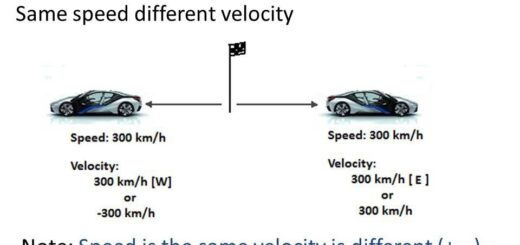
Mass and weight are closely related concepts, but they are not the same. Mass is the amount of matter contained in an object, while weight is the gravitational force acting on that mass. Because mass depends only on the quantity of matter, it remains constant regardless of where the object is located. Weight, however, changes whenever the strength of gravity changes.
Fg =m g , g=9.8 m/s^2
Another important difference lies in their units of measurement. Mass is measured in kilograms (kg) or grams (g) using instruments such as beam balances and electronic balances. Weight, on the other hand, is measured in newtons (N) using a spring balance or force meter because it represents a force rather than a quantity of matter.
For example, if an astronaut has a mass of 70 kg on Earth, their mass remains 70 kg on the Moon. However, their weight becomes much smaller on the Moon because lunar gravity is only about one-sixth of Earth’s gravity. This illustrates why mass is constant while weight varies depending on gravitational acceleration.
Understanding the distinction between mass and weight is essential in physics, engineering, medicine, and everyday life. Scientists rely on accurate mass measurements in laboratory experiments and manufacturing, while weight measurements are important for determining the force exerted on objects under different gravitational conditions.
You can subscribe to Science Online on YouTube from this link: Science Online
The mole, Mass of substance & Avogadro’s number
What are the factors affecting the weight?
The force and some technological applications depend on their motion and the effect of the force