
Biotechnology in Agriculture: definition, examples, types, advantages and disadvantages
Biotechnology in agriculture is the use of scientific techniques and genetic engineering to improve plants, animals, and microorganisms for agricultural purposes. It involves modifying the genetic makeup of crops and livestock to enhance their yield, quality, resistance to pests, diseases, and environmental conditions, and to reduce the need for chemical inputs such as fertilizers and pesticides.
Biotechnology in Agriculture
Biotechnology in agriculture is the application of scientific and genetic engineering techniques to improve plants, animals, and microorganisms used in farming. It involves modifying the genetic makeup of crops and livestock to enhance productivity, resistance to pests and diseases, tolerance to harsh environmental conditions, and nutritional value. Common agricultural biotechnology methods include genetic modification, tissue culture, molecular markers, and the use of biofertilizers and biopesticides.
This modern approach enables farmers to produce more food efficiently and sustainably, thereby reducing the need for chemical inputs and minimizing environmental impact. Examples include pest-resistant cotton, drought-tolerant maize, and nutrient-enriched crops like Golden Rice. Despite its many benefits, agricultural biotechnology also raises ethical, environmental, and economic concerns, such as loss of biodiversity and dependence on biotech companies.
Agricultural biotechnology applies biological science to farming — helping produce more food, improve sustainability, and support global food security. Example: Developing genetically modified (GM) crops like pest-resistant cotton or drought-tolerant maize. Using tissue culture to rapidly reproduce disease-free plants.
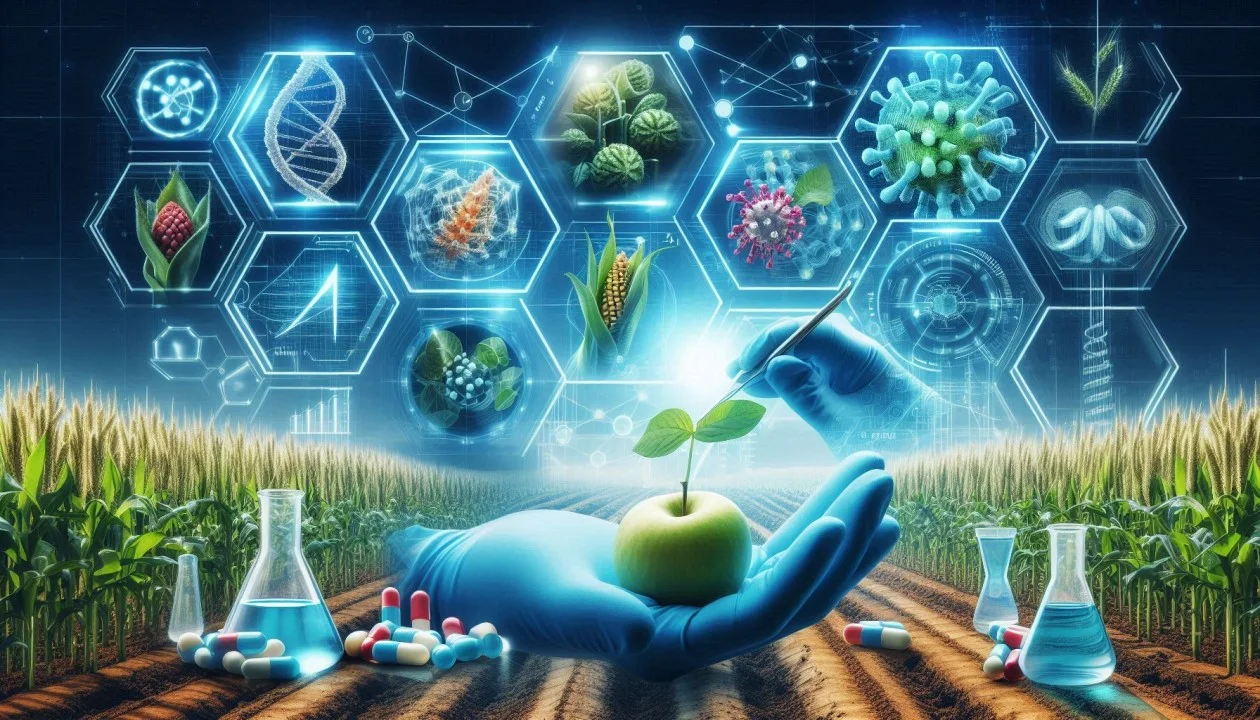
Biotechnology in Agriculture
Features of Biotechnology in Agriculture
- Genetic Modification (GM): Alters the DNA of plants or animals to introduce desirable traits, such as pest resistance, higher yield, or improved nutrition.
- Tissue Culture Technology: Allows rapid multiplication of disease-free and high-quality plants in a controlled laboratory environment.
- Molecular Markers: Used to identify and select plants or animals with specific genetic traits more efficiently during breeding programs.
- Biofertilizers and Biopesticides: Use of living organisms (like bacteria or fungi) to enhance soil fertility or control pests naturally, reducing chemical use.
- Genetic Engineering for Resistance: Development of crops that are resistant to pests, diseases, herbicides, or harsh environmental conditions such as drought or salinity.
- Improvement of Nutritional Content: Enhances the nutritional value of crops (e.g., Golden Rice enriched with Vitamin A).
- Animal Biotechnology: Improves livestock productivity and health through genetic selection, cloning, or the production of vaccines.
- Sustainable Farming: Promotes eco-friendly agricultural practices by minimizing chemical inputs and conserving natural resources.
Advantages of Biotechnology in Agriculture
- Increased Crop Yield: Genetically modified (GM) crops produce higher yields, helping to feed growing populations.
- Pest and Disease Resistance: Biotechnology enables crops to resist insects, viruses, and fungi, reducing the need for chemical pesticides.
- Drought and Stress Tolerance: Crops can be engineered to withstand harsh conditions like drought, salinity, or poor soil quality.
- Improved Nutritional Quality: Enhances the nutritional content of food (e.g., adding vitamins, minerals, or proteins).
- Reduced Use of Chemicals: Lowers dependence on chemical fertilizers and pesticides, helping protect the environment and farmers’ health.
- Faster Breeding and Growth: Speeds up the development of new plant varieties and livestock breeds.
- Environmental Protection: Encourages sustainable farming through soil conservation, biodiversity, and reduced greenhouse gas emissions.
Disadvantages of Biotechnology in Agriculture
- Loss of Biodiversity: Widespread use of genetically modified crops may reduce genetic diversity in agriculture.
- Environmental Risks: Modified genes might spread to wild species, causing ecological imbalances.
- Health Concerns: Some people worry about the potential long-term health effects of consuming GM foods (though not scientifically proven).
- High Costs: Biotechnology research, development, and licensing can be expensive for farmers and governments.
- Ethical and Social Issues: Genetic modification raises ethical concerns about “tampering” with nature and ownership of living organisms.
- Dependence on Corporations: Farmers may rely heavily on biotech companies for seeds, increasing economic dependence.
- Regulatory Challenges: GM crops often face strict regulations and public opposition in some countries.
You can subscribe to science online on YouTube from this link: Science Online
Genetic Engineering, Gene cloning, Bacterial genetics conjugation transformation and transduction
Molecular technology (Genetic Engineering) advantages, Techniques and uses
Genetic code, formation of amino acid code and Steps of Protein synthesis
Cloning of DNA sequences, Importance of recombinant DNA and Uses of human genome
Viral replication cycles, Importance of bacteriophages, Bacteriophage lytic and lysogenic cycles
Features and classification of viruses, Defective viruses and Viral vectors used for gene therapy
Pathogenesis of bacterial infection, Classification of Pathogens and Bacterial virulence factors
Microbiology, Bacteria structure, types, Gram-positive bacteria and Gram-negative bacteria
Bacterial growth phases and Environmental factors required for bacterial growth