
7 Shocking Facts About Two Ovaries and Fallopian Tubes in the Female Reproductive System
Two ovaries and Fallopian tubes are vital organs of the female reproductive system that play a central role in ovulation, fertilization, hormone production, and pregnancy. Understanding their structure and function helps explain how human reproduction begins and why maintaining reproductive health is important.
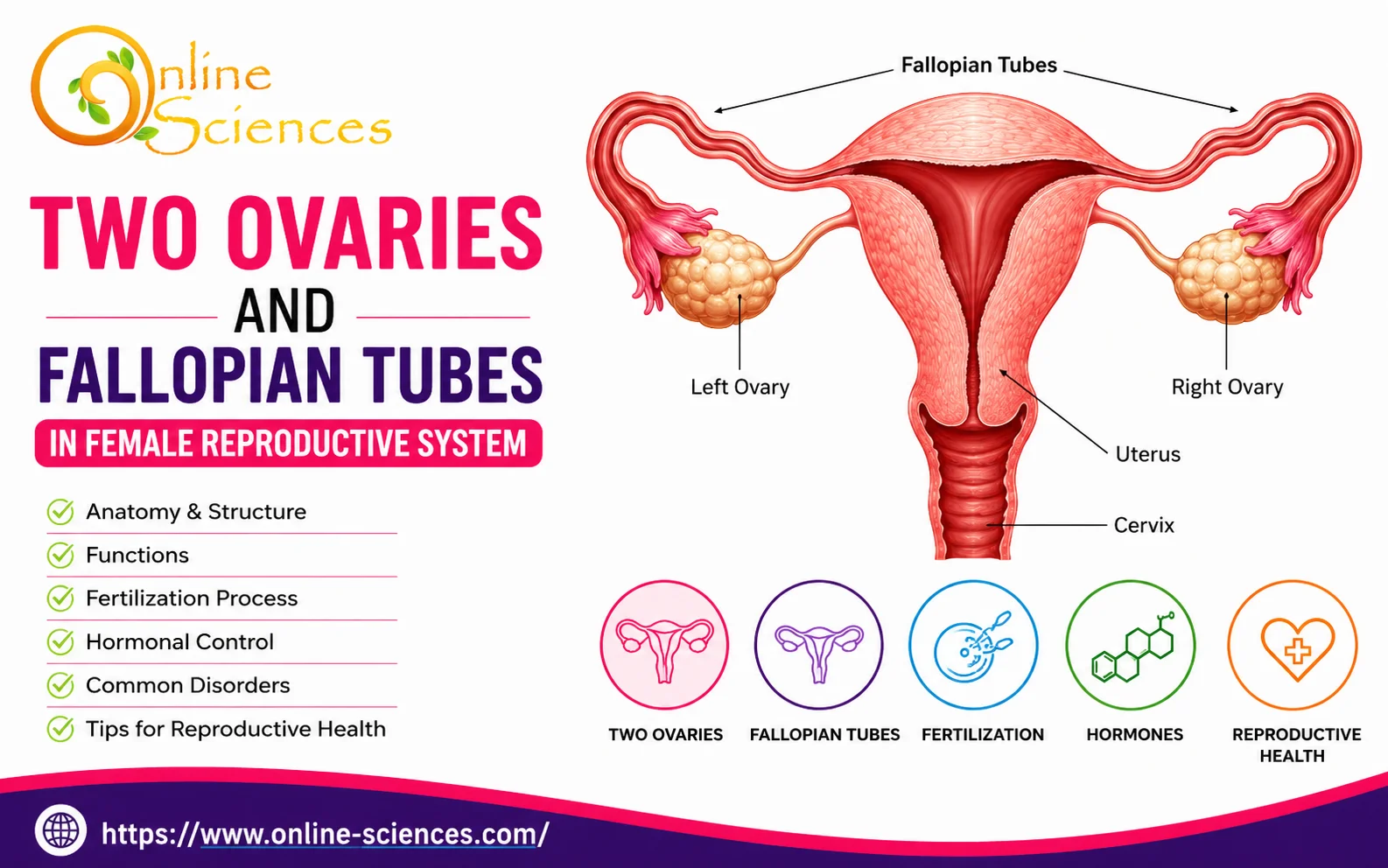
Two Ovaries and Fallopian Tubes
Female reproductive system
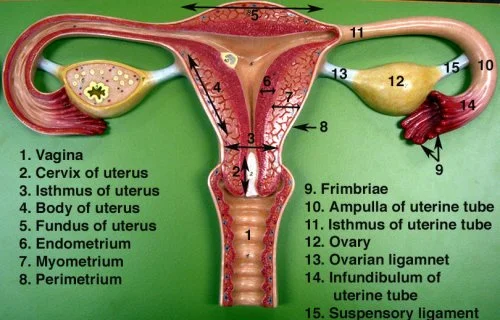
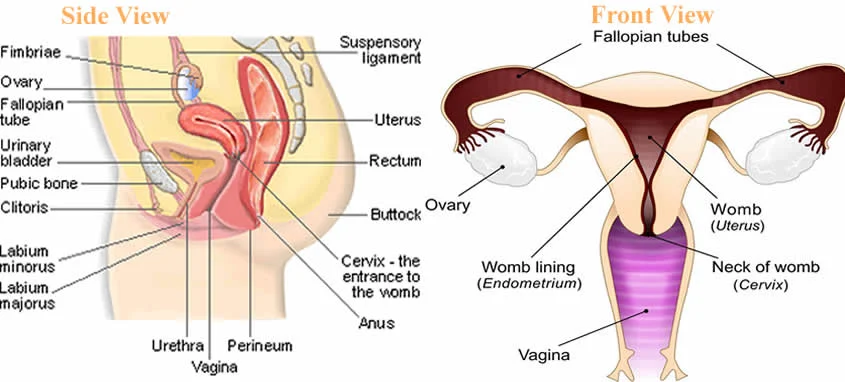
The female reproductive system consists of two ovaries, two fallopian tubes, the uterus, and the vagina. It is called the female genital system. It is made up of the internal and external sex organs, which function in human reproduction. The female reproductive system is immature at birth, and it develops to maturity at puberty to be able to produce the gametes and to carry the fetus to full term.
Female reproductive system
Two ovaries
Two ovaries are two glands having the size of a peeled almond, and they lie inside the body in the lower part of the abdominal cavity from the back.
Function of the ovaries
Female reproductive system
The function of two ovaries is the production of the ova, where each ovary releases one ripe ovum every 28 days in exchange with the other ovary in a process known as ovulation. The ovaries produce the female sex hormones, which are Estrogen and Progesterone.
Estrogen is responsible for the appearance of secondary sex characters in females. Progesterone is responsible for the occurrence and continuity of the pregnancy.
Signs of puberty in the female
The signs of puberty, which are the softness of voice and the occurrence of the menstrual cycle every 28 days, as long as no pregnancy happens, the Menstrual cycle starts at the age of female puberty (11- 14 years) and stops at the age of menopause.
The accumulation of fats in certain regions, the growth and development of breasts, and the growth of hair in the armpit and pubic area are from signs of puberty.
Two Fallopian tubes
Two Fallopian tubes are two tubes of the funnel-shaped opening provided with finger-like projections. The inner wall of the Fallopian tubes is lined with cilia, and the two Fallopian tubes are open in the upper corners of the uterus.
Fallopian tubes receive the ovum and direct it towards the uterus by the aid of the contractions and relaxations of the muscles in the wall of the tubes and the movement of the lining cilia.
The ligation of the Fallopian tubes is considered one of the means of birth control because sperms do not reach the ripe ovum, so the fertilization process does not happen.
Two Ovaries and Fallopian Tubes
The female reproductive system contains two ovaries and two Fallopian tubes, which work together to produce eggs, support fertilization, and prepare for pregnancy. These organs are connected to the uterus and are controlled by reproductive hormones. Healthy ovaries and Fallopian tubes are essential for natural conception and maintaining normal menstrual cycles.
Functions of the Two Ovaries
The ovaries are small, almond-shaped organs located on each side of the uterus.
Their main functions include:
- Producing female reproductive cells (eggs or ova).
- Releasing one mature egg during ovulation each menstrual cycle.
- Producing the hormones estrogen and progesterone.
- Regulating the menstrual cycle.
- Supporting pregnancy during its early stages through hormone production.
Although both ovaries contain thousands of immature eggs at birth, usually only one egg is released during each menstrual cycle.
Functions of the Fallopian Tubes
The Fallopian tubes are narrow, muscular tubes connecting the ovaries to the uterus.
Their major functions include:
- Capturing the egg released from the ovary.
- Providing the site where fertilization usually occurs.
- Transporting the fertilized egg toward the uterus.
- Moving the egg with the help of tiny hair-like structures called cilia and muscular contractions.
If fertilization does not occur, the egg naturally breaks down and is absorbed by the body.
How Fertilization Occurs
The reproductive process follows several important steps:
- An ovary releases a mature egg during ovulation.
- The Fallopian tube picks up the egg.
- Sperm travel through the cervix and uterus into the Fallopian tubes.
- Fertilization usually takes place inside the Fallopian tube.
- The fertilized egg divides repeatedly while moving toward the uterus.
- The embryo implants into the uterine lining, where pregnancy begins.
Structure of the Fallopian Tube
Each Fallopian tube consists of four regions:
- Fimbriae: Finger-like projections that collect the released egg.
- Infundibulum: Funnel-shaped opening near the ovary.
- Ampulla: The widest section where fertilization most commonly occurs.
- Isthmus: A narrow section connecting the uterus.
Each part plays an important role in successful reproduction.
Hormonal Control
Several hormones regulate ovarian activity:
- Follicle-Stimulating Hormone (FSH): Stimulates egg development.
- Luteinizing Hormone (LH): Triggers ovulation.
- Estrogen: Develops female reproductive characteristics and prepares the uterus.
- Progesterone: Maintains the uterine lining for possible pregnancy.
These hormones work together to ensure normal reproductive function.
Common Disorders Affecting the Ovaries and Fallopian Tubes
Several medical conditions can interfere with fertility and reproductive health:
- Ovarian cysts.
- Polycystic ovary syndrome (PCOS).
- Ovarian cancer.
- Blocked Fallopian tubes.
- Pelvic inflammatory disease (PID).
- Ectopic pregnancy.
- Endometriosis.
Early diagnosis and treatment improve reproductive outcomes.
Tips for Maintaining Reproductive Health
To keep the ovaries and Fallopian tubes healthy:
- Maintain a balanced diet.
- Exercise regularly.
- Avoid smoking.
- Practice safe sexual habits.
- Attend routine gynecological examinations.
- Seek medical care for pelvic pain or abnormal menstrual cycles.
Healthy lifestyle choices support fertility and overall reproductive wellness.
Frequently Asked Questions (FAQ) about Two ovaries and Fallopian tubes
1. What are the main functions of the ovaries?
The ovaries produce eggs and secrete the hormones estrogen and progesterone, which regulate the menstrual cycle and support pregnancy.
2. What is the role of the Fallopian tubes?
The Fallopian tubes transport the egg from the ovary to the uterus and are the usual site where fertilization occurs.
3. Can pregnancy occur with one ovary?
Yes. Many women become pregnant naturally with one healthy ovary and one functioning Fallopian tube.
4. Where does fertilization usually occur?
Fertilization most commonly occurs in the ampulla, the widest section of the Fallopian tube.
5. What happens if the Fallopian tubes are blocked?
Blocked Fallopian tubes can prevent sperm from reaching the egg or stop the fertilized egg from reaching the uterus, leading to infertility or an ectopic pregnancy.
6. How many eggs do women have at birth?
Females are born with approximately 1–2 million immature eggs, which gradually decrease throughout life until menopause.
7. What hormones are produced by the ovaries?
The ovaries primarily produce estrogen and progesterone, along with smaller amounts of inhibin and testosterone.
8. Can both ovaries release eggs at the same time?
Yes. Although uncommon, both ovaries can release an egg during the same menstrual cycle, which may result in fraternal twins if both eggs are fertilized.
You can subscribe to science online on YouTube from this link: Science Online
Female reproductive system organs, functions, anatomy & Histological structure of the uterus
How does the fertilization process take place in the human?
Reproduction, Types of sexual reproduction (Conjugation, Reproduction by sexual gametes)
Reproduction in Human being, Structure of Male genital system & sperm
Structure of Female genital system & ovum, Oogenesis stages & Menstrual cycle