
Why the Respiratory System Is Vital: 9 Key Functions & the Life-Saving Importance of Respiration
The respiratory system is responsible for supplying oxygen to the body and removing carbon dioxide through the process of respiration. The lungs play a central role in gas exchange, while structures like the trachea and bronchi help transport air efficiently. This continuous process is essential for energy production, supporting vital organs, and maintaining overall body balance.
Human respiratory system
The respiratory system is one of the most important systems in the human body, as it ensures a constant supply of oxygen. Oxygen is required by cells to produce energy, which powers every activity in the body—from movement to brain function. Without efficient respiration, cells cannot function properly, leading to fatigue and serious health complications.
Respiration is also crucial for removing carbon dioxide, a waste product generated during energy production. If carbon dioxide accumulates in the body, it can disrupt the body’s pH balance and lead to harmful effects. The lungs continuously work to expel this gas, keeping the internal environment stable and safe.
In addition to gas exchange, the respiratory system helps regulate body functions and supports overall health. It plays a role in maintaining acid-base balance, filtering harmful particles from the air, and even aiding in speech. Keeping the respiratory system healthy ensures efficient breathing, better energy levels, and improved quality of life.
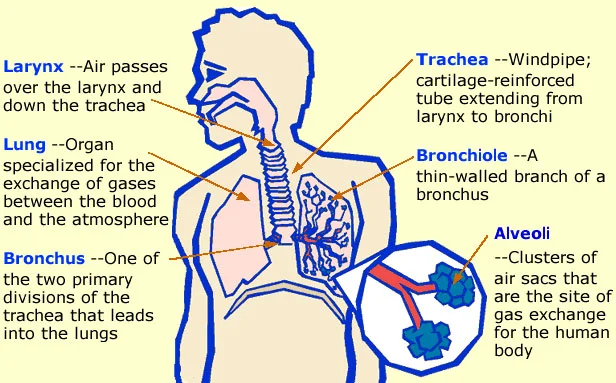
Respiratory system
We can not live without the air. It contains oxygen gas, which burns the small particles of the digested food to produce energy, carbon dioxide gas, and water vapor, and this process is called respiration process. Man needs the respiration process to get the needed energy from the food to do all the body activities, such as excretion, sensation, reproduction, and motion.
The respiratory system provides oxygen for metabolism in the tissues. It removes carbon dioxide and the waste product of metabolism.The respiratory system facilitates the sense of smell, it produces speech, it maintains acid-base balance, It maintains body water levels, and it maintains heat balance.
The respiration process takes place in special organs forming the respiratory system, and most organs of the respiratory system exist in the thoracic (chest) cavity.
9 key functions of the respiratory system
- Gas Exchange (Oxygen & Carbon Dioxide): The primary function is to bring oxygen into the body and remove carbon dioxide through the lungs.
- Oxygen Supply for Energy Production: Oxygen is delivered to body cells, where it is used to produce energy through cellular respiration.
- Removal of Carbon Dioxide: The system eliminates carbon dioxide, a waste product that can be harmful if it builds up in the body.
- Regulation of Blood pH: By controlling carbon dioxide levels, the respiratory system helps maintain the body’s acid-base balance.
- Protection Against Dust and Germs: Structures like the nose and airways filter, trap, and remove harmful particles and microorganisms.
- Regulation of Air Temperature and Moisture: The respiratory system warms and moistens incoming air to protect delicate lung tissues.
- Voice Production: Air passing through the larynx enables speech and sound production.
- Sense of Smell: The nose contains receptors that allow you to detect different odors.
- Support of Blood Circulation: The lungs help oxygenate blood and assist in proper circulation throughout the body.
Respiration process importance
The respiration process gives the body of living organisms the needed energy to do all body activities. The respiration process is the process by which human obtain energy from the digested food.
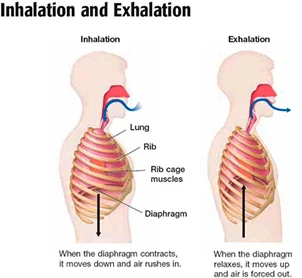
Inhalation and Exhalation process.
The inhalation process is a process by which air rich in oxygen gas enters the lungs. The exhalation process is a process by which the air rich in carbon dioxide gas and water vapor is expelled outside the body.
The number of respiration times increases when the body is more active to obtain the energy needed for all the body activities.
FAQ about the respiratory system
1. What is the main function of the respiratory system?
The main function of the respiratory system is to allow breathing and enable gas exchange—bringing oxygen into the body and removing carbon dioxide.
2. How does respiration work in the body?
Respiration involves inhaling oxygen into the lungs, where it enters the bloodstream, and exhaling carbon dioxide produced by body cells.
3. Why is oxygen important for the body?
Oxygen is essential for producing energy in cells through cellular respiration, helping all organs function properly and efficiently.
4. What happens if the respiratory system doesn’t work properly?
If the respiratory system is impaired, it can lead to conditions like asthma or chronic obstructive pulmonary disease, which reduce oxygen supply and affect overall health.
5. How can you keep your respiratory system healthy?
You can maintain a healthy respiratory system by avoiding smoking, exercising regularly, and reducing exposure to pollutants.
You can follow science online on YouTube from this link: Science online
Mechanics of ventilation, Structures of Respiratory system and Functions of conducting zone
Respiratory system function, organs, structure, anatomy & conducting portion
Role of the respiratory system in the excretion process in man & Respiration in plant
Cellular respiration, Structure of ATP and types of fermentation




Those note help me very much
Thank you very much , you are welcome
This note helped me in my school assignment.
Do your best to do the best
Thank you for your comment
It is really Nice. Infact i like it
Thank you very much
… thanks
You are welcome
yah! its helfulllll
Thank you for your comment
Perfect piece of information
Thank you very much for your comment