DOBOT Collaborative Robot Series importance, How accurate is a Dobot?
The Dobot robot is a versatile, programmable robotic arm that combines industrial precision with educational accessibility, allowing users to explore robotics, automation, and artificial intelligence in practical, hands-on ways.
Dobot robot
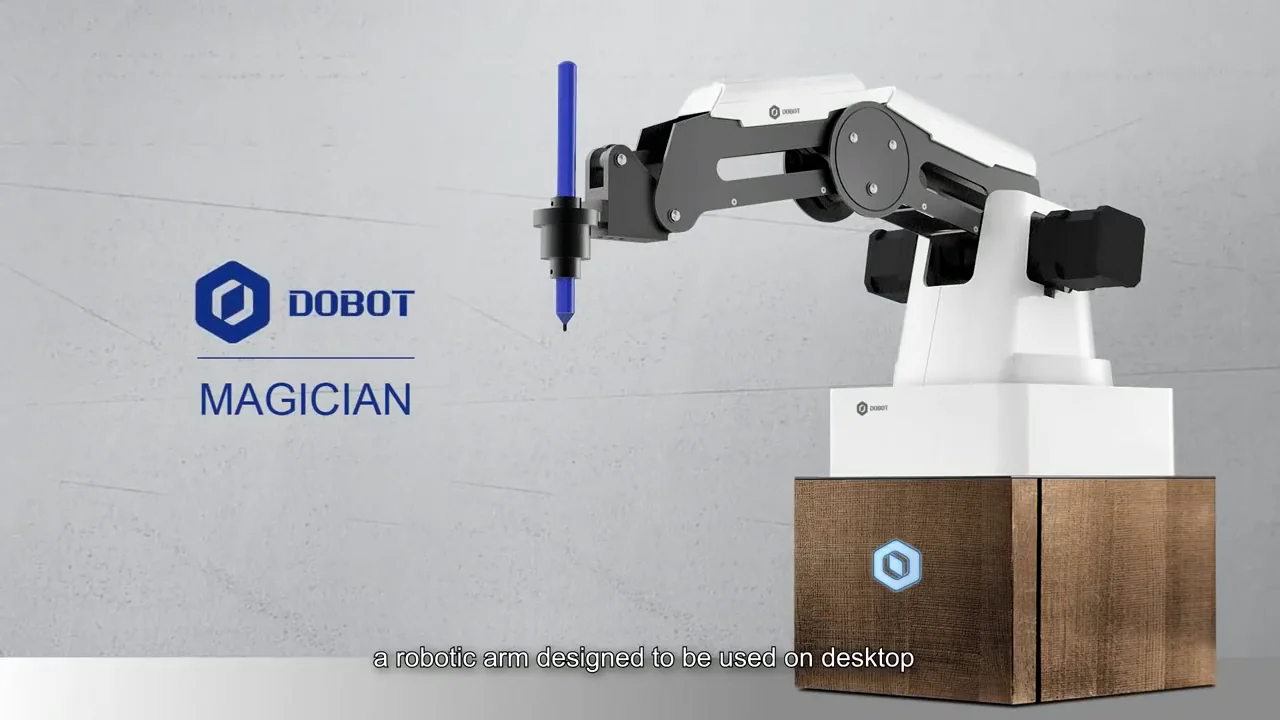
The Dobot robot is a multi-functional, high-precision robotic arm developed by Dobot, a Chinese robotics company. It is designed for education, research, light manufacturing, and automation tasks. Dobot robots are known for their compact size, affordability, and ease of programming, making them popular in STEM learning, prototyping, and industrial applications.
The Dobot robot can perform a wide range of tasks such as 3D printing, laser engraving, object sorting, drawing, assembly, and pick-and-place operations. If you’re considering a DOBOT robot (or cobot) for your use case, DOBOT robot is a great fit for environments where you have repetitive tasks.
Dobot robot
Dobot robot features
1. Precision & payload flexibility: Many Dobot collaborative robots (cobots) in the CR Series support payloads from ~0.5 kg up to 16 kg or more. Repeatability (the ability to return to the same position) is very high in many models. For example, the CR Series claims about ±0.02 mm repeatability in some specs. The “Magician” desktop arm supports multiple end tools (3D printing, laser engraver, drawing/writing) and is targeted at education/research.
2. Ease of deployment & programming: The CR Series is built with a “plug-and-play” philosophy: “quick deployment … complete installation in 20 minutes, up and running in an hour” is quoted for certain models. User-friendly programming: some models support drag-and-drop graphical programming, tablet/phone interfaces, and even “hand-guiding” (physically moving the arm to teach the motion) in certain collaborative setups. Good for mixed skill levels: from educational use (Magician) to industrial automation.
3. Safety & human-robot collaboration: These robots are designed for collaborative operation (i.e., safe working alongside humans). E.g., in the CR Series: “22 safety features built-in … ISO 13849 & TS15066 certified.” Special safety accessory: Dobot’s SafeSkin pre-collision sensing technology detects obstacles within about 15 cm, monitors at 0.01 s cycle, and the sponse ~0.1 s. Real-time obstacle avoidance, force sensing, and vision modules can be part of the system.
4. Open ecosystem & extensibility: Dobot provides an “ecosystem” of accessories: vision systems (2D/3D cameras), grippers (electric, vacuum, flexible), sensors (force, laser scanners), mobility (AGVs), etc. Support for secondary development: users can add custom end-effectors, integrate with PLCs, sensors, and third-party software. Good for both education (programming, robotics curriculum) and industrial automation.
5. Industry-ready performance & applications: Dobot targets many industries: automotive, electronics, healthcare, retail, and education. For example, the “Atom” humanoid robot from Dobot (very advanced) supports dexterous manipulation (28 upper-body DoF) and complex walking systems. In industrial arm models: high speed, high precision, and application-specific tooling available (welding, palletizing, pick-and-place, etc).
6. Compact & desktop options: For lighter duty or educational setups: e.g., the MG400 model is ultra-compact (“footprint smaller than an A4 paper”) yet delivers automation. This allows integration into labs, small workstations, and even desktops for research or prototyping.
7. Summary of feature strengths: High precision and flexible payload options make these robots suitable for small research tasks to heavy industrial automation. Easy programming/deployment lowers the barrier to entry for users without a deep robotics background. Safety features built in make them viable for human-robot collaborative environments. The modular ecosystem enables varied applications and customization. Industry and educational coverage mean they can grow with your needs. Compact models broaden the use case to smaller labs/workstations.
Dobot robot advantages
Ease of deployment and programming: Many DOBOT cobots support drag-and-drop programming, graphical or block-based programming, and even “teach by moving the arm” (drag-teach) functionality.
Plug-and-play architecture: quick setup, simpler wiring. For example, the CR-series claims “complete installation in 20 minutes, ready in an hour”.
Support for multiple programming methods (mobile app, WiFi, and teach pendant) in some models. These features make them accessible even for users without a very deep robotics experience.
Safety & Human-Robot Collaboration: Many of their robots are designed for collaborative use (working alongside humans) with built-in safety features such as force/torque limiting, collision detection, etc. Their “SafeSkin” pre-collision sensing technology detects obstacles in 10-20 cm and can respond very quickly (~10 ms) to help reduce collisions. These capabilities raise confidence for environments where humans and robots share space.
Flexibility & modular ecosystem: DOBOT emphasises a broad “ecosystem” of accessories: grippers, vision systems, sensors, conveyor integration, etc. Their cobots are used in a variety of industries (electronics, healthcare, food & beverage, education) and for varied tasks: machine tending, palletising, pick-and-place, gluing, etc. This makes them good for flexible production lines or changing tasks.
Precision & performance (for the price): The CR series claims high repeatability (~±0.02 mm) in some cases. Good performance in terms of speed, trajectory tracking. For example, the CR5 has a 0.2 mm roundness error at 1 m/s. So for many tasks, they deliver “industrial-grade” precision.
Cost-effectiveness for many users: For small/medium manufacturers or labs, some DOBOT models are positioned as more affordable alternatives compared to high-end industrial robots. They can reduce labour costs, improve uptime, and handle repetitive tasks. This means a potentially good return on investment (ROI) for many use cases.
Disadvantages of Dobot robot
Still requires integration, accessories, and training: While programming is easier, using a cobot well still involves training the staff, configuring end-effectors, setting up safety zones, ensuring proper wiring, etc. Automation literature emphasises this general drawback.
Some users report that, despite ease-of-use claims, in practice, you may need to tweak parameters, deal with control-box updates or minor vibrations. Potential concerns on long-term durability, support & ecosystem compared to incumbent players. Because DOBOT is comparatively newer than some major legacy robot makers, in some regions, service/support/spare inventory may be less established.
Limitations in highly specialised or heavy-duty tasks: Although DOBOT offers decent payloads, there may be limitations when you move to very high payloads, very large reach, extremely harsh environments, or very tight tolerances compared to top-end industrial robots.
General automation study: Robots struggle with unstructured tasks … jobs involving irregular shapes, unpredictable materials, or nuanced decision-making still require human input. If you have needs like heavy welding, extremely high temperature environments, or massive factory-scale deployment, you might hit the limitations of a lighter/cheaper cobot.
Cost can still be significant & hidden costs: Though positioned as affordable, full system cost includes more than just the robot arm: end-effectors, vision systems, floor mounting, safety/collaboration systems, training, integration, commissioning. The general cons of automation emphasise this. For smaller enterprises, even a “cheaper cobot” may still be a large investment and may require sufficient volume of tasks to justify.
Dependency on software/ecosystem & potential for lock-in: If you invest in proprietary programming environments, accessories, etc., switching later may be harder. Some user comments suggest software issues: I have personally been exposed … but I hated how incomplete and buggy their software and control box were. This means you’ll want to evaluate software stability, updates, and compatibility before committing.
You can subscribe to Science Online on YouTube from this link: Science Online
Scara robot advantages and disadvantages and What is the structure of the SCARA robot?
Serial Robots review, advantages, disadvantages and what can serial robots do?
Techman (TM) collaborative robots features, TM Robot, Cobot with a Built-in Vision System
Collaborative robot arm (cobot robots) applications, uses, advantages and disadvantages
Automation in manufacturing uses, advantages and disadvantages
Industrial robot (Auto industry) uses, advantages and disadvantages
Robot welding advantages over manual welding