
Medical Nano-Carriers 2026: Revolutionizing Targeted Drug Delivery and Modern Nanomedicine
Medical Nano-Carriers are advanced nanoscale drug delivery systems designed to transport medications, genes, proteins, and vaccines directly to targeted tissues or cells. By improving drug stability, enhancing bioavailability, and enabling controlled release, medical nano-carriers increase treatment effectiveness while reducing side effects. They play a vital role in modern nanomedicine, particularly in cancer therapy, gene therapy, vaccine delivery, and precision medicine.
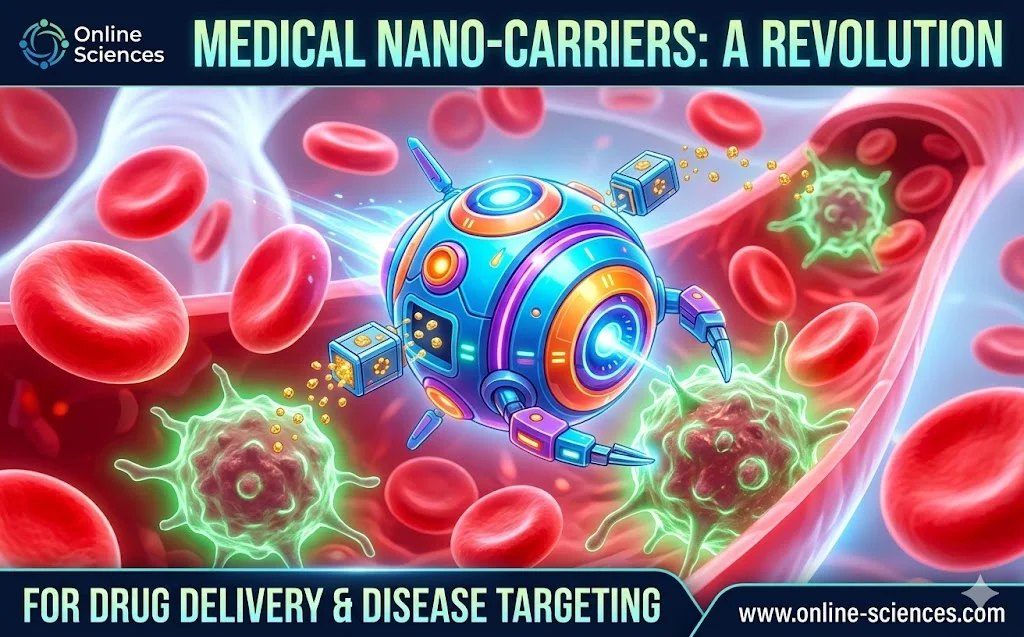
Medical Nano-Carriers
Medical Nano-Carriers
Medical nano-carriers are among the most significant innovations in modern healthcare. These microscopic delivery systems transport drugs directly to diseased tissues, improving treatment effectiveness while minimizing damage to healthy cells. Advances in nanotechnology have made nano-carriers an essential component of cancer therapy, gene therapy, vaccine development, and personalized medicine.
Unlike conventional drug delivery methods, nanocarriers can protect sensitive drugs from degradation, improve absorption, control drug release, and target specific cells with remarkable precision. Today, researchers continue developing smarter nanocarriers capable of responding to biological signals and environmental conditions inside the human body.
What are Medical Nano-Carriers?
Medical nano-carriers are nanoscale particles, generally ranging from 1 to 1000 nanometers, engineered to transport therapeutic agents such as:
Their primary purpose is to deliver medications safely and efficiently to targeted tissues while reducing systemic toxicity. Nano-carriers can circulate through the bloodstream, cross biological barriers, and release their therapeutic payload at the desired location.
Medical Nano-Carriers Improve Drug Delivery
Medical nano-carriers significantly enhance drug delivery by protecting medications from premature degradation, increasing their bioavailability, extending circulation time, and allowing controlled drug release. These advantages improve treatment outcomes for many diseases, especially cancer and chronic inflammatory disorders.
What is a Nano Carrier?
A nano carrier is a tiny engineered vehicle made from lipids, polymers, metals, silica, proteins, or other biocompatible materials that transports drugs or biological molecules to specific parts of the body.
Nano-carriers may be designed to:
- Target cancer cells.
- Cross the blood–brain barrier.
- Deliver genetic material.
- Respond to pH changes.
- Release drugs slowly over time.
- Improve poorly soluble drugs.
Why are Nano-Carriers important?
Traditional medicines are often distributed throughout the entire body, affecting both healthy and diseased tissues. Nano-carriers overcome this limitation by delivering drugs more selectively.
Major benefits include:
- Higher treatment efficiency.
- Lower drug dosage requirements.
- Reduced adverse effects.
- Improved patient compliance.
- Enhanced drug stability.
- Longer circulation time.
- Controlled drug release.
- Better penetration into tumors.
How Medical Nano-Carriers Work
The drug delivery process generally involves several steps:
- Drug Loading: The therapeutic compound is encapsulated, adsorbed, or chemically attached to the nano-carrier.
- Bloodstream Circulation: The nano-carrier protects the drug while traveling through the body.
- Target Recognition: Special ligands or antibodies guide the nano-carrier toward diseased cells.
- Cellular Uptake: Cells absorb the nano-carrier through endocytosis or membrane fusion.
- Drug Release: The medication is released in response to environmental triggers such as pH, Temperature, Enzymes, Light, and magnetic fields.
Common Nanocarriers for Drug Delivery
Several nanocarrier systems are widely used in medicine.
1. Liposomes:
Liposomes are spherical vesicles made of phospholipid bilayers that closely resemble cell membranes.
Advantages include:
- Excellent biocompatibility.
- Low toxicity.
- High drug-loading capacity.
- Suitable for hydrophilic and hydrophobic drugs.
Applications:
2. Polymeric Nanoparticles
These carriers are produced using biodegradable polymers such as PLGA and chitosan.
Benefits include:
- Controlled drug release.
- High stability.
- Adjustable size.
- Targeted delivery.
Applications:
- Cancer treatment.
- Gene therapy.
- Protein delivery.
3. Dendrimers
Dendrimers are highly branched synthetic molecules with numerous surface functional groups.
Advantages:
- Precise molecular structure.
- High drug-loading capacity.
- Excellent targeting ability.
Applications:
- Gene delivery.
- Imaging.
- Cancer therapy.
4. Solid Lipid Nanoparticles (SLNs)
Solid lipid nanoparticles combine the advantages of liposomes and polymeric nanoparticles.
Benefits:
- Improved drug stability.
- Controlled release.
- Low toxicity.
Applications:
- Oral drug delivery.
- Topical formulations.
- Anticancer drugs.
5. Micelles
Micelles are self-assembled nanostructures formed by amphiphilic molecules.
Advantages:
- Excellent for poorly soluble drugs.
- Small particle size.
- Long circulation time.
Applications:
- Chemotherapy.
- Anti-inflammatory medications.
6. Metallic Nanoparticles
Common materials include:
- Gold.
- Silver.
- Iron oxide.
Applications:
- Imaging.
- Photothermal therapy.
- Biosensors.
- Drug delivery.
7. Mesoporous Silica Nanoparticles
These particles contain tiny pores capable of storing large amounts of drugs.
Advantages:
- High loading capacity.
- Controlled release.
- Surface modification.
Applications:
- Cancer therapy.
- Targeted drug delivery.
What are the 4 Types of Nanostructures?
The four major categories of nanostructures include:
1. Zero-Dimensional (0D)
- Quantum dots.
- Nanoparticles.
2. One-Dimensional (1D)
- Nanowires.
- Nanotubes.
- Nanorods.
3. Two-Dimensional (2D)
- Graphene.
- Thin films.
- Nanosheets.
4. Three-Dimensional (3D)
- Nanocomposites.
- Nanoporous materials.
- Dendritic nanostructures.
Each category possesses unique physical and chemical properties that make it suitable for specific biomedical applications.
Types of Nanocarriers for Drug Delivery
Medical nanocarriers can also be classified according to their composition.
Lipid-Based Nanocarriers
- Liposomes.
- Solid lipid nanoparticles.
- Nanostructured lipid carriers.
Polymer-Based Nanocarriers
- Polymeric nanoparticles.
- Nanocapsules.
- Dendrimers.
Inorganic Nanocarriers
- Gold nanoparticles.
- Silica nanoparticles.
- Magnetic nanoparticles.
Biological Nanocarriers
- Exosomes.
- Protein nanoparticles.
- Virus-like particles.
Medical Nano-Carriers Examples
Numerous nanomedicines already use nano-carrier technology.
Examples include:
- Liposomal doxorubicin.
- Liposomal amphotericin B.
- Liposomal irinotecan.
- Lipid nanoparticle-based mRNA vaccines.
- Albumin-bound paclitaxel.
- Iron oxide nanoparticles for imaging.
These therapies demonstrate how nanotechnology improves drug safety and effectiveness.
What is an Example of a Nanomedicine?
One of the best-known examples is liposomal doxorubicin, where the chemotherapy drug doxorubicin is enclosed inside liposomes.
Benefits include:
- Reduced heart toxicity.
- Longer circulation time.
- Improved tumor targeting.
- Better treatment outcomes.
Another well-known example is the lipid nanoparticle technology used in mRNA vaccines, which protects fragile mRNA molecules until they reach human cells.
Common Medical Applications of Nano-Carriers
- Cancer Therapy: Nano-carriers concentrate chemotherapy drugs within tumors while reducing damage to healthy tissues.
- Gene Therapy: Nanocarriers transport DNA, siRNA, and mRNA into target cells safely.
- Vaccine Delivery: Nanotechnology improves immune responses while protecting vaccine components.
- Neurological Diseases: Some nanocarriers can cross the blood–brain barrier, opening new possibilities for treating Alzheimer’s disease, Parkinson’s disease, and brain tumors.
- Cardiovascular Medicine: Targeted delivery reduces inflammation and improves treatment of heart disease.
- Infectious Diseases: Nanocarriers enhance antimicrobial therapy and improve drug penetration into infected tissues.
Advantages of Medical Nano-Carriers
Major benefits include:
- Targeted drug delivery.
- Lower toxicity.
- Higher therapeutic efficiency.
- Better bioavailability.
- Controlled drug release.
- Improved stability.
- Reduced dosing frequency.
- Enhanced patient compliance,
- Protection of sensitive drugs.
- Personalized medicine potential.
Challenges of Medical Nano-Carriers
Despite their promise, several challenges remain:
- High manufacturing costs.
- Complex large-scale production.
- Regulatory approval.
- Long-term safety evaluation.
- Immune system interactions.
- Drug loading limitations.
- Storage stability.
Researchers continue working to overcome these challenges.
Nanocarrier vs Nanoparticle
Nanocarrier vs nanoparticle is a common comparison in nanomedicine because the two terms are related but not interchangeable. A nanoparticle is a broad term that refers to any particle with dimensions typically between 1 and 100 nanometers. Nanoparticles can be made from metals, polymers, lipids, silica, or other materials and are used in various fields, including medicine, electronics, environmental science, and energy. Not all nanoparticles are designed to transport drugs or biological molecules.
A nanocarrier, on the other hand, is a specialized type of nanoparticle engineered specifically for delivering therapeutic agents such as drugs, proteins, DNA, RNA, or vaccines to targeted cells or tissues. Nanocarriers are designed to improve drug stability, protect sensitive molecules from degradation, control the release of medications, and enhance treatment effectiveness while minimizing side effects. Common examples include liposomes, polymeric nanoparticles, dendrimers, micelles, and solid lipid nanoparticles.
The key difference between a nanocarrier and a nanoparticle lies in their purpose. While every nanocarrier is a nanoparticle or nanoscale structure, not every nanoparticle functions as a nanocarrier. Nanocarriers are optimized for medical applications, particularly targeted drug delivery and precision medicine, whereas nanoparticles have much broader applications across multiple scientific and industrial disciplines.
In modern healthcare, nanocarriers have become essential components of advanced drug delivery systems because they can target diseased tissues more accurately than conventional treatments. Their ability to improve bioavailability, reduce toxicity, and provide controlled drug release makes them invaluable in treating cancer, infectious diseases, neurological disorders, and other complex medical conditions.
A nanocarrier is a specialized type of nanoparticle optimized for transporting therapeutic agents. In contrast, a nanoparticle is a broader term describing any particle within the nanoscale size range, regardless of its function.
Future of Medical Nano-Carriers
The future of nanomedicine is moving toward intelligent drug delivery systems capable of:
- Responding to disease biomarkers.
- Delivering multiple drugs simultaneously.
- Personalized cancer therapy.
- Artificial intelligence-assisted targeting.
- Gene editing delivery.
- Regenerative medicine.
- Precision diagnostics.
Researchers are also developing biodegradable and environmentally friendly nanocarriers that improve patient safety while reducing manufacturing complexity.
Conclusion
Medical nano-carriers have transformed the field of drug delivery by enabling targeted therapies with greater precision, fewer side effects, and improved therapeutic outcomes. From liposomes and polymeric nanoparticles to lipid nanoparticles used in modern vaccines, nanotechnology continues to reshape healthcare. As research advances, smarter, safer, and more personalized nano-carriers will play an increasingly important role in treating cancer, genetic disorders, infectious diseases, and neurological conditions.
Frequently Asked Questions (FAQ) about Medical nano-carriers
1. What is a nano carrier?
A nano carrier is a nanoscale delivery system that transports drugs, genes, proteins, or vaccines directly to specific cells or tissues, improving treatment efficiency and reducing side effects.
2. What are the 4 types of nanostructures?
The four primary types are zero-dimensional (0D), one-dimensional (1D), two-dimensional (2D), and three-dimensional (3D) nanostructures.
3. What is an example of a nanomedicine?
Liposomal doxorubicin and lipid nanoparticle-based mRNA vaccines are among the most successful examples of nanomedicine.
4. What are the common nanocarriers?
Common nanocarriers include liposomes, polymeric nanoparticles, dendrimers, micelles, solid lipid nanoparticles, metallic nanoparticles, mesoporous silica nanoparticles, and exosomes.
5. How do nano-carriers improve drug delivery?
They protect drugs from degradation, increase bioavailability, enable controlled release, and target diseased tissues while minimizing damage to healthy cells.
6. Are nano-carriers safe?
Most approved nanocarriers use biocompatible materials and undergo rigorous safety testing, although long-term evaluation remains an active area of research.
7. Which diseases benefit from nano-carriers?
Cancer, neurological disorders, infectious diseases, cardiovascular diseases, autoimmune conditions, and genetic disorders can all benefit from nanocarrier-based therapies.
8. What is the difference between nanocarriers and nanoparticles?
Nanocarriers are engineered specifically to deliver therapeutic agents, while nanoparticles are general nanoscale materials that may serve various scientific, industrial, or medical purposes.
You can subscribe to Science Online on YouTube from this link: Science Online