
How a Thermal Power Plant Works 2026: Complete Guide to Electricity Generation
How a Thermal Power Plant Works is one of the most searched topics in energy engineering in 2026 because thermal power stations continue to supply a large percentage of the world’s electricity. A thermal power plant converts heat energy into electrical energy through a series of important stages that include fuel combustion, steam production, turbine rotation, and electricity generation. Modern thermal plants now use advanced technologies to improve efficiency, reduce emissions, and support growing industrial and residential energy demands.
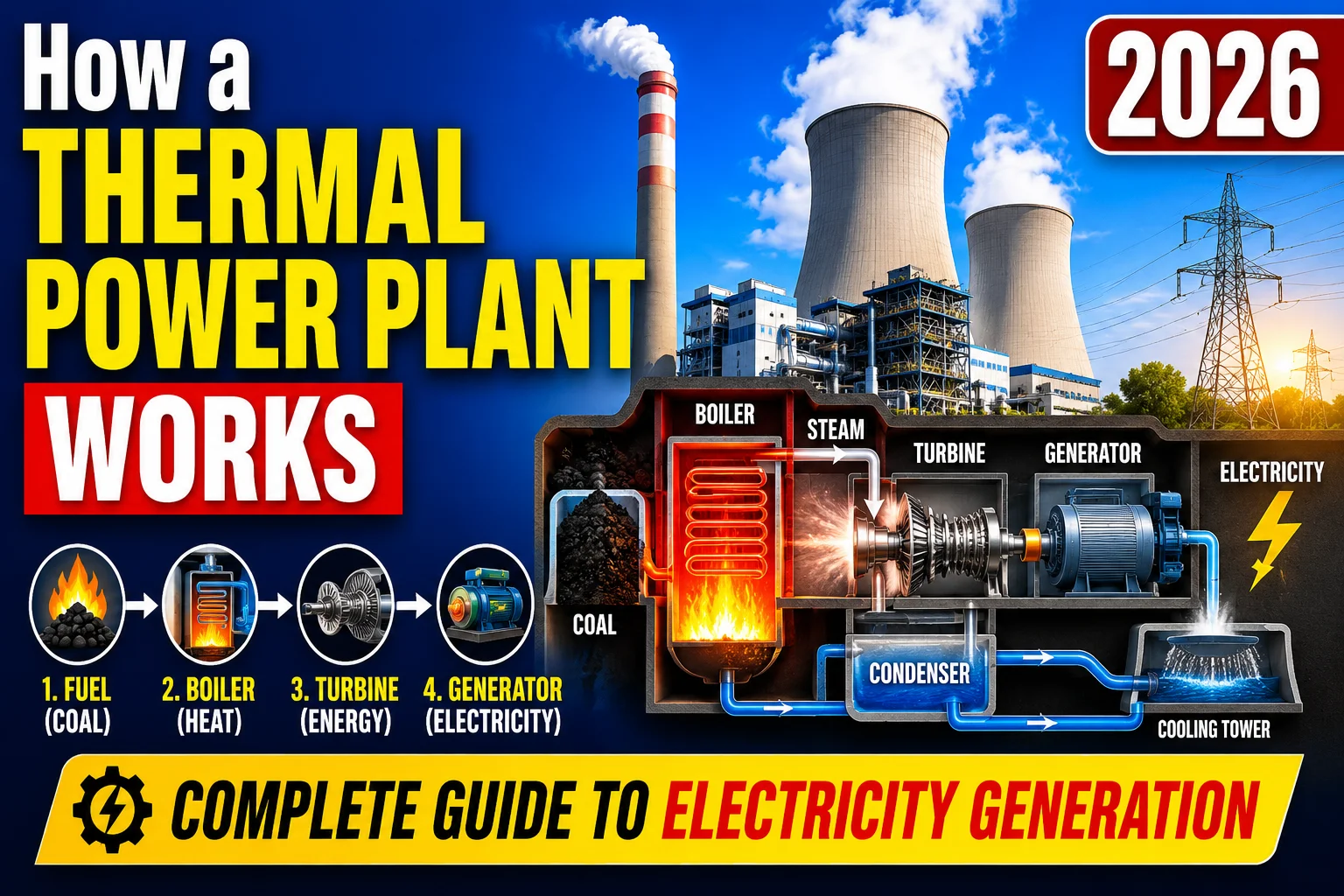
How a Thermal Power Plant Works
How a Thermal Power Plant Works
A thermal power plant generates electricity by converting heat energy into electrical energy. It is one of the most widely used methods of electricity production across the world because it can provide continuous and reliable power for homes, factories, hospitals, and transportation systems.
Thermal power plants mainly use fuels such as coal, natural gas, oil, or nuclear fuel to produce heat. This heat converts water into high-pressure steam, which rotates turbines connected to generators that produce electricity. Understanding the working principles of boilers, turbines, generators, condensers, and cooling systems helps students, engineers, and technology enthusiasts learn how electricity reaches homes, factories, and smart cities around the world.
Basic Working Principle of a Thermal Power Plant
The operation of a thermal power plant is based on converting thermal energy into mechanical energy and then into electrical energy.
The process follows these stages:
- Fuel combustion produces heat.
- Heat converts water into steam.
- Steam rotates a turbine.
- The turbine drives a generator.
- The generator produces electricity.
The efficiency of energy conversion can be represented by:
η = Q in / W out × 100%
This formula shows how much of the input heat energy becomes useful electrical energy.
Main Components of a Thermal Power Plant
Boiler
The boiler is one of the most important parts of a thermal power station. Fuel is burned inside the boiler furnace, producing large amounts of heat. Water flowing through pipes inside the boiler absorbs this heat and turns into steam.
Functions of the Boiler
The high-pressure steam produced in the boiler moves toward the steam turbine. As steam passes through the turbine blades, it causes the turbine shaft to rotate at high speed. The turbine converts thermal energy into mechanical energy.
Generator
The rotating turbine shaft is connected to a generator. The generator converts mechanical energy into electrical energy using electromagnetic induction. Electricity generated in the power plant is then transmitted through transformers and power lines to consumers.
Condenser
After leaving the turbine, the steam enters the condenser. The condenser cools the steam and converts it back into water. This recycled water is reused in the boiler, improving plant efficiency and reducing water waste.
Cooling Tower
Cooling towers remove excess heat from the system. They help maintain proper operating temperatures inside the plant. Large clouds seen above thermal power plants often come from cooling towers and are mostly water vapor, not smoke.
Transformer
Transformers increase the voltage of generated electricity before transmission. High-voltage electricity travels more efficiently over long distances with lower energy losses.
Step-by-Step Process of Electricity Generation
- Step 1: Fuel Combustion: Fuel such as coal, gas, or oil is burned inside the boiler furnace. This produces thermal energy.
- Step 2: Steam Production: The heat generated converts water into high-pressure steam.
- Step 3: Turbine Rotation: The steam flows through turbine blades, causing the turbine shaft to spin rapidly.
- Step 4: Electricity Generation: The rotating turbine powers the generator, producing electricity.
- Step 5: Steam Condensation: Steam leaving the turbine is cooled inside the condenser and converted back into water.
- Step 6: Water Recycling: The condensed water is pumped back to the boiler, and the cycle repeats continuously.
Rankine Cycle in Thermal Power Plants
The working cycle used in most thermal power plants is called the Rankine Cycle.
Q in − Q out = W net
This thermodynamic cycle explains how heat energy is converted into useful mechanical work.
The Rankine cycle includes:
Types of Thermal Power Plants
- Coal-Fired Power Plants: Coal is burned to produce heat for steam generation. These plants are common but produce higher emissions.
- Natural Gas Power Plants: Natural gas plants are cleaner and more efficient than coal plants. Combined-cycle gas plants are widely used today.
- Oil-Fired Thermal Plants: These plants use petroleum fuels and are mainly used for backup or emergency electricity generation.
- Nuclear Thermal Power Plants: Nuclear reactions generate heat instead of fossil fuel combustion. The heat still produces steam for turbines.
Advantages of Thermal Power Plants
- Continuous Power Generation: Thermal plants can operate day and night regardless of weather conditions.
- Large Electricity Production: They can generate electricity on a massive scale for cities and industries.
- Reliable Technology: Thermal power technology is mature and widely available worldwide.
Disadvantages of Thermal Power Plants
- Air Pollution: Burning fossil fuels releases carbon dioxide and harmful gases.
- High Water Usage: Large amounts of water are required for cooling and steam production.
- Fuel Dependency: Most thermal plants depend on non-renewable fossil fuels.
Environmental Impact
Thermal power plants can affect the environment through:
- Greenhouse gas emissions.
- Air pollution.
- Water pollution.
- Thermal pollution.
Modern plants use pollution control systems such as:
- Electrostatic precipitators.
- Carbon capture technologies.
- Flue gas cleaning systems.
These technologies reduce harmful emissions and improve environmental safety.
Modern Improvements in Thermal Power Plants
Modern thermal plants use advanced technologies, including:
- Supercritical boilers.
- Combined-cycle systems.
- Smart automation.
- Artificial intelligence monitoring.
- High-efficiency turbines.
These developments improve performance while reducing fuel consumption and emissions.
FAQ About How Thermal Power Plants Work
1. What is the main purpose of a thermal power plant?
The main purpose is to generate electricity from heat energy.
2. What fuel is used in thermal power plants?
Coal, natural gas, oil, and nuclear fuel are commonly used.
3. How does steam generate electricity?
Steam rotates turbines connected to generators that produce electricity.
4. What is the role of the condenser?
The condenser cools steam and converts it back into water for reuse.
5. Why are cooling towers important?
Cooling towers remove excess heat and maintain safe operating temperatures.
6. What is the Rankine Cycle?
It is the thermodynamic cycle used in thermal power plants to convert heat into work.
7. Are thermal power plants efficient?
Modern combined-cycle thermal plants can achieve very high efficiency levels.
8. Do thermal power plants cause pollution?
Traditional fossil-fuel plants produce emissions, but modern systems reduce environmental impact significantly.
Conclusion
Thermal power plants remain one of the most important methods of electricity generation worldwide. They work by converting heat energy into mechanical energy and then into electrical energy using boilers, turbines, and generators.
Although thermal plants face environmental challenges, modern engineering technologies are helping improve efficiency and reduce pollution. Thermal power generation will continue to play a major role in global energy production for many years.
You can follow Science Online on YouTube from this link: Science Online
Thermal Power Plants Review 2026: Advantages, Disadvantages, Working Principles, and Future Trends
Nuclear power plants advantages, disadvantages, features & uses
Nuclear submarines (Nuclear Powered Ships) advantages and disadvantages
Nuclear Transformation, Nuclear fission bomb and Nuclear fission reactor
Nuclear power (nuclear fission) advantages and disadvantages
Nuclear weapons structure, types and harmful effects