
7 Amazing Uses of Concentration of Sound and Importance of Echo (Sound Reflection) in Our Life
Concentration of sound and importance of echo (sound reflection) in our life play a significant role in science, technology, medicine, and everyday communication. Sound reflection allows us to hear echoes, measure distances, design better concert halls, and use advanced medical imaging such as ultrasound. By understanding how sound waves reflect and concentrate, we can improve many technologies that make our lives safer and more efficient.
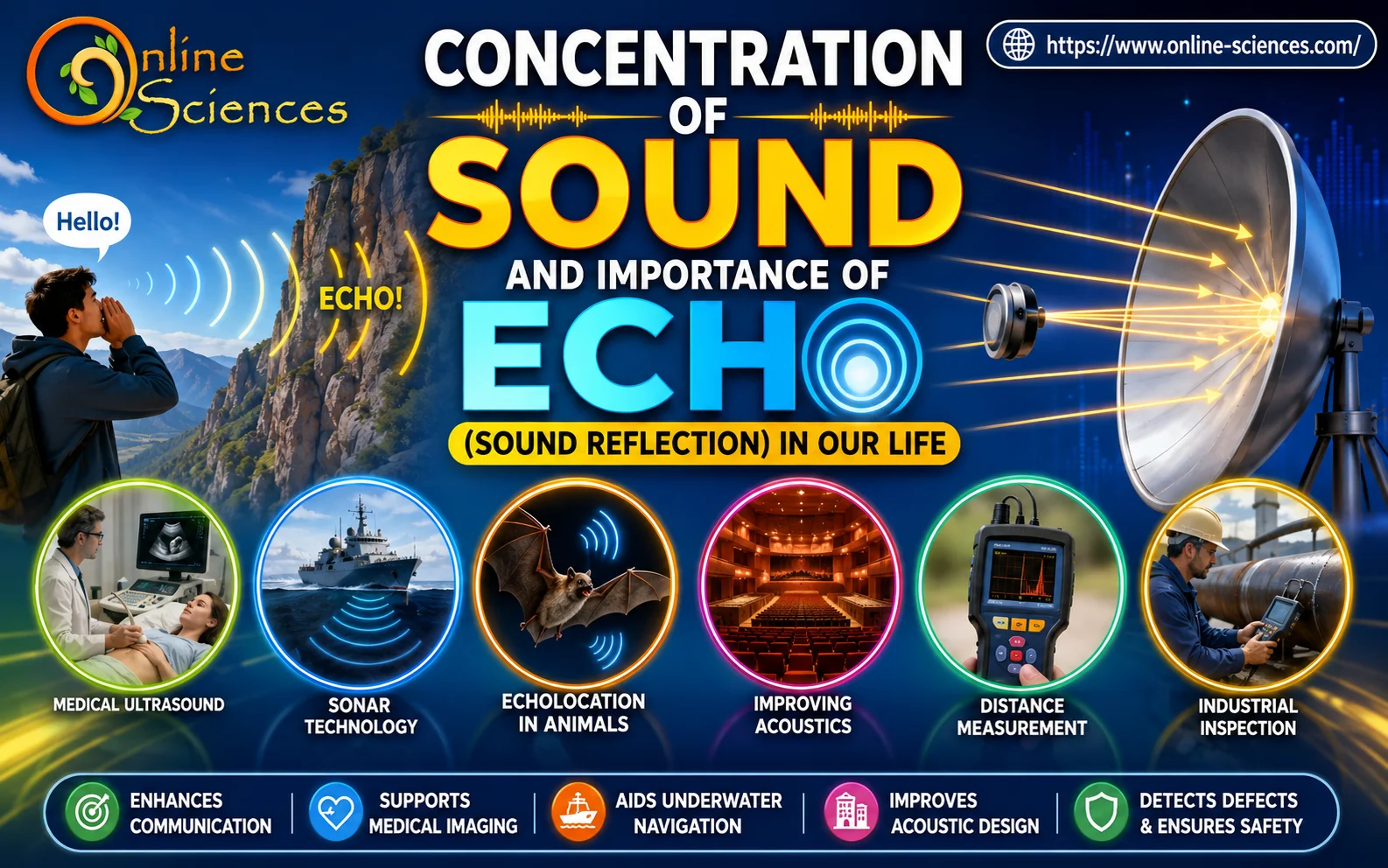
Concentration of Sound and Importance of Echo
Concentration of sound and importance of echo
We must know the importance of echo in our life. There are many applications of echo in different fields, whether scientific, technical, or medical, such as the determination of the speed of sound through the air and the concentration of sound.
The echo is used in the determination of sea depth and fish shoals, detecting industrial defects, locating the position of surfaces and barriers, and it is used in medical diagnosis.
Concentration of the sound
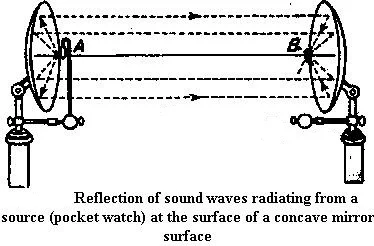
Sound reflection on a concave surface.
When the sound waves fall on a concave surface, the reflected sound waves will be collected at a point known as the focal centre ( focus ) of this surface. It is possible to determine the positions and the dimensions of concave surfaces, then direct the reflected sound waves in definite directions to make the sound clearer and to increase its intensity.
The concentration of sound is the collection of sound at a point due to its reflection on a concave surface. The concentration of sound is applied by sound engineers when building worship places and big conference halls. These places are supplied by concave walls and ceilings to concentrate the reflected sound and make the sound clearer and more intense.
The voice of the Imam can be heard clearly in all parts of large mosques without using the microphones because the surfaces of large mosques are concave, which concentrate the reflected sound waves and make the sound clearer and more intense.
The fennec fox has large and concave ear pinna that concentrate the reflected sound and make it clearer and more intense. The hearing of a Fennec fox is sensitive enough to hear prey moving underground.
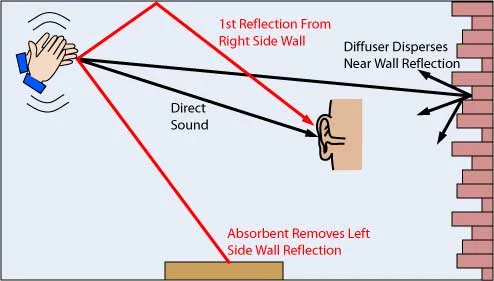
Sound reflection
What is Sound Reflection?
Sound reflection occurs when sound waves strike a hard surface and bounce back toward the source or another direction. This reflected sound is called an echo if it reaches the listener after a noticeable delay.
Reflection depends on:
- Surface material.
- Surface smoothness.
- Angle of incidence.
- Frequency of the sound.
Hard, smooth surfaces produce stronger echoes than soft materials, which absorb sound.
What is the Concentration of Sound?
The concentration of sound is the process of collecting or focusing sound waves at one point using curved or specially shaped reflecting surfaces.
Examples include:
- Parabolic reflectors.
- Megaphones.
- Satellite-like sound collectors.
- Acoustic mirrors.
Concentrating sound increases its intensity without increasing its energy.
How Does Concentration of Sound Work?
Curved reflecting surfaces redirect sound waves toward a single focal point. For example, Sound produced at the focus of a parabolic reflector travels as nearly parallel waves. Incoming parallel sound waves are reflected back to the focus. This principle is widely used in communication systems and scientific instruments.
Importance of Echo (Sound Reflection) in Our Life
1. Medical Ultrasound
Doctors use reflected sound waves to produce images of:
- Babies during pregnancy.
- Internal organs.
- Blood vessels.
- Muscles.
- Heart.
Ultrasound is painless, safe, and does not use harmful radiation.
2. SONAR Technology
Ships and submarines use SONAR (Sound Navigation and Ranging) to:
- Detect underwater objects.
- Measure ocean depth.
- Locate fish schools.
- Navigate safely underwater.
The device calculates distance by measuring the echo return time.
3. Echolocation in Animals
Several animals depend on echoes for navigation.
Examples include:
- Bats.
- Dolphins.
- Some whales.
- Oilbirds.
These animals emit sounds and analyze returning echoes to detect prey and obstacles.
4. Architectural Design
Engineers carefully control sound reflection in:
- Concert halls.
- Theaters.
- Auditoriums.
- Conference rooms.
Proper reflection ensures that everyone hears speech and music clearly.
5. Distance Measurement
Echoes help determine the distance of:
- Mountains.
- Buildings.
- Underwater objects.
- Cave walls.
This principle is also used in laser and ultrasonic measuring devices.
6. Hearing Aids and Acoustic Devices
Modern hearing systems use controlled sound reflection to improve:
- Speech clarity.
- Noise reduction.
- Listening comfort.
7. Industrial Inspection
Ultrasonic testing detects:
- Internal cracks.
- Metal defects.
- Pipeline damage.
- Aircraft component failures.
It allows engineers to inspect materials without destroying them.
Everyday Examples of Sound Reflection
- Hearing your voice in a canyon.
- Echoes inside tunnels.
- Sounds bouncing from the mountains.
- Public announcement systems.
- Whispering galleries.
- Large empty halls.
Advantages of Concentration of Sound
- Increases sound intensity.
- Improves communication.
- Enhances medical imaging.
- Supports underwater navigation.
- Helps detect structural defects.
- Improves classroom and theater acoustics.
- Enables scientific research.
Factors Affecting Echo Formation
An echo can be heard clearly when:
- The reflecting surface is large.
- The surface is hard and smooth.
- The reflected sound arrives at least 0.1 seconds after the original sound.
- The listener is approximately 17 meters or more from the reflecting surface (at normal air temperatures).
Difference Between Echo and Reverberation
Difference Between Echo and Reverberation: Echo and reverberation are both caused by the reflection of sound waves, but they differ in how the reflected sound is perceived. An echo is a distinct repetition of the original sound that is heard after a noticeable delay, usually when the reflected sound reaches the listener at least 0.1 seconds later. It commonly occurs in open spaces near large, hard surfaces such as mountains or cliffs.
In contrast, reverberation is the persistence of sound caused by multiple rapid reflections that arrive almost immediately after the original sound, making them blend together rather than being heard separately. Reverberation is common in enclosed spaces like halls, churches, and classrooms, and while a moderate amount enhances music and speech, excessive reverberation can reduce sound clarity.
Applications of Concentration of Sound
- Megaphones.
- Ear trumpets.
- Stethoscopes.
- Satellite communication dishes.
- Ultrasonic scanners.
- Acoustic telescopes.
- Military listening devices.
- Scientific laboratories.
Why Soft Materials Reduce Echoes?
Materials such as:
- Curtains.
- Carpets.
- Foam panels.
- Acoustic ceiling tiles.
absorb sound energy instead of reflecting it, reducing echoes and improving indoor sound quality.
Future Applications of Sound Reflection
Emerging technologies include:
- Smart ultrasonic robots.
- Autonomous underwater vehicles.
- AI-powered medical imaging.
- Advanced non-destructive testing.
- Smart buildings with adaptive acoustics.
- High-resolution 3D ultrasound systems.
Conclusion
The concentration of sound and importance of echo (sound reflection) in our lives extends far beyond hearing our own voice bounce back. From diagnosing diseases and navigating underwater to improving concert halls and inspecting aircraft, sound reflection is one of the most practical principles in physics. As technology continues to evolve, applications of sound concentration and echo will become even more valuable across medicine, engineering, robotics, and environmental science.
Frequently Asked Questions (FAQ) about the importance of the echo
1. What is sound reflection?
Sound reflection is the bouncing back of sound waves after they strike a surface.
2. What is an echo?
An echo is a reflected sound heard separately from the original sound after a short delay.
3. Why is echo important?
Echoes help measure distances, perform medical imaging, detect underwater objects, and improve building acoustics.
4. What is the concentration of sound?
It is the focusing of sound waves at a specific point using curved reflecting surfaces.
5. Which animals use echoes?
Bats, dolphins, whales, and some birds use echolocation to navigate and find food.
6. Where is sound concentration used?
It is used in megaphones, ultrasound machines, parabolic reflectors, hearing devices, and scientific instruments.
7. Why are carpets used in theaters?
Carpets absorb reflected sound, reducing echoes and improving sound clarity.
8. What is the difference between echo and reverberation?
An echo is heard as a separate sound, while reverberation is the persistence of sound caused by many rapid reflections.
9. How does SONAR use sound reflection?
SONAR sends sound waves underwater and measures the returning echoes to determine the location and distance of objects.
10. Can sound reflection be harmful?
Excessive reflection can create unwanted echoes and poor acoustics, but proper acoustic design minimizes these effects.
You can subscribe to Science Online on YouTube from this link: Science Online
The echo (the sound reflection) and conditions necessary for hearing the echo
Determination of sea depth and fish shoals by echo
The effect of echo in locating the position of surfaces and barriers
The importance of ultrasonic waves in medical diagnosis
The advantages and disadvantages of ultrasonic waves in detecting industrial defects