
Thermal Pollution Review 2026: Powerful Effects, Causes, Risks & Smart Solutions
Thermal pollution is becoming a major environmental threat in 2026 as factories and power plants continue releasing heated wastewater into natural water bodies. Understanding the causes, harmful effects, and modern prevention methods of thermal pollution can help protect aquatic life, improve water quality, and support sustainable environmental development worldwide.
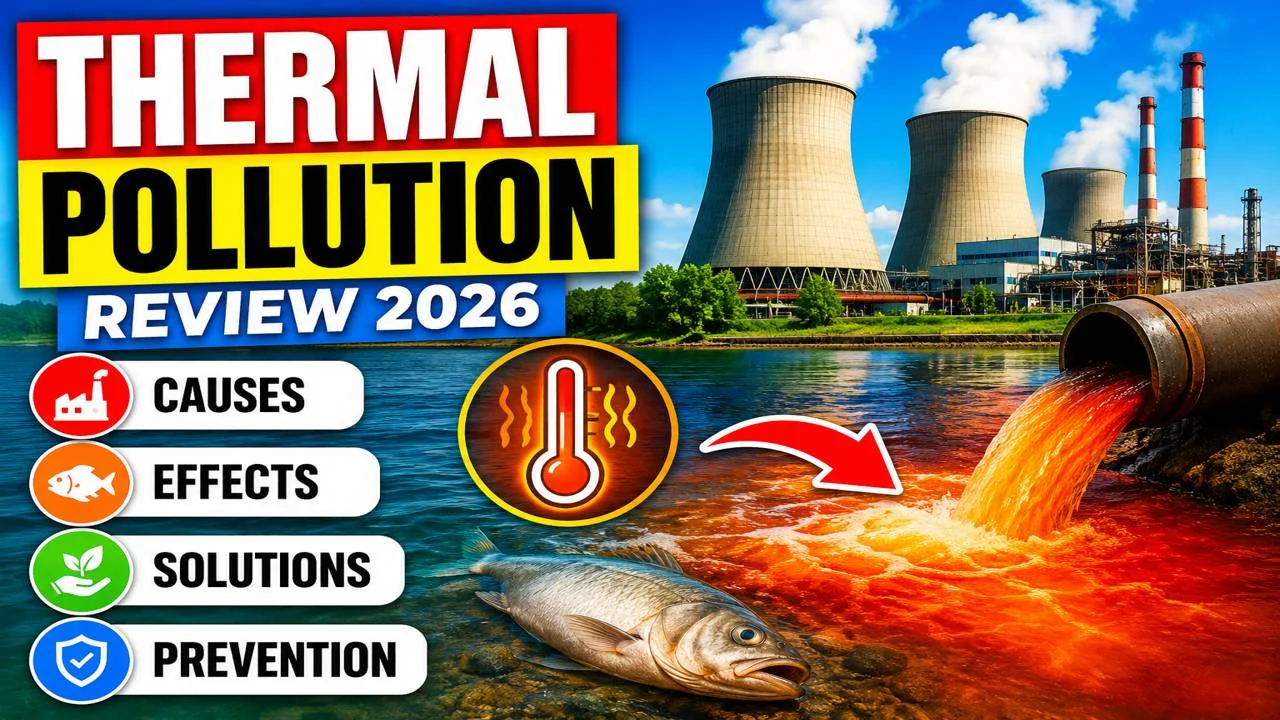
Thermal Pollution
Thermal Pollution Review
Thermal pollution is one of the most dangerous environmental problems affecting rivers, lakes, oceans, and aquatic ecosystems worldwide. It occurs when industries, factories, or power plants release excessively hot or cold water into natural water bodies, changing the normal water temperature and disrupting the marine life balance. In 2026, environmental experts continue to warn about the increasing effects of thermal pollution due to industrial expansion and rising global energy demand.
The problem is especially serious near thermal power stations, nuclear plants, steel factories, oil refineries, and large manufacturing industries. Even small temperature changes can reduce oxygen levels in water, stress aquatic organisms, and damage ecosystems that took decades to develop naturally.
What is Thermal Pollution?
Thermal pollution refers to the degradation of water quality caused by any process that changes the natural temperature of water bodies. Most commonly, industries use water as a coolant and then discharge the heated water back into rivers or lakes.
This sudden temperature increase affects fish, plants, microorganisms, and aquatic biodiversity. In some cases, thermal pollution may also occur because of deforestation, soil erosion, dam construction, or urban runoff.
Main Causes of Thermal Pollution
- Power Plants: Thermal and nuclear power plants are among the largest contributors to thermal pollution. They use enormous amounts of water for cooling systems and discharge warm water into nearby rivers or oceans.
- Industrial Factories: Manufacturing industries such as chemical plants, steel factories, and petroleum refineries release heated wastewater during industrial processes.
- Deforestation: Trees provide shade that helps maintain normal water temperatures. Removing vegetation increases sunlight exposure and raises water temperatures.
- Soil Erosion: Erosion causes sediments to enter water bodies, making the water shallower and easier to heat by sunlight.
- Urban Runoff: Hot rainwater from roads, parking lots, and rooftops can flow into lakes and rivers, increasing water temperature.
Harmful Effects of Thermal Pollution
- Reduced Oxygen Levels: Warm water contains less dissolved oxygen, making it difficult for fish and aquatic organisms to survive.
- Death of Aquatic Organisms: Sudden temperature changes can shock fish and other species, leading to mass deaths.
- Disruption of Ecosystems: Thermal pollution affects breeding cycles, migration patterns, and food chains in aquatic environments.
- Increased Algae Growth: Higher water temperatures encourage harmful algae blooms that consume oxygen and release toxins.
- Biodiversity Loss: Sensitive species may disappear completely from polluted habitats.
Importance of Controlling Thermal Pollution
Controlling thermal pollution is essential for protecting biodiversity, preserving aquatic ecosystems, and ensuring clean water resources for future generations. Healthy rivers and lakes support fisheries, agriculture, tourism, and human health. Without effective environmental protection policies, thermal pollution may contribute to long-term ecological imbalance and economic losses.
Governments and environmental organizations are increasingly investing in advanced cooling systems, wastewater treatment technologies, and sustainable industrial practices to reduce thermal pollution. Public awareness and stricter environmental regulations also play an important role in minimizing water temperature changes caused by industrial activities.
Modern Solutions to Thermal Pollution
- Cooling Towers: Factories and power plants use cooling towers to lower water temperature before discharge.
- Cooling Ponds: Artificial ponds help dissipate heat naturally before water returns to rivers or lakes.
- Recycling Water: Industries can reuse cooling water instead of continuously releasing heated water.
- Afforestation: Planting trees around water bodies helps maintain cooler temperatures naturally.
- Environmental Regulations: Strict laws can limit industrial discharge temperatures and protect ecosystems.
Thermal Pollution and Climate Change
Climate change is making thermal pollution even more dangerous. Rising global temperatures have already warmed many rivers and oceans, so additional industrial heat creates extra stress on aquatic ecosystems. Scientists warn that combining climate change with thermal pollution may accelerate species extinction and ecosystem collapse in vulnerable regions.
FAQ about thermal pollution
1. What is thermal pollution in simple words?
Thermal pollution is the increase or decrease in natural water temperature caused by human activities such as factories or power plants.
2. What are the main causes of thermal pollution?
The main causes include industrial wastewater, thermal power plants, deforestation, soil erosion, and urban runoff.
3. Why is thermal pollution harmful?
It reduces oxygen levels in water, harms aquatic organisms, disrupts ecosystems, and increases algae growth.
4. Which industries cause thermal pollution?
Power plants, nuclear facilities, steel factories, chemical industries, and oil refineries are major contributors.
5. How can thermal pollution be prevented?
Using cooling towers, recycling water, planting trees, and enforcing environmental laws can reduce thermal pollution.
6. Does thermal pollution affect humans?
Yes. It can damage fisheries, reduce water quality, affect drinking water resources, and harm the environment that humans depend on.
7. What is the relationship between thermal pollution and climate change?
Climate change increases natural water temperatures, making thermal pollution more dangerous for aquatic ecosystems.
Conclusion
Thermal pollution is a growing environmental challenge that affects water quality, aquatic life, and ecosystem stability worldwide. As industrial activities continue expanding in 2026, controlling thermal pollution has become more important than ever. Through modern cooling technologies, environmental regulations, and sustainable practices, societies can reduce the harmful impacts of thermal pollution and protect natural water resources for future generations.
You can follow Science Online on YouTube from this link: Science Online
Thermal Power Plants Review 2026: Advantages, Disadvantages, Working Principles, and Future Trends
Nuclear power plants advantages, disadvantages, features & uses
Nuclear submarines (Nuclear Powered Ships) advantages and disadvantages
Nuclear Transformation, Nuclear fission bomb and Nuclear fission reactor
Nuclear power (nuclear fission) advantages and disadvantages
Nuclear weapons structure, types and harmful effects