Ultimate Guide to Robots at Home: Types, Benefits, and the Future of Smart Living (2026)
Robots at home are becoming an essential part of modern living, helping families save time, improve convenience, and automate everyday tasks. Powered by artificial intelligence, smart sensors, and advanced navigation systems, these robots can clean floors, monitor home security, assist with elderly care, and even provide companionship.
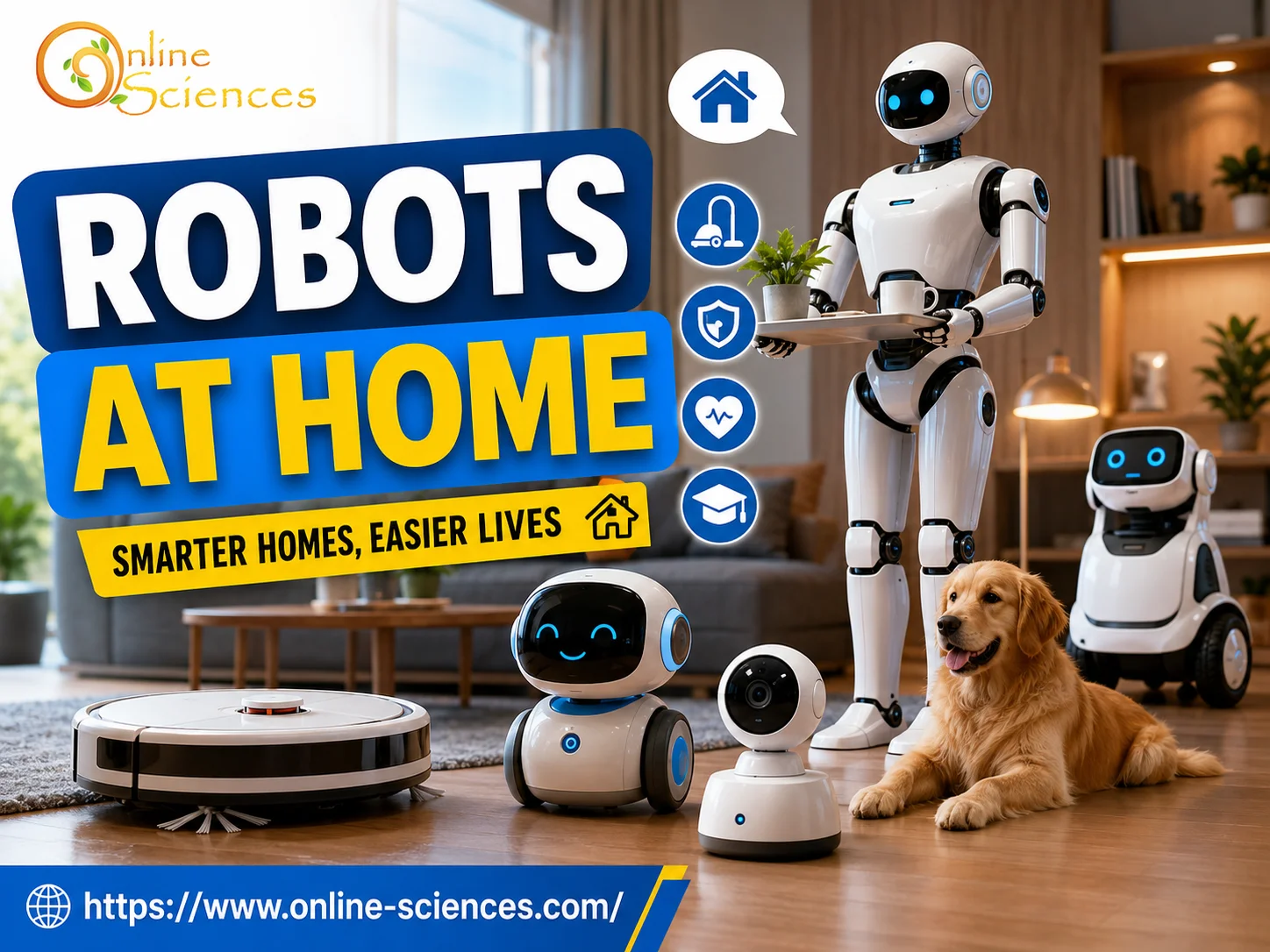
Robots at home
Home robots
As smart home technology continues to evolve, home robots are becoming more intelligent, capable of learning user preferences and working seamlessly with connected devices such as smart lights, thermostats, and voice assistants.
The future of home robotics extends beyond simple household chores. Advanced humanoid home robots are being developed to interact naturally with people, recognize faces and voices, carry objects, assist children with learning, and support elderly family members with daily activities.
As AI becomes more powerful and robotics technology becomes more affordable, robots at home are expected to play a larger role in creating safer, smarter, and more efficient living environments for households around the world.
Robots at Home: Smart Assistants Transforming Everyday Life
Robots at home are no longer science fiction. Thanks to rapid advances in artificial intelligence (AI), robotics, computer vision, and machine learning, home robots are becoming practical assistants for cleaning, security, companionship, education, and even healthcare. In 2026, modern home robots are smarter, more interactive, and capable of performing a growing number of household tasks, making daily life easier and more efficient.
What are Home Robots?
Home robots are intelligent machines designed to assist people with everyday household activities. Unlike traditional appliances, these robots can sense their environment, process information, make decisions, and perform tasks with minimal human intervention.
Modern home robots combine technologies such as:
- Artificial intelligence.
- Machine learning.
- Computer vision.
- Voice recognition.
- Autonomous navigation.
- Internet of Things (IoT) connectivity.
- Smart sensors.
Many home robots can communicate with smart home devices and virtual assistants to automate multiple household functions.
Types of Robots at Home
Home robots come in many forms depending on their purpose.
1. Robot Vacuum Cleaners
Robot vacuum cleaners automatically clean floors using intelligent navigation systems.
Features include:
- Automatic room mapping.
- Obstacle avoidance.
- Scheduled cleaning.
- Carpet detection.
- Self-emptying dust bins.
- App control.
These remain the most widely adopted home robots worldwide.
2. Robot Mops
Robot mops clean hard floors by spraying water and wiping surfaces.
Advantages include:
- Removes dust and stains.
- Automatic water management.
- Smart room mapping.
- Suitable for tile, wood, and laminate flooring.
3. Lawn Mowing Robots
Outdoor robotic lawn mowers maintain gardens without human effort.
Benefits include:
- Automatic grass cutting.
- Rain detection.
- GPS navigation.
- Quiet operation.
- Energy-efficient performance.
4. Window Cleaning Robots
Window-cleaning robots attach securely to glass surfaces and automatically clean windows.
Features:
- Strong suction.
- Edge detection.
- Automatic path planning.
- Safety backup systems.
5. Pool Cleaning Robots
Pool robots scrub walls, remove debris, and filter water efficiently.
Advantages:
- Saves time.
- Reduces manual labor.
- Improves water quality.
- Energy-efficient operation.
6. Security Robots
Home security robots patrol homes using cameras and sensors.
Capabilities include:
- Motion detection.
- Facial recognition.
- Two-way communication.
- Night vision.
- Real-time mobile alerts.
- Intruder detection.
7. Educational Robots
Educational robots help children learn:
- Programming.
- Mathematics.
- Science.
- Languages.
- Logical thinking.
- Robotics concepts.
These robots make learning interactive and enjoyable.
8. Companion Robots
Companion robots provide emotional support and entertainment.
They may:
- Hold conversations.
- Play games.
- Tell stories.
- Remind users about medication.
- Reduce loneliness.
- Assist elderly individuals.
9. Kitchen Robots
Kitchen robots can assist with:
- Food preparation.
- Ingredient mixing.
- Recipe guidance.
- Cooking automation.
- Kitchen organization.
Future kitchen robots are expected to become even more autonomous.
10. Healthcare Robots
Healthcare robots assist people with:
- Medication reminders.
- Health monitoring.
- Fall detection.
- Emergency alerts.
- Telemedicine support.
- Daily wellness tracking.
They are especially valuable for elderly care.
Humanoid Home Robots
Humanoid home robots are designed to resemble humans in appearance and movement. They combine advanced AI with natural interaction, making them capable of assisting with a wide variety of household tasks.
Unlike single-purpose robots, humanoid robots aim to become universal home assistants capable of understanding speech, recognizing faces, manipulating objects, and adapting to changing environments.
Features of Humanoid Home Robots
Modern humanoid robots typically include:
- Human-like movement.
- Voice conversation.
- Facial recognition.
- Object recognition.
- AI-powered decision-making.
- Autonomous navigation.
- Gesture recognition.
- Emotional interaction.
- Smart home integration.
- Continuous learning.
What Can Humanoid Robots Do at Home?
Future humanoid home robots may:
- Welcome visitors.
- Carry groceries.
- Clean rooms.
- Organize household items.
- Prepare simple meals.
- Monitor home security.
- Help children with homework.
- Assist elderly family members.
- Control smart home devices.
- Provide companionship.
- Make video calls.
- Deliver reminders and schedules.
As AI models continue to improve, humanoid robots are expected to become increasingly capable of handling complex household responsibilities.
Advantages of Robots at Home
Home robots offer many benefits, including:
- Save time.
- Reduce physical effort.
- Improve home cleanliness.
- Increase convenience.
- Enhance home security.
- Support elderly care.
- Help individuals with disabilities.
- Improve productivity.
- Operate 24/7.
- Reduce household stress.
- Integrate with smart home ecosystems.
- Learn user preferences over time.
Limitations of Home Robots
Despite their rapid development, home robots still face several challenges.
Common limitations include:
- High purchase cost.
- Limited battery life.
- Maintenance requirements.
- Privacy concerns.
- Difficulty handling unexpected situations.
- Dependence on internet connectivity.
- Limited understanding of complex human emotions.
- Compatibility issues with some smart home devices.
As robotics technology advances, many of these limitations are expected to become less significant.
The Future of Robots at Home
The future of home robotics is promising. Experts expect future robots to become:
- More affordable.
- More intelligent.
- Better at understanding human emotions.
- Faster learners.
- More energy efficient.
- Safer around children and pets.
- Better at multitasking.
- More capable of performing household chores autonomously.
AI-powered humanoid robots could eventually become common household assistants, similar to today’s smartphones and smart speakers.
Frequently Asked Questions (FAQ) about Robots at home
1. What are robots at home?
Home robots are intelligent machines designed to assist with household tasks such as cleaning, security, companionship, education, healthcare, and home automation.
2. What are the most common types of home robots?
The most common types include robot vacuum cleaners, robot mops, lawn mowing robots, security robots, educational robots, companion robots, healthcare robots, kitchen robots, pool cleaning robots, and humanoid home robots.
3. What is a humanoid home robot?
A humanoid home robot is a robot designed with a human-like appearance and movement that can interact naturally with people while performing various household tasks.
4. Are home robots powered by artificial intelligence?
Yes. Most modern home robots use AI for navigation, speech recognition, object detection, decision-making, and learning from user behavior.
5. Can home robots replace humans?
No. Home robots are designed to assist people rather than replace them. They automate repetitive tasks while humans continue to make complex decisions and provide creativity and emotional understanding.
6. Are home robots safe?
Most commercially available home robots include obstacle detection, collision avoidance, child safety features, and emergency stop mechanisms, making them safe for everyday household use.
7. Can home robots work with smart homes?
Yes. Many home robots integrate with smart home systems, allowing users to control lighting, security cameras, thermostats, and other connected devices.
8. Are humanoid robots the future of home automation?
Many researchers believe humanoid robots will become a major part of future smart homes as AI and robotics continue to evolve, enabling them to perform a broader range of household tasks.
Conclusion
Robots at home are rapidly changing the way people live, offering greater convenience, efficiency, and support for daily activities. From robot vacuum cleaners and security systems to advanced humanoid home robots, these intelligent machines continue to evolve with artificial intelligence, making homes smarter, safer, and more connected.
As technology advances, home robots are expected to become an essential part of everyday life, helping families save time, improve productivity, and enjoy a more comfortable living environment.
You can subscribe to Science Online on YouTube from this link: Science Online
Domestic robot or service robot types, advantages and disadvantages
Dynamics Atlas review, advantages & features, How does Atlas robot work?
Boston Dynamics Handle robot review, features and importance
Emo robot review, advantages, disadvantages, features & What can Emo do?
Eilik Desktop Companion Robot structure, features, use, advantages & disadvantages
Tesla robots (Optimus) review, use, advantages & disadvantages