Dobot Atom humanoid robot achieves cross-scenario multi-task industrial applications
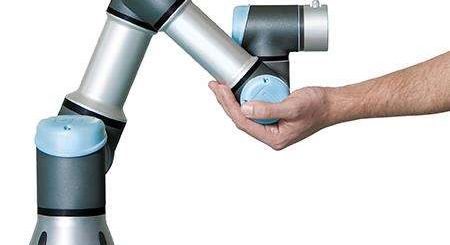
Dobot Atom is an educational robotic arm developed by Dobot, a Chinese robotics company known for creating user-friendly and versatile robotic solutions for learning, research, and the light industry. It is great for learning robotics and automation concepts. It is compatible with various software and platforms.
Dobot Atom
Dobot Atom is a small, programmable robotic arm designed mainly for STEM and robotics education. It helps students and beginners learn programming, automation, and robotics principles through hands-on experience. It is safe and user-friendly for students. It encourages creativity and problem-solving.
Dobot Atom is a compact educational robotic arm that helps students and beginners explore robotics, coding, and automation interactively and practically. It has a compact and lightweight design. It is easy to use in classrooms or at home. It supports block-based coding, Python, and Arduino. It can perform accurate movements and tasks. It allows simple image recognition or tracking tasks. Users can add grippers, suction cups, or sensors.
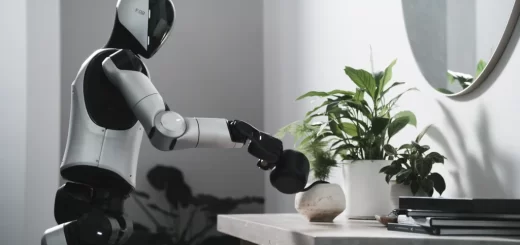
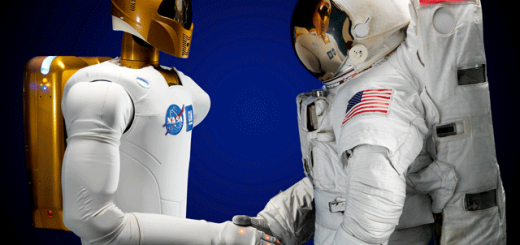
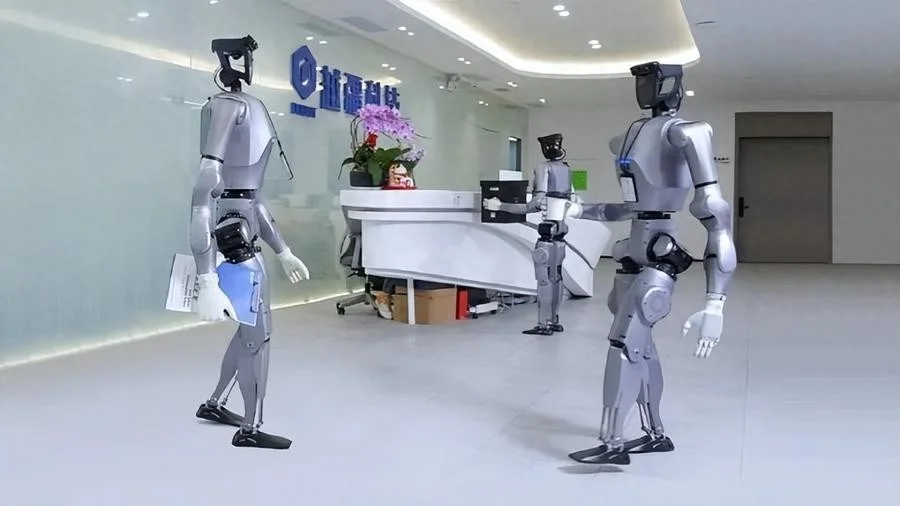
The combination of human-like dexterity and humanoid bipedal mobility is relatively rare in robotics — many robots specialise in one domain (arms) but lack full humanoid mobility. The ±0.05 mm precision is exceptional for humanoid robots, putting it into the realm of very fine industrial work.
Dobot Atom
Energy-efficient walking and dynamic scenario adaptability suggest it’s targeted not just for fixed automation cells, but more flexible, “service + industrial” environments. The manufacturer emphasises “embodied AI” — i.e., the robot doesn’t just execute pre-programmed paths, but can perceive, decide, and adapt.
Dobot Atom features
High-precision dexterous manipulation: Dobot Atom is a full-size humanoid robot designed for advanced manipulation, mobility, and AI-driven tasks. It supports ~28 degrees of freedom (DOF) in its upper body (arms/hands) for human-like motion. Repeatability of ± 0.05 mm, enabling very fine tasks (e.g., micro assembly or delicate handling). Dobot Atom uses a “Neuro-Driven Dexterity System (NDS)” in some models: transformer-based architecture + binocular RGB vision + high frequency servo control (~200 Hz) for smooth fine motor control.
Straight-knee walking / humanoid mobility: Dobot Atom incorporates an anthropomorphic walking system (AWS) that uses a straight-knee gait (vs typical bent-knee humanoid robots) to improve energy efficiency and stability. Energy consumption is claimed to be ~42% less compared to traditional bent-knee walking designs. Dobot Atom is designed for navigating workstations of varying heights (~700-1000 mm) and compact spaces.
Advanced AI and edge-computing capabilities: Dobot Atom is equipped with a proprietary model named “Robot Operator Model-1 (ROM-1)” for task decomposition, decision making, and adaptation in unstructured scenarios. Edge computing system with performance ~7.7× industry standard according to manufacturer specs. Dobot Atom can adapt to various environments and tasks — not strictly in fixed automation lines but also dynamic, service, or mixed human-robot settings.
Cross-scenario & multi-robot collaboration: Dobot Atom is built to integrate into diverse application scenarios: industrial assembly, service tasks (e.g., café or pharmacy), logistics, and research. Dobot Atom supports safe human-robot interaction and multi-robot coordination — enabling it to work alongside humans or other robots in synchronized workflows.
Physical & technical specifications (selected highlights): Height approx. 1.53 m, weight around 62 kg for the standard model. Walking speed, arm span, and loads vary by variant (e.g., “Trainer”, “Max”). For example, the maximum arm end-speed ~1.5 m/s; arm load ~3.5 kg in some models. Programming and control interfaces for AI training, teleoperation, vision sensors, etc, in some variants.
Dobot Atom advantages
- Exceptional precision: Dobot Atom humanoid robot is a high-end, full-size AI-powered robot platform. It claims repeatability of ± 0.05 mm, which is very high for a humanoid robot.
- High dexterity / many degrees of freedom: The “upper body” has ~28 DOF (in some models up to 41 DOF), enabling human-like manipulation of objects.
- Energy-efficient mobility: It uses a “straight‐knee” walking mechanism (as opposed to a heavily bent-knee gait), which reduces energy consumption by ~42% compared to conventional humanoid walking designs.
- AI and edge computing capability: It has an advanced onboard computing system (claimed ~7.7× industry‐standard) and a built-in “Robot Operator Model-1 (ROM-1)” enabling more autonomy in unstructured environments.
- Versatility across scenarios: It’s positioned for both industrial automation (assembly, precision tasks) and service/interactive settings (hospitality, logistics), and designed for human-robot collaboration.
Disadvantages of Dobot Atom
- Cost: Being a full-size humanoid robot with advanced features, it is likely very expensive and probably out of reach for smaller labs or standard industrial budgets.
- Complexity & maintenance: With many degrees of freedom, high-precision actuators, AI systems, and bipedal walking, the system will likely require sophisticated maintenance, calibration, and expertise to deploy reliably.
- Payload/strength limitations: While it excels at dexterity and mobility, it may not match heavy-duty industrial robots in terms of raw payload or speed for heavy lifting or large-scale manufacturing. (Typical humanoids trade off payload vs mobility.)
- Environmental constraints: Bipedal robots still face challenges in robustness, especially in truly unstructured or rugged environments (e.g., uneven terrain, outdoor use) compared to wheeled or tracked robots.
- Integration & deployment: Because of its advanced nature, integrating it into existing workflows may require significant effort (software, safety, human-robot interface, tool-end-effectors) — which could slow ROI.
- Dobot Atom has a limited strength and range compared to industrial robots. It is not suitable for heavy or complex industrial tasks. It depends on software updates and calibration for accurate performance. Despite its capabilities, this is still a premium, advanced robot — cost, integration complexity, and environment constraints are likely non-trivial.
- While straight-knee walking is more energy-efficient, bipedal robots still tend to be less robust and more maintenance-intensive than wheeled robots in many industrial settings.
- The environment (workspace, lighting, obstacles) may need adaptation — while it claims adaptability, real-world performance always depends on many factors.
- Payload and reach are less than large industrial robots; this is more suited for tasks needing fine manipulation rather than heavy lifting.
You can follow Science Online on YouTube from this link: Science online
3D Printed T-800 Terminator Bust with LED Eyes, What can a 3D-printed Terminator do?
Boston Dynamics Atlas review, advantages and features, How does Atlas robot work?
Tesla robots (Optimus) review, use, advantages and disadvantages
Emo robot review, advantages, disadvantages, features and what can Emo do?
Advantages and disadvantages of using robots in our life
Artificial intelligence (AI) definition, advantages, disadvantages, features and applications
Robot teachers use, advantages and disadvantages
Sophia robot review, features, use, advantages and disadvantages
Vector robot review, advantages, disadvantages and specifications