Physical AI 2027: Discover the Future of Humanoid Robots and Smart Machines!
Physical AI is transforming the future of technology by bringing artificial intelligence out of computers and into the physical world. Unlike traditional AI systems that primarily generate text, images, and digital content, Physical AI enables robots, autonomous vehicles, drones, and intelligent machines to understand their surroundings, make decisions, and perform real-world tasks. From humanoid robots working in factories to autonomous machines assisting people at home, Physical AI could become one of the most important technological breakthroughs of 2027.
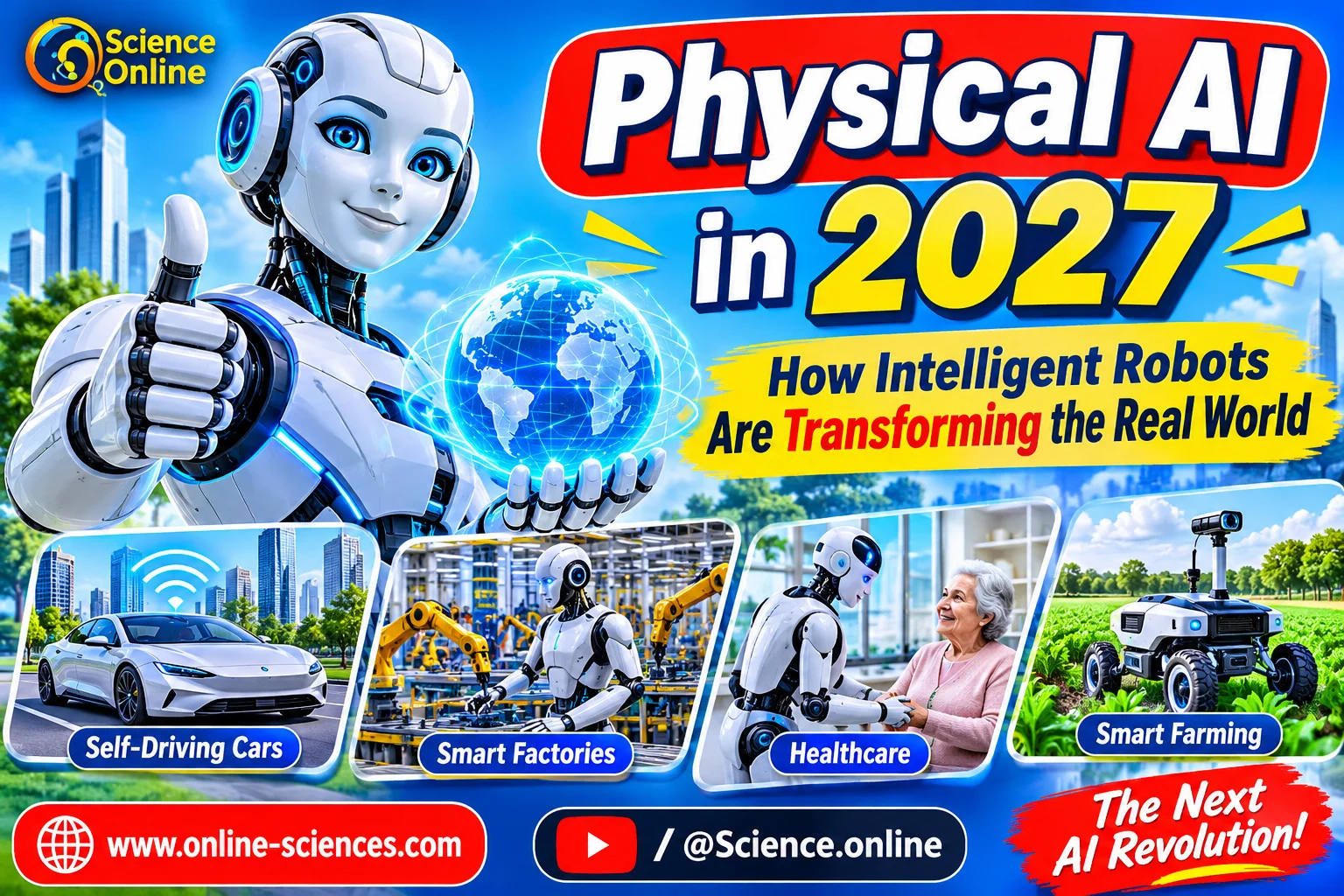
Physical AI in 2027
What is Physical AI?
Physical AI is a type of artificial intelligence that allows machines to interact intelligently with the physical environment. It combines AI models, robotics, computer vision, sensors, machine learning, and advanced control systems to help machines perceive, understand, and respond to the world around them.
Traditional AI usually operates in digital environments. For example, AI chatbots answer questions, image generators create pictures, and language models produce written content. Physical AI goes further by connecting intelligent software with physical machines that can move, touch, manipulate objects, and perform actions.
A Physical AI system can recognize objects, understand spatial relationships, estimate distances, avoid obstacles, and decide how to complete a task. It can also use information from cameras, microphones, force sensors, and other devices to improve its decisions. The main goal is to develop intelligent machines that can operate safely and effectively in unpredictable real-world environments.
How Does Physical AI Work?
Physical AI combines several advanced technologies to create intelligent machines capable of interacting with their surroundings.
- Computer Vision: Cameras and visual recognition systems allow robots to identify objects, recognize people, understand scenes, and navigate different environments.
- Sensors and Perception: Robots use cameras, LiDAR, radar, microphones, depth sensors, and touch sensors to collect information about their surroundings.
- AI Models: Machine learning and multimodal AI models help machines interpret information, understand instructions, recognize situations, and select appropriate actions.
- Robotics and Motion Planning: Algorithms calculate how a robot should move its arms, hands, wheels, or legs to complete tasks while avoiding obstacles.
- Real-Time Decision-Making: Physical AI systems continuously process new information and adjust their actions when the environment changes.
- Learning and Adaptation: Some systems can improve their performance through demonstrations, simulations, training data, and feedback from real-world experiences.
These technologies work together to create machines that do more than follow fixed instructions. They enable robots to respond intelligently to changing conditions.
Physical AI vs Traditional Artificial Intelligence
Physical AI and traditional AI share many technologies, but they have different purposes and capabilities. Physical AI and traditional artificial intelligence share the same fundamental goal of using intelligent algorithms to process information and make decisions, but they differ in how they interact with the world.
Traditional AI mainly operates in digital environments, where it analyzes data, answers questions, generates text and images, recognizes patterns, and assists users through software applications such as chatbots and AI image generators. In contrast, Physical AI extends artificial intelligence into the real world by connecting intelligent AI models with robots, sensors, cameras, and mechanical systems.
This enables machines to recognize objects, understand their surroundings, move independently, manipulate physical objects, and perform practical tasks. For example, a traditional AI chatbot can explain how to assemble a product, while a Physical AI-powered robot could potentially pick up the required tools and perform the assembly itself.
In simple terms, traditional AI focuses on understanding and generating digital information, whereas Physical AI focuses on using intelligence to interact with and act upon the physical environment. Physical AI does not replace traditional AI. Instead, it extends artificial intelligence into the physical world, allowing intelligent systems to perform tasks beyond digital communication.
Top Applications of Physical AI in 2027
How intelligent machines are changing different industries.
1. Smart Manufacturing and Factories
Physical AI enables industrial robots to assemble products, inspect components, transport materials, and perform repetitive tasks. Intelligent machines can adjust their movements when objects change position, helping manufacturers improve productivity and quality.
2. Autonomous Vehicles and Robotaxis
Self-driving cars use cameras, radar, LiDAR, and AI models to recognize traffic signs, detect pedestrians, understand road conditions, and plan routes. Physical AI helps vehicles respond to changing situations and make driving decisions.
3. Healthcare and Medical Robotics
Intelligent robotic systems can support healthcare professionals with precise movements, medical equipment handling, rehabilitation, and patient assistance. In the future, home robots could help older adults with everyday activities, although medical decisions and safety-critical procedures require appropriate human supervision.
4. Warehouses and Logistics
AI-powered robots can identify packages, pick and move objects, navigate warehouse aisles, and coordinate with other machines. This technology can make supply chains more efficient and reduce physically demanding work.
5. Agriculture and Smart Farming
Physical AI can power autonomous tractors, agricultural robots, and intelligent drones. These machines can monitor crops, detect weeds, identify plant diseases, and support precision farming.
6. Smart Homes and Personal Robots
Future household robots could clean rooms, organize objects, carry groceries, and assist people with daily tasks. Physical AI could make these machines more adaptable than traditional automated home appliances.
Physical AI and Humanoid Robots
Humanoid robots are among the most exciting examples of Physical AI because they combine intelligent software with a human-like physical body. Companies developing humanoid robots are working toward machines that can walk, balance, recognize objects, manipulate tools, and perform useful tasks in environments originally designed for people.
Examples include:
- Tesla Optimus – Designed to perform repetitive and physically demanding tasks.
- Figure AI robots – Developed for general-purpose tasks in industrial and everyday environments.
- Boston Dynamics Atlas – Demonstrates advanced robotic mobility and dynamic movement.
- Agility Robotics Digit – Designed for material handling and logistics applications.
The combination of humanoid robotics, advanced sensors, and AI foundation models could help robots learn tasks from demonstrations and natural-language instructions. However, reliable performance across different environments remains a major engineering challenge.
Why is Physical AI Becoming Important in 2027?
Physical AI is attracting attention because AI technology is moving beyond generating digital content toward performing useful physical tasks.
Several developments are supporting this transformation:
- Multimodal AI: Models can process visual information, language, audio, and sensor data together.
- Robot Foundation Models: Specialized AI models are being developed to support robotic perception, reasoning, and actions.
- Simulation Technology: Virtual environments allow developers to train and test robots before deploying them in real-world locations.
- Digital Twins: Virtual representations of factories, warehouses, and machines help engineers evaluate operations and optimize workflows.
- Edge Computing: Powerful onboard computers allow robots to process information and respond without depending entirely on remote cloud servers.
Companies such as NVIDIA are developing technologies and platforms for this ecosystem, including NVIDIA Cosmos, Isaac, and GR00T. These technologies support different parts of physical AI development, including simulation, robot learning, and deployment.
Challenges and Risks of Physical AI
Despite its enormous potential, Physical AI faces important challenges before intelligent robots can become common in everyday life.
- Safety: A robot operating near humans must avoid collisions, recognize dangerous situations, and respond appropriately to unexpected events.
- High Costs: Advanced sensors, robotic hardware, computing systems, maintenance, and software development can make physical AI expensive.
- Real-World Complexity: Robots must deal with unpredictable environments, different lighting conditions, moving objects, and unfamiliar situations.
- Data and Training: Physical AI requires high-quality information about real-world objects, movements, forces, and environments.
- Privacy and Cybersecurity: Connected robots may collect sensitive visual and environmental information, creating security and privacy concerns.
- Employment Changes: Automation could transform some jobs and create demand for new skills in robotics, AI engineering, maintenance, and system supervision.
Simulation, careful testing, human oversight, and reliable safety mechanisms will be essential for responsible adoption.
What is the Future of Physical AI?
The future of Physical AI could bring a new generation of intelligent machines capable of understanding instructions, learning from demonstrations, and completing increasingly complex tasks. Factories may use autonomous robot fleets, hospitals may adopt more advanced robotic assistance, and homes may eventually contain personal robots capable of helping with everyday activities.
One of the most important developments will be the combination of generative AI, robotics, and real-world learning. Instead of programming every movement separately, developers are working toward systems that can understand goals, plan actions, and adapt to new situations.
However, Physical AI will not become universally reliable overnight. Hardware limitations, energy consumption, costs, safety, and the difficulty of handling unfamiliar environments will influence how quickly these technologies develop.
Physical AI represents an important step toward artificial intelligence that does not simply think and communicate, but can also interact with the real world and perform meaningful physical tasks.
Frequently Asked Questions (FAQs)
1. What is Physical AI in simple words?
Physical AI is artificial intelligence that enables robots and autonomous machines to understand their surroundings, make decisions, and perform physical tasks in the real world.
2. What are examples of Physical AI?
Examples include humanoid robots, self-driving cars, autonomous drones, warehouse robots, smart manufacturing systems, and intelligent agricultural machines.
3. Is Physical AI the same as robotics?
No. Robotics focuses on designing and controlling physical machines, while Physical AI adds intelligent perception, reasoning, learning, and decision-making capabilities to those machines.
4. How does Physical AI work?
It combines AI models, cameras, sensors, computer vision, machine learning, and robotic control systems to understand the environment and perform physical actions.
5. What companies are developing Physical AI?
Companies and organizations working in this area include NVIDIA, Tesla, Figure AI, Boston Dynamics, Agility Robotics, and several industrial robotics developers.
6. Will Physical AI replace human workers?
Physical AI may automate certain repetitive, dangerous, and physically demanding tasks. However, it will also create opportunities in robotics engineering, AI development, maintenance, and human-machine collaboration.
7. What is the difference between Physical AI and Generative AI?
Generative AI creates digital content such as text, images, and videos, while Physical AI enables machines to perceive and interact with the physical environment.
8. Will Physical AI become important in 2027?
Physical AI is expected to remain an important technology area in 2027, particularly in industrial automation, humanoid robotics, autonomous vehicles, logistics, and intelligent machines.
Explore more science and technology articles on Science Online: https://www.online-sciences.com/
Watch more technology videos on Science Online Channel: https://www.youtube.com/@Science.online
Boston Dynamics Atlas review, advantages and features, How does Atlas robot work?
Tesla robots (Optimus) review, use, advantages and disadvantages
Emo robot review, advantages, disadvantages, features and what can Emo do?
Advantages and disadvantages of using robots in our life
Artificial intelligence (AI) definition, advantages, disadvantages, features and applications
Robot teachers use, advantages and disadvantages
Sophia robot review, features, use, advantages and disadvantages
Vector robot review, advantages, disadvantages and specifications