Types of Waste in the Human Body and Excretion Process Importance
The human body is constantly producing waste in the excretion process as a result of daily metabolic activities, and removing these wastes is essential for maintaining health and balance. From carbon dioxide released through breathing to urea filtered by the kidneys, the body relies on a complex and efficient excretion system. In this guide, we explore the different types of waste in the human body and explain how the excretion process works, along with the key organs involved and their vital functions.
The excretion process in the human
When we eat, some food is digested, then the blood carries the digested food to all the body cells. The cells consume the digested food to produce energy and release some useless materials into the blood to be expelled out of the body, and these useless materials are called the excretory materials (the cell wastes).
When some food is not digested, this indigested food becomes useless, so it must be expelled outside the body in the form of solid wastes. Two types of wastes are expelled outside the body: solid wastes and excretory materials.
Solid wastes are indigested food that is stored in the large intestine until it passes out of the body, and the excretory materials are expelled from the body through the excretion process.
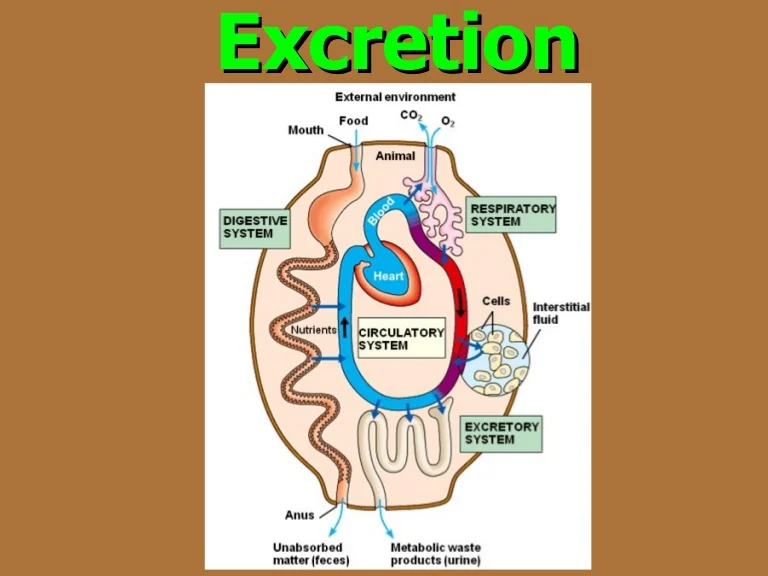
Indigested food must be expelled outside the body in the form of solid wastes.
The excretion process is the process of getting rid of the excretory materials of the body, and the excretory materials are the waste materials that are produced inside the body cells. The body must get rid of them.
Excretion is the process of removing cellular wastes. Excretion refers specifically to the elimination of wastes produced by cellular activity, and it is not the removal of undigested food material.
The body must get rid of the excretory materials, as they contain harmless materials that the body can not use and poisonous materials that the body must get rid of.
Importance of the Excretion Process
The excretion process is essential for maintaining the body’s internal balance and overall health. During metabolism, the body produces waste products such as urea, carbon dioxide, and excess salts, which can be toxic if they accumulate. Excretion removes these harmful substances, preventing damage to cells and organs and keeping the body functioning properly.
It also plays a vital role in regulating important body conditions, such as water balance, salt levels, and pH. The kidneys, for example, carefully control the amount of water and electrolytes in the body, ensuring that all systems work in harmony. Without this regulation, the body could quickly become dehydrated or overloaded with fluids and toxins.
In addition, the excretion process supports the efficiency of other body systems. By continuously filtering and cleaning the blood, organs like the kidneys, lungs, and skin help maintain a stable internal environment. This stability is crucial for processes like circulation, respiration, and digestion, making excretion a key factor in survival and overall well-being.
FAQ about Types of Wastes and Excretion Process in Humans
1. What are the main types of waste in the human body?
The main types of waste include:
- Carbon dioxide (from respiration).
- Urea (from protein metabolism).
- Excess water and salts.
- Undigested food (feces).
2. What is the excretion process?
Excretion is the process by which the body removes metabolic waste products and excess substances to maintain internal balance.
3. Which organs are involved in excretion?
The main organs include:
4. How do the kidneys help in excretion?
The kidneys filter blood to remove waste products like urea and excess water, forming urine that is excreted from the body.
5. What role do the lungs play in excretion?
The lungs remove carbon dioxide and small amounts of water vapor during exhalation.
6. How does the skin help in waste removal?
The skin excretes sweat, which contains water, salts, and small amounts of urea.
7. What is the function of the liver in excretion?
The liver detoxifies harmful substances and converts ammonia into urea, which is then excreted by the kidneys.
8. Why is excretion important for the human body?
Excretion is essential to remove toxic substances, maintain water and salt balance, and keep the body functioning properly.
You can follow science online on YouTube from this link: Science online
Important excretory organs in man’s body & Structure of urinary system
Small intestine, Absorption of digested food, Metabolism, Large intestine and defecation
Role of the respiratory system in the excretion process in man & Respiration in plant