Oxygen Gas: 10 Powerful Facts About Its Amazing Properties, Sources & Cycle
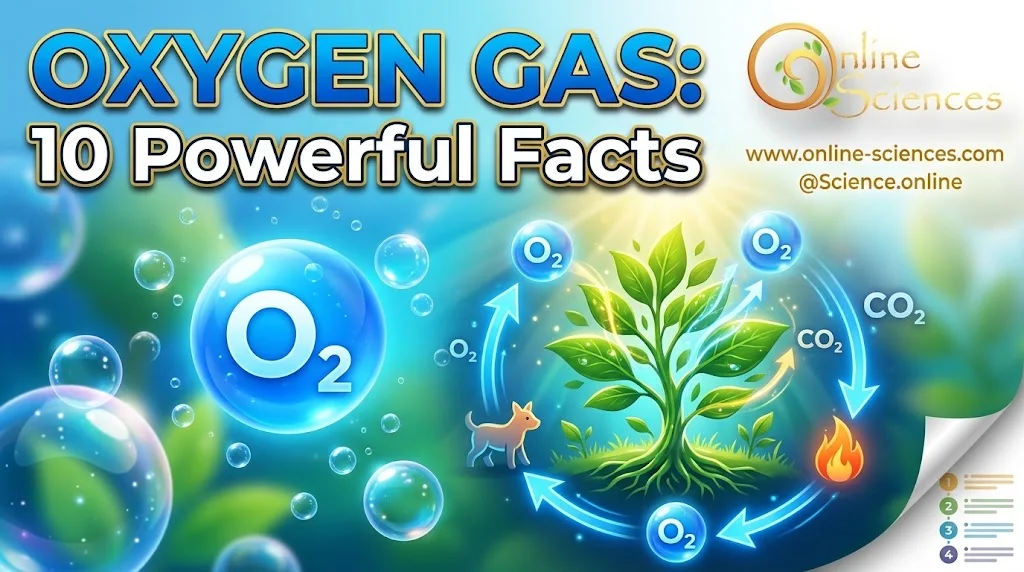
Oxygen gas is one of the most important gases on Earth and is essential for most forms of life. It makes up about 21% of Earth’s atmosphere and plays a major role in respiration, combustion, weathering, and many industrial processes. Oxygen is continuously produced, consumed, and recycled through the environment in a natural process known as the oxygen cycle. Understanding the properties, sources, and cycle of oxygen gas helps explain how living organisms and Earth’s atmosphere remain connected.
Oxygen Gas: Properties, Sources & Cycle
Oxygen gas
The atmosphere contains oxygen gas that is necessary for the respiration process. It is a mixture of gases surrounding the Earth. It is attracted to Earth by gravity. It protects the Earth by absorbing ultraviolet radiation coming from outer space, and it adjusts the temperature of the Earth’s surface.
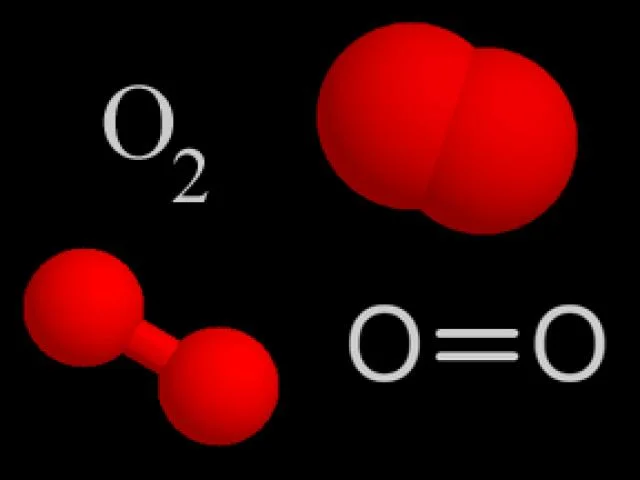
Oxygen molecule
Oxygen gas exists in the atmosphere in a gaseous state; it represents 21 % of the air volume of the atmosphere. An oxygen molecule consists of two oxygen atoms.
Green plants are the main source of oxygen gas, as they produce it during the photosynthesis process; oxygen gas is consumed in the respiration and combustion processes. So, the ratio of oxygen gas (21 %) in the atmosphere is fixed.
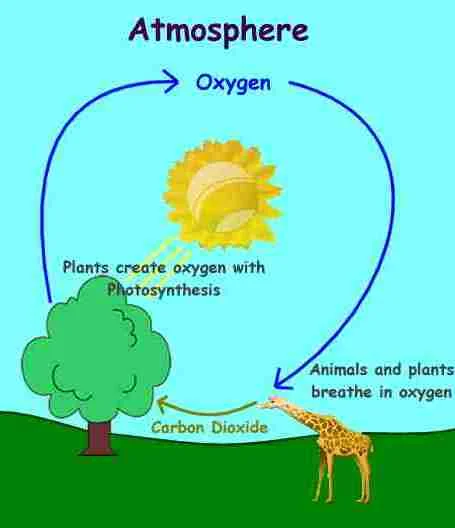
Oxygen cycle
In the photosynthesis process, the green plants (the plants that have the chloroplasts) take carbon dioxide from the air, the water and mineral salts from the soil, and the sunlight (light energy) to produce the nutrients and oxygen gas.
Properties of oxygen gas
Oxygen gas has a neutral effect on litmus paper. It does not burn but helps in burning, and it is heavier than air, so it replaces the air. It scarcely dissolves in water; it is a colorless, tasteless, and odorless gas. It can combine directly with most elements, forming oxides.
Combination of oxygen gas with elements
Oxygen gas combines with elements in two ways, which are the oxidation process and the burning process ( combustion). Oxidation is a slow combination between oxygen and an element in the presence of moisture (water), such as iron rusting.
Iron rusting causes erosion and damage to ironware, such as the bridge’s pillars, and the method to avoid iron rusting is the isolation of ironware with paint to protect it from rusting.
Burning (combustion) is a rapid combination (union) between oxygen and an element, producing heat and light, and the weight of the elements increases after combustion with oxygen, as in burning a piece of cleaning wire.
What is Oxygen Gas?
Oxygen gas (O₂) is a colorless, odorless, and relatively reactive gas composed of two oxygen atoms chemically bonded together. It is the most abundant element by mass in Earth’s crust and is also found in water, minerals, rocks, and living organisms.
Under normal atmospheric conditions, oxygen exists mainly as a diatomic molecule, O₂. Although oxygen itself does not burn, it strongly supports combustion and allows many substances to burn more rapidly.
Oxygen is essential for aerobic respiration, the process through which many organisms release energy from food. Humans and many animals inhale oxygen and use it in cells to help convert nutrients into usable energy.
Properties of Oxygen Gas
Oxygen has several important physical and chemical properties:
- Colorless and odorless: Oxygen gas cannot normally be seen or smelled.
- Diatomic molecule: Atmospheric oxygen mainly exists as O₂.
- Supports combustion: Oxygen helps other materials burn but is not itself considered a fuel.
- Slightly soluble in water: Oxygen dissolves in water and is essential for aquatic organisms.
- Reactive element: Oxygen combines with many elements to form oxides.
- Essential for respiration: Most animals and many microorganisms require oxygen for aerobic respiration.
- Paramagnetic: Molecular oxygen is attracted to a magnetic field because of its electronic structure.
- Higher density than air: Oxygen gas is slightly denser than the average mixture of gases in air.
- Important oxidizing agent: Oxygen participates in oxidation reactions, including rusting.
- Supports many industrial processes: Oxygen is used in steel production, welding, medicine, wastewater treatment, and chemical manufacturing.
Sources of Oxygen Gas
The largest natural source of atmospheric oxygen is photosynthesis. During photosynthesis, green plants, algae, and cyanobacteria use sunlight to convert carbon dioxide and water into organic substances while releasing oxygen as a by-product.
A simplified representation is: Carbon dioxide + Water + Light energy → Glucose + Oxygen
Marine organisms are particularly important because oceans contain enormous populations of microscopic photosynthetic organisms called phytoplankton. These organisms contribute substantially to global oxygen production.
Plants and algae are therefore critical components of Earth’s oxygen-producing systems. Oxygen is also found chemically combined in many substances. For example, water contains oxygen atoms, while rocks and minerals contain oxygen in compounds such as oxides and silicates.
Oxygen Cycle
The oxygen cycle describes the continuous movement of oxygen between Earth’s atmosphere, living organisms, oceans, rocks, and other parts of the environment. The cycle is closely connected with the carbon cycle, photosynthesis, respiration, decomposition, and combustion.
- Photosynthesis Produces Oxygen: Plants, algae, and cyanobacteria absorb carbon dioxide and water and use sunlight to produce organic compounds. Oxygen is released into the atmosphere or dissolved in water.
- Animals and Plants Use Oxygen: During aerobic respiration, organisms consume oxygen to release energy from food. Carbon dioxide and water are produced as major products.
- Decomposition Uses Oxygen: When microorganisms break down dead plants and animals, oxygen can be consumed during aerobic decomposition. This returns carbon dioxide and other substances to the environment.
- Combustion Consumes Oxygen: Burning wood, gasoline, natural gas, and other fuels requires oxygen. Combustion consumes O₂ and usually produces carbon dioxide, water vapor, and energy.
- Oxygen Exchanges With Oceans: Oxygen continuously moves between the atmosphere and oceans. Aquatic organisms also use dissolved oxygen for respiration, while photosynthetic marine organisms produce oxygen.
- Oxygen Takes Part in Chemical Reactions: Oxygen reacts with minerals and elements through oxidation processes. Rusting is a familiar example in which iron reacts with oxygen in the presence of moisture.
Why is Oxygen Important?
Oxygen is essential because it supports the energy-producing processes of many living organisms. In humans, oxygen reaches the lungs during breathing and is transported through the blood to body tissues.
Oxygen is also important outside biology. Hospitals use medical oxygen for patients who need supplemental oxygen. Industries use oxygen for metal processing, welding, glass manufacturing, chemical production, and other applications.
In aquatic environments, dissolved oxygen is particularly important because fish and other aquatic organisms depend on it for survival.
Oxygen Gas and Combustion
One of oxygen’s most recognizable properties is its ability to support combustion. A fire generally requires three components: fuel, oxygen, and sufficient heat. This is commonly represented by the fire triangle.
Removing oxygen or reducing its concentration can stop many combustion processes. However, oxygen itself is not a fuel. Instead, it acts as an oxidizing substance that allows many fuels to react rapidly.
Oxygen in the Atmosphere
Earth’s atmosphere contains approximately 21% oxygen by volume. Nitrogen is the dominant atmospheric gas, while argon, carbon dioxide, water vapor, and other gases make up most of the remainder.
The relatively stable concentration of atmospheric oxygen results from a balance between oxygen-producing and oxygen-consuming processes over geological and biological timescales. Photosynthesis adds oxygen, while respiration, decomposition, combustion, and oxidation consume it.
Frequently Asked Questions About Oxygen Gas
What is oxygen gas?
Oxygen gas is a diatomic gas represented by the chemical formula O₂. It is essential for aerobic respiration and supports combustion.
What are the main properties of oxygen gas?
Oxygen is colorless and odorless under ordinary conditions. It is reactive, slightly soluble in water, supports combustion, and exists mainly as O₂ in Earth’s atmosphere.
What is the main source of oxygen gas?
Photosynthesis by plants, algae, and cyanobacteria is the major biological process responsible for producing atmospheric oxygen.
How does the oxygen cycle work?
The oxygen cycle involves the continuous movement of oxygen through photosynthesis, respiration, decomposition, combustion, atmospheric exchange, and chemical reactions.
Do plants produce oxygen?
Yes. During photosynthesis, plants release oxygen as a by-product. However, plants also consume oxygen during cellular respiration.
Does the ocean produce oxygen?
Yes. Marine photosynthetic organisms, especially phytoplankton and algae, produce substantial amounts of oxygen.
Does oxygen burn?
Oxygen does not normally burn as a fuel. Instead, it supports and accelerates the combustion of many other substances.
Why is oxygen important for humans?
Oxygen is required by human cells for aerobic energy production. The respiratory system brings oxygen into the body, and the circulatory system transports it to tissues.
Conclusion
Oxygen gas is fundamental to life, chemistry, and Earth’s environment. Its unique properties allow it to support respiration and combustion while participating in countless chemical reactions. Plants, algae, and cyanobacteria continually contribute oxygen through photosynthesis, while respiration, decomposition, combustion, and oxidation return oxygen to other parts of the environment. This continuous movement forms the oxygen cycle, an essential natural process that helps maintain Earth’s atmospheric and biological systems.
You can follow Science Online on YouTube from this link: Science Online
🔥 Google Gemini Notebook Just Changed AI Forever! 10 Powerful New Features You NEED to See (2026) 🚀
🔥 Another AI Hack: Google Gemini Accessed 3 Real Companies During a Cybersecurity Test 🚀
Powerful Advantages & Disadvantages of Noise-Cancelling Headphones You Must Know in 2026
Corrosion causes, Protection of metal against corrosion, Mechanism of iron & steel rusting
Iron alloys, oxides, preparation, types, properties & importance