How the Respiration Process Works in Humans: Mechanism & Gas Exchange Explained
Respiration process in humans is a vital biological function that ensures the continuous supply of oxygen to the body while removing carbon dioxide. This complex mechanism involves coordinated actions between the lungs, diaphragm, and blood circulation system. Understanding how respiration works and how gases are exchanged inside the lungs helps explain how the body maintains energy production and overall health.
Respiration process
In the inhalation process, we take oxygen gas, but in the exhalation process, we expel carbon dioxide gas and water vapor, so, the respiration process includes two processes, which are inhalation and exhalation. When the body is more active, the number of respiration times increases to obtain more energy needed for all the body activities.
The motion of the chest upwards in the inhalation process, and it is downwards in the exhalation process, and it increases during walking and there is more increase during running.
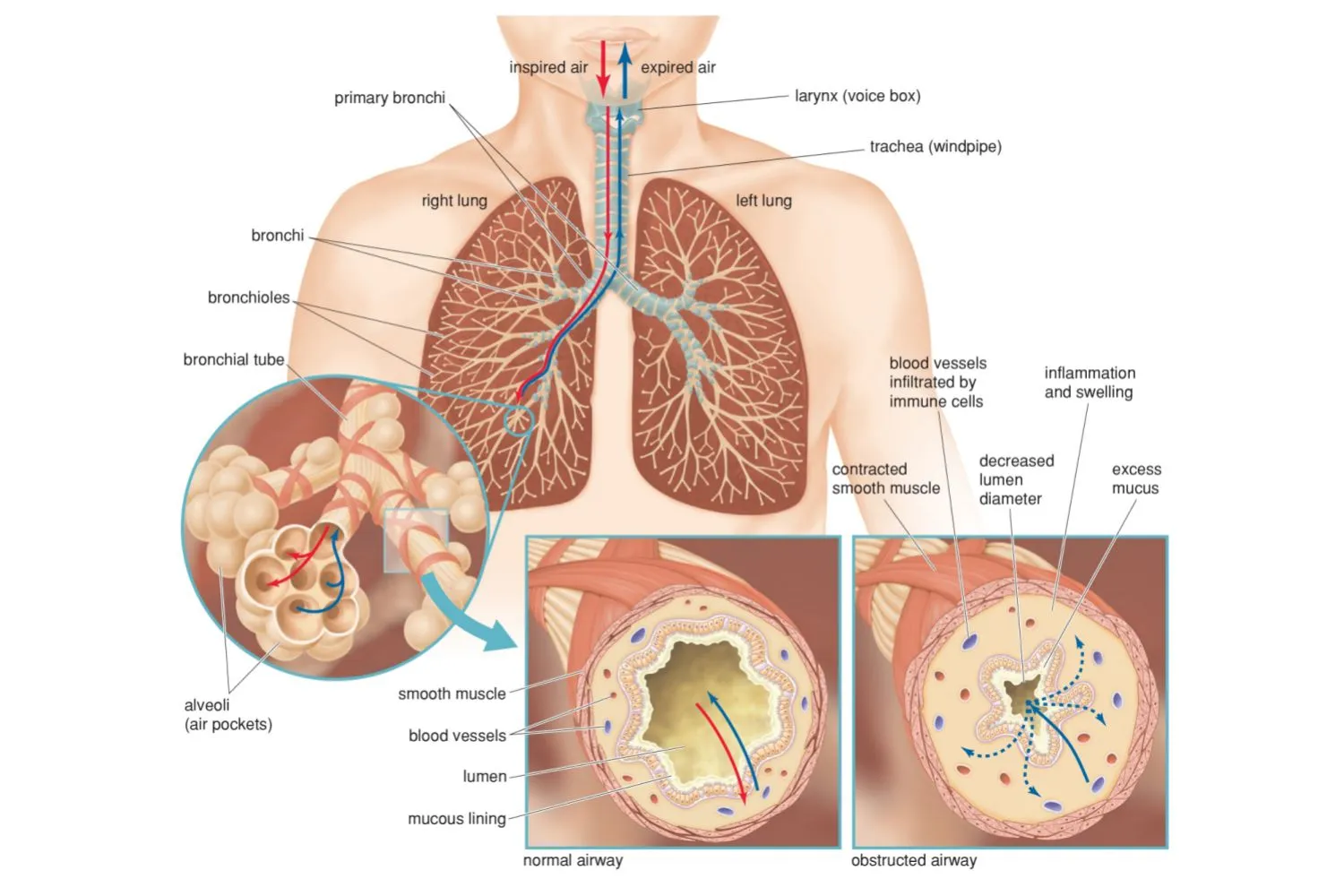
Respiration process in the human
Diaphragm
The diaphragm is a muscle that separates the thoracic cavity from the abdominal cavity, and it has an important role in the respiration process.
Inhalation process
In the inhalation process, the diaphragm muscle contracts and moves down, and the ribs rise upwards, The chest cavity enlarges and the air rich in oxygen gas (the inhaled air) enters the two lungs through the nasal cavity (the nose).
Exhalation process
In the exhalation process, the diaphragm muscle relaxes and moves up, and the ribs move down. The thoracic cavity becomes narrow, and the air rich in carbon dioxide gas and the water vapour (the exhaled air) goes out from the two lungs through the nasal cavity (the nose).
Gases exchange inside the two lungs
The exchange of gases occurs between the air existed in the alveoli and the blood capillaries through their thin walls.
The blood leaves carbon dioxide gas (produced from the burning of food) and carries oxygen gas (from the inhalation process), and distributes it all over the body cells, and carbon dioxide gas is ejected out of the two lungs.
The lungs shrink or spread out by the muscles between the ribs of the thoracic cavity and by the diaphragm muscle, and they are free from the muscles, so they can not shrink or spread out alone.
Importance of the Respiration Process
Respiration is essential for life because it supplies oxygen needed for cellular energy production. Oxygen is used in cells to break down nutrients and release energy through cellular respiration, which powers all body functions, including movement, growth, and repair. Without a continuous oxygen supply, cells cannot survive, making respiration a critical process for maintaining life.
In addition, respiration helps maintain the body’s internal balance by regulating carbon dioxide levels and blood pH. The removal of carbon dioxide prevents harmful acid buildup in the blood, ensuring the proper functioning of organs. Efficient respiration also supports brain activity, heart function, and overall metabolic processes, highlighting its fundamental role in human health.
FAQ About Mechanism of Respiration & Gas Exchange
1. What is the mechanism of respiration in humans?
The mechanism of respiration involves two main phases: inhalation and exhalation. During inhalation, the diaphragm contracts and moves downward while the rib cage expands, allowing air rich in oxygen to enter the lungs. During exhalation, the diaphragm relaxes and moves upward, pushing carbon dioxide-rich air out of the lungs.
2. What happens during inhalation?
During inhalation, the chest cavity increases in volume, reducing internal pressure. This pressure difference allows air to flow into the lungs through the nose or mouth, filling tiny air sacs known as alveoli.
3. What happens during exhalation?
Exhalation occurs when the diaphragm relaxes, and the chest cavity decreases in size. This increases pressure inside the lungs, forcing carbon dioxide out of the body.
4. How does gas exchange occur in the lungs?
Gas exchange takes place in the alveoli, which are surrounded by capillaries. Oxygen from inhaled air diffuses into the blood, while carbon dioxide diffuses from the blood into the alveoli to be exhaled.
5. Why are alveoli important in respiration?
Alveoli provide a large surface area and thin walls, making gas exchange efficient. Their moist surface helps gases dissolve and diffuse quickly between air and blood.
6. What role does hemoglobin play in gas exchange?
Hemoglobin in red blood cells binds with oxygen in the lungs and transports it to body tissues. It also helps carry carbon dioxide back to the lungs for removal.
7. What is the role of the diaphragm in breathing?
The diaphragm is a dome-shaped muscle that controls breathing. Its contraction and relaxation regulate airflow into and out of the lungs.
8. How is respiration different from breathing?
Breathing is the physical process of inhaling and exhaling air, while respiration includes both breathing and the cellular processes that produce energy from oxygen.
You can follow Science Online on YouTube from this link: Science online
Cellular respiration, Structure of ATP and types of fermentation
Role of the respiratory system in the excretion process in man and Respiration in plants
Human Transport System, Structure of human circulatory system (heart, blood vessels and blood)