15 Powerful Facts About the Importance and Structure of the Skeletal System in the Human Body
The importance and structure of the skeletal system are fundamental topics in human anatomy because the skeleton forms the framework of the body, protects vital organs, supports movement, and stores essential minerals. The skeletal system consists of bones, cartilage, ligaments, and joints that work together to maintain body shape and stability while enabling physical activities.
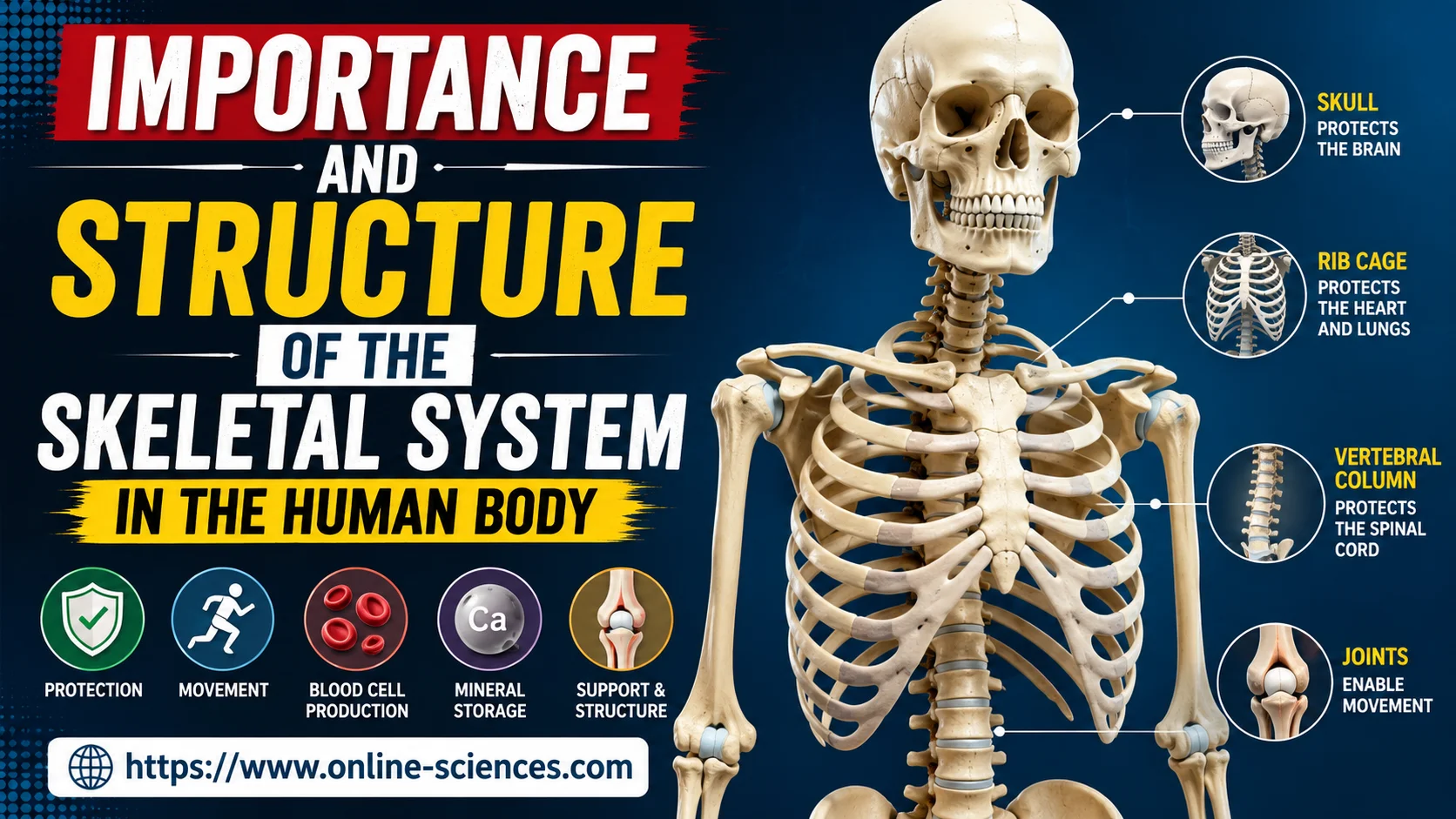
Importance and Structure of the Skeletal System
Importance and Structure of the Skeletal System
The human skeletal system contains 206 bones in adulthood and serves many critical functions beyond simple support. It protects the brain, heart, lungs, and spinal cord, produces blood cells inside the bone marrow, and acts as a storage site for minerals such as calcium and phosphorus. Understanding the importance and structure of the skeletal system helps students, healthcare professionals, and anyone interested in human biology appreciate how the body functions efficiently.
The movement is the ability of the organism to change its position from a place to another, it is from the characteristics that distinguish between the living organisms & non-living things, The human movement occurs with the participation and integration of special organs and systems such as the skeletal and the muscular systems and also the nervous system that regulates the movement, The system that is responsible for applying the movement is the locomotory system.
Structure of the locomotory system
The movement of our bodies depends on the work of our muscles and bones together. The locomotory system consists of the skeletal system and the muscular system.
Skeletal system
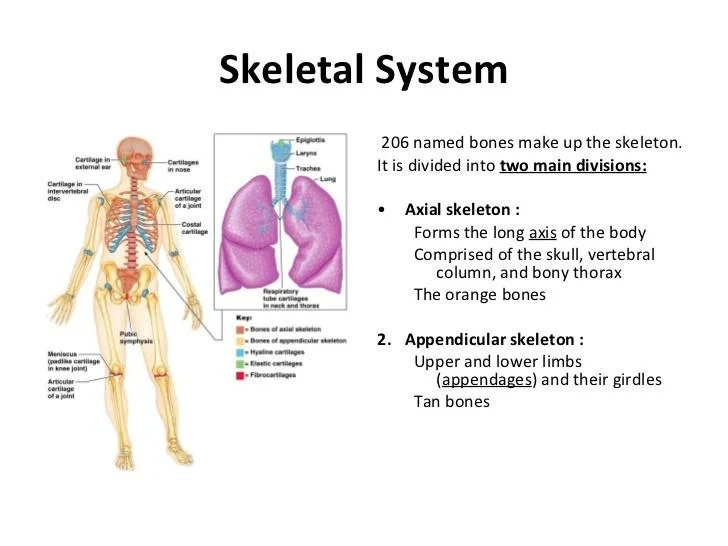
The skeletal system in the human body
The skeletal system consists of the axial skeleton and the appendicular skeleton. The axial skeleton consists of the skull, the backbone, and the ribcage. The skeletal system gives the shape to the body, and without it, the body would look like a paper kite without a rigid frame.
The skeletal system supports the body weight, and without it, you can not stand or sit, The skull protects the brain, and it is a bony box contains cavities for the eyes, the ears and the nose.
The backbone represents the axis of the skeleton, It consists of 33 vertebrae, It contains cartilages between the vertebrae to prevent their friction during the motion, The backbone allows the body to bend in the different directions and it protects the spinal cord.
The rib-cage consists of 12 pairs of ribs, The first 10 pairs are connected to the sternum (the breast bone) anteriorly, The rib-cage protects the lungs and the heart, It helps in the inhalation and exhalation processes (the breathing).
The human skeleton system is the internal framework of the body, It contains around 300 bones at birth and decreases to 206 bones by the adulthood after some bones have fused together, Bone mass in the skeleton system reaches maximum density around age 30.
The skeletons of the adult males and females have some variation, primarily to accommodate the childbirth, The female pelvis is more rounded, proportionally larger and flatter, The male’s pelvis is nearly 90 degrees or less of angle, while the female’s pelvis is 100 degrees or more.
There are two types of tissues inside the bones which are Compact bone and Spongy bone.
Compact bone is dense & hard tissue that makes up the outer layer of most bones and the main shaft of long bones, such as those in the arms and legs, Nerves and the blood vessels live inside this tissue.
Spongy bone is made up of smaller plates filled with red bone marrow, It is found at the ends of long bones, such as the head of the femur and at the center of the other bones.
Other common conditions affect the skeletal system, including Osteoporosis (It is the disease in which the bones become fragile and prone to fracture), Leukemia (It is a cancer of the white blood cells).
Osteopenia, osteitis deformans, and osteomalacia (Similar to osteoporosis, these are other types of bone loss), Scoliosis, kyphosis, and lordosis (these are the abnormalities of the spinal curve).
Importance of the Skeletal System
The skeletal system performs several essential functions:
- Support: It provides the body’s framework and maintains posture and shape.
- Protection: Bones protect delicate organs, such as the skull protects the brain, the rib cage protects the heart and lungs, and the vertebral column protects the spinal cord.
- Movement: Bones act as levers, while muscles generate force to move.
- Blood Cell Production: Bone marrow produces Red blood cells, White blood cells, and Platelets.
- Mineral Storage: Bones store important minerals, including calcium and phosphorus.
- Fat Storage: Yellow bone marrow stores energy-rich fat reserves.
Structure of the Skeletal System
The skeletal system is divided into two major sections:
Axial Skeleton
The axial skeleton forms the central axis of the body and contains 80 bones.
Components include:
- Skull.
- Vertebral column.
- Ribs.
- Sternum.
Appendicular Skeleton
The appendicular skeleton consists of 126 bones and includes:
- Shoulder girdle.
- Arms and hands.
- Pelvic girdle.
- Legs and feet.
This division allows efficient movement and coordination.
Main Components of the Skeletal System
Bones
Bones are living tissues composed of:
- Compact bone.
- Spongy bone.
- Bone marrow.
Cartilage
Cartilage is a flexible connective tissue found in:
Ligaments
Ligaments connect bone to bone and help stabilize joints.
Joints
Joints are points where two or more bones meet and enable movement.
Examples:
- Knee joint.
- Shoulder joint.
- Hip joint.
- Elbow joint.
Types of Bones in the Human Body
Long Bones
Examples:
- Femur.
- Humerus.
- Tibia.
Short Bones
Examples:
- Carpals.
- Tarsals.
Flat Bones
Examples:
- Skull bones.
- Sternum.
- Ribs.
Irregular Bones
Examples:
- Vertebrae.
- Facial bones.
Sesamoid Bones
Example: Patella (kneecap)
Interesting Facts About the Human Skeleton
- An adult human has 206 bones.
- Babies are born with about 270 bones.
- The femur is the longest and strongest bone.
- The stapes in the ear is the smallest bone.
- Bones continuously remodel throughout life.
- Bone marrow produces billions of blood cells daily.
Frequently Asked Questions (FAQ) about the skeletal system
1. What is the skeletal system?
The skeletal system is the body’s framework made up of bones, cartilage, ligaments, and joints that provide support, protection, and movement.
2. How many bones are in the adult human body?
An adult human body contains 206 bones.
3. What are the two main divisions of the skeletal system?
The skeletal system is divided into the axial skeleton and the appendicular skeleton.
4. Why is the skeletal system important?
It supports the body, protects organs, enables movement, produces blood cells, and stores minerals.
5. What is the strongest bone in the human body?
The femur, or thigh bone, is the strongest and longest bone in the human body.
6. What is the function of bone marrow?
Bone marrow produces red blood cells, white blood cells, and platelets.
7. How does the skeletal system help movement?
Bones act as levers while muscles pull on them to create movement at joints.
8. What minerals are stored in bones?
Bones primarily store calcium and phosphorus, which are essential for many body functions.
9. What is cartilage?
Cartilage is a flexible connective tissue that cushions joints and provides support to various body structures.
10. Can bones repair themselves?
Yes, bones can heal and remodel themselves after injury through a natural repair process.
Conclusion
The importance and structure of the skeletal system extend far beyond providing shape to the body. This remarkable system supports movement, protects vital organs, produces blood cells, and stores essential minerals. Understanding the anatomy and functions of the skeletal system is crucial for appreciating how the human body maintains strength, flexibility, and overall health throughout life.
You can follow Science Online on YouTube from this link: Science Online
Bones function, types & structure, The skeleton & Curvature of Spine in Adults
Skeletal system, Axial skeleton (vertebral column, Skull & thoracic cage)
Skeletal system, Appendicular skeleton structure and importance