
Importance of the Human Excretory System: How Your Body Removes Waste and Stays Healthy
The Human Excretory System plays a vital role in maintaining the body’s internal balance by removing harmful waste products produced during metabolism. Without this system, toxic substances would accumulate in the body, leading to serious health problems. It continuously filters blood, regulates fluid balance, and ensures cells function efficiently.
Excretory materials
The excretory materials are carbon dioxide, nitrogenous wastes, excess salts, and excess water. They are the waste materials produced inside cells, and the body must get rid of them.
Carbon Dioxide
When the body cells burn the digested food (carbohydrates or starch) with oxygen to produce energy, carbon dioxide is produced with water vapor, and we can get rid of them through the two lungs through the exhalation process.
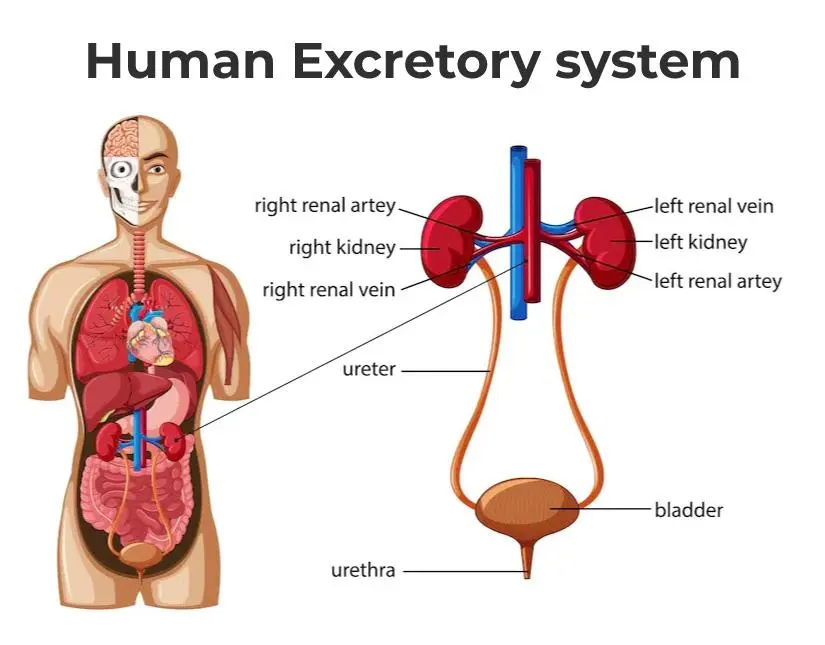
Human Excretory System
Nitrogenous wastes
Nitrogenous wastes are produced by breaking down the proteins, which are necessary for the growth of the body, and repairing the damaged tissues. They are urea and uric acid, and we can get rid of them through the urinary system.
The excess salts and the excess water
The body gets rid of the excess salts by dissolving them in excess water. We can get rid of them through the urinary system and the skin.
Importance of the Human Excretory System
The excretory system is essential for survival because it eliminates metabolic waste such as urea, carbon dioxide, and excess salts from the body. It helps maintain homeostasis by regulating water levels, electrolyte balance, and blood pressure. Organs like the kidneys, lungs, and skin work together to detoxify the body and keep it functioning properly. Without proper excretion, cells would be unable to perform their functions, leading to organ failure and disease.
How do your body cells get rid of the excretory materials?
When the body cells produce waste, they release it to the blood through the thin walls of the blood capillaries. The blood carries these wastes to the special organs to get rid of them, where carbon dioxide and water vapour are exhaled from the two lungs.
Nitrogenous wastes (urea and uric acid) are removed by the two kidneys (the urinary system). Your kidneys are composed of 1 million cells called Nephrons. These long, coiled tubes are where the blood is filtered, and the urine is produced.
The excess salts and the excess water are expelled outside the body through the skin in the form of sweat and the urinary system in the form of urine. The excretory system is the body system that separates and gives off the waste from the body, usually as urine or sweat.
The skin is one of the excretory organs, as it gets rid of some excess salts and excess water in the form of sweat. The body cells release their wastes into the blood as the blood carries these wastes to special organs to get rid of them.
FAQ about the Human Excretory System
1. How do your body cells get rid of excretory materials?
Body cells produce waste products during metabolism, such as carbon dioxide and urea. These wastes diffuse from the cells into the bloodstream. The circulatory system then transports them to excretory organs like the kidneys and lungs. The kidneys filter waste from the blood to form urine, while the lungs remove carbon dioxide during breathing. This coordinated process ensures that harmful substances are continuously removed from the body.
2. Why is the excretory system important?
It prevents the buildup of toxic substances, maintains internal balance, and supports overall health by regulating fluids and chemicals in the body.
3. What are the main organs of the excretory system?
The main organs include the kidneys, ureters, urinary bladder, urethra, lungs, and skin.
4. What happens if the excretory system fails?
Failure of the excretory system can lead to toxin accumulation, fluid imbalance, and life-threatening conditions such as kidney failure.
5. Is sweating part of excretion?
Yes, sweating helps remove excess salts and small amounts of waste through the skin.
You can subscribe to Science Online on YouTube from this link: Science Online
Important excretory organs in man’s body and Structure of the urinary system
Role of the respiratory system in the excretion process in man & Respiration in plants
The structure and the function of the urinary system in the human body