
🔥 Importance and Uses of Robots in Medicine: 10 Amazing Benefits of Medical Robots! How AI Is Revolutionizing Healthcare!
Robots are transforming modern medicine by helping doctors perform complex surgeries, improving patient care, assisting people with disabilities, and making healthcare services more accurate and efficient. The importance and uses of robots in medicine continue to grow as artificial intelligence, advanced sensors, and robotic technology become more sophisticated. From surgical robots to rehabilitation systems, medical robots are changing how diseases are diagnosed, treated, and managed, offering exciting possibilities for the future of healthcare.
Medical robots
The medical robot performs surgery using very small tools attached to a robotic arm. The surgeons control the robotic arm with a computer. The surgeon sits at a computer station. He directs the movements of a robot, and small surgical tools are attached to the robot’s arms.
Robotic surgery
Surgical robots allow surgical operations to be carried out with greater precision than an unaided human surgeon, which allows surgeons greater access to areas under the operation using more precise and less invasive methods.
The surgeons make small cuts to insert the instruments into the body, and then a thin tube with a camera attached to the end of it (endoscope) allows the surgeons to view enlarged 3-D images of the body as the surgery is taking place.
A medical robot matches the doctor’s hand movements to perform the procedure using tiny instruments. The surgery is done without making large cuts. The surgical cuts are smaller than with traditional open surgery; it has less pain, less risk of infection, and less bleeding.
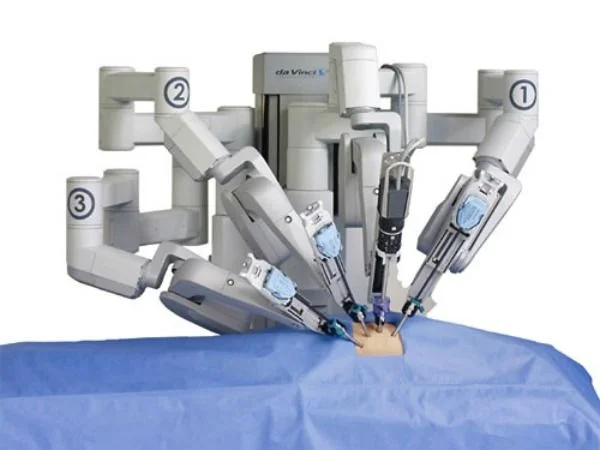
Medical robot
The surgical cuts are faster in recovery, it has smaller scars, and the patient will stay a shorter time in the hospital, Using medical robots will reduce the hospital stays, it will improve the patients’ prognoses and it will save costs.
Medical robots are one of the most useful applications of robotic technology; they can work with unmatched precision, and they can work without fatigue.
Medical robots reduce patient pain; they minimize the need for more medication and longer hospital stays, allowing the person to return home and start therapy sooner.
Medical robots have revolutionized the speed and efficiency of health care services in several parts of the world. Successful surgery patients have therefore reported smaller incisions, less blood, pain, and trauma, and faster healing time than regular surgery.

Medical robots and their importance and uses in modern healthcare, robotic surgery, and patient rehabilitation.
Importance and Uses of Robots in Medicine
Robotics is one of the most important technological developments in modern healthcare. Medical robots are specialized machines designed to assist doctors, nurses, surgeons, therapists, and patients. They combine mechanical engineering, computer science, artificial intelligence (AI), cameras, and precision instruments to perform medical tasks that may be difficult, repetitive, or time-consuming for humans.
The importance of robots in medicine comes from their ability to improve accuracy, support medical professionals, reduce physical effort, and enhance patient care. Although robots cannot replace the knowledge and judgment of qualified healthcare professionals, they can make many medical procedures safer and more efficient.
1. Robotic Surgery
One of the most important uses of robots in medicine is robotic-assisted surgery. Surgical robotic systems, such as the da Vinci Surgical System, allow surgeons to control specialized instruments using a console. These systems provide magnified three-dimensional views and highly controlled instrument movements. They are used in several procedures, including prostate surgery, gynecological operations, and certain abdominal surgeries.
Robotic assistance can enable smaller incisions, improved precision, and potentially faster recovery in suitable patients. However, outcomes depend on the procedure, surgeon experience, and the patient’s condition.
2. Medical Diagnosis and Imaging
Robots and AI-powered medical systems help healthcare professionals analyze medical images, including X-rays, CT scans, and MRI scans. They can identify suspicious patterns, measure anatomical structures, and highlight areas that may require further investigation.
These technologies support doctors in detecting diseases earlier and making more informed decisions. However, medical professionals must review and interpret diagnostic findings.
3. Rehabilitation and Physical Therapy
Rehabilitation robots help patients recover movement after strokes, spinal cord injuries, accidents, or neurological disorders. Robotic exoskeletons and robotic-assisted therapy devices support patients while walking, standing, or exercising. They can repeat controlled movements and adjust assistance according to individual rehabilitation needs. These devices help therapists provide structured training and monitor patient progress.
4. Hospital Service Robots
Hospitals use autonomous robots to transport medicines, laboratory samples, meals, medical equipment, and supplies between departments. These robots can reduce repetitive workloads for hospital employees, improve delivery efficiency, and allow healthcare workers to spend more time caring for patients. Some systems also assist with cleaning and disinfection in designated hospital areas.
5. Robotic Nursing Assistance
Assistive robots can remind patients to take medication, help them communicate with caregivers, provide basic information, and support elderly people with certain daily activities. Some robots are designed to monitor movement and detect situations that may require human assistance. They can support nursing teams, especially in facilities with large numbers of patients.
6. Telepresence and Remote Healthcare
Telepresence robots allow doctors to communicate with patients and healthcare teams remotely through cameras, screens, microphones, and internet connections. They can help specialists participate in consultations, monitor patients, and communicate with medical staff in different locations. This technology is particularly useful when specialists cannot be physically present.
7. Laboratory Automation
Medical laboratories use robots to handle samples, prepare tests, move laboratory materials, and perform repetitive procedures. Automation can increase processing speed, improve consistency, and reduce some manual handling errors. This is especially valuable in laboratories that process large numbers of blood tests and other medical samples.
8. Pharmacy and Medication Management
Robotic pharmacy systems can organize medicines, prepare prescriptions, and distribute medication within hospitals. Automated dispensing systems help manage inventory and reduce certain dispensing errors. However, pharmacists and qualified healthcare professionals remain essential for checking prescriptions, drug interactions, and appropriate medication use.
9. Medical Robots for Infection Control
Some hospitals use autonomous disinfection robots equipped with ultraviolet-C (UV-C) technology. These machines disinfect selected areas and surfaces as part of infection-control programs. They can support hospital cleaning teams, but they must be operated according to safety procedures because UV-C exposure can harm human skin and eyes.
10. Artificial Intelligence and the Future of Medical Robots
Artificial intelligence is making medical robots more capable of interpreting information, recognizing objects, navigating hospital environments, and assisting healthcare professionals.
Future medical robots may provide more personalized rehabilitation, improve remote patient monitoring, and assist with increasingly complex medical procedures. Nevertheless, patient safety, privacy, cybersecurity, affordability, and ethical considerations must remain priorities as these technologies develop.
Benefits of Using Robots in Medicine
Medical robots offer several important advantages:
- Greater precision: Robotic systems can perform controlled movements during delicate medical procedures.
- Improved patient care: Assistive robots support patients who need additional help.
- Faster medical procedures: Automation can reduce the time required for repetitive laboratory and hospital tasks.
- Reduced workload: Robots can handle transportation, cleaning, and other repetitive activities.
- Better rehabilitation: Robotic devices help patients practice movements and improve mobility.
- Remote healthcare: Telepresence robots connect doctors with patients in distant locations.
Despite these benefits, medical robots can be expensive to purchase and maintain. They also require specialized training, regular maintenance, and strict safety controls. Robots should support medical professionals rather than replace human judgment, compassion, and responsibility.
Conclusion
The importance and uses of robots in medicine are increasing as robotics and artificial intelligence continue to advance. Medical robots are improving surgical procedures, supporting rehabilitation, assisting nurses, automating laboratories, and helping hospitals deliver better healthcare services.
Although challenges such as cost, safety, and technical complexity remain, medical robotics has enormous potential to transform modern healthcare. In the future, intelligent robots may become even more valuable partners for doctors and patients, making medical services more accessible, precise, and efficient.
Frequently Asked Questions (FAQ)
1. What is the importance of robots in medicine?
Robots are important in medicine because they help improve surgical precision, support rehabilitation, automate medical tasks, assist healthcare professionals, and improve patient care.
2. What are the main uses of robots in healthcare?
The main uses include robotic surgery, medical diagnosis, rehabilitation, hospital transportation, nursing assistance, laboratory automation, pharmacy management, and infection control.
3. Can robots perform surgery?
Yes. Robotic-assisted surgical systems allow trained surgeons to control specialized instruments and perform certain operations with enhanced visualization and precision.
4. What are the benefits of robotic surgery?
Potential benefits include smaller incisions, controlled instrument movements, improved visualization, and shorter recovery times for some procedures.
5. Can robots replace doctors and nurses?
No. Medical robots are designed to assist healthcare professionals. Doctors and nurses remain responsible for diagnosis, treatment decisions, patient communication, and medical supervision.
6. How do robots help disabled people?
Robotic exoskeletons, prosthetic devices, and rehabilitation systems can help people with mobility difficulties perform movements, practice walking, and improve their independence.
7. What is the future of robots in medicine?
Future medical robots may use advanced AI to improve surgical assistance, personalized rehabilitation, remote monitoring, and hospital automation.
Explore more science and technology articles on Science Online: https://www.online-sciences.com/
Watch more technology videos on Science Online Channel: https://www.youtube.com/@Science.online
Laboratory robotics uses, advantages and disadvantages
Computers in Medicine uses, advantages and disadvantages
Robotic surgery cons, pros, uses and How does robotic surgery work?
Artificial intelligence in medical field advantages & how AI medical diagnosis changes medicine
Surgical robots types, advantages, disadvantages, How is robotic surgery different from traditional