How the Mouth Starts Digestion: Functions, Importance and Surprising Facts You Need to Know!
Did you know that digestion actually begins in your mouth before food even reaches your stomach? The mouth plays a powerful and underestimated role in breaking down food and preparing it for the rest of the digestive process. From chewing to enzyme action, every second in your mouth matters—discover why this first step is the key to better digestion and overall health!
The mouth
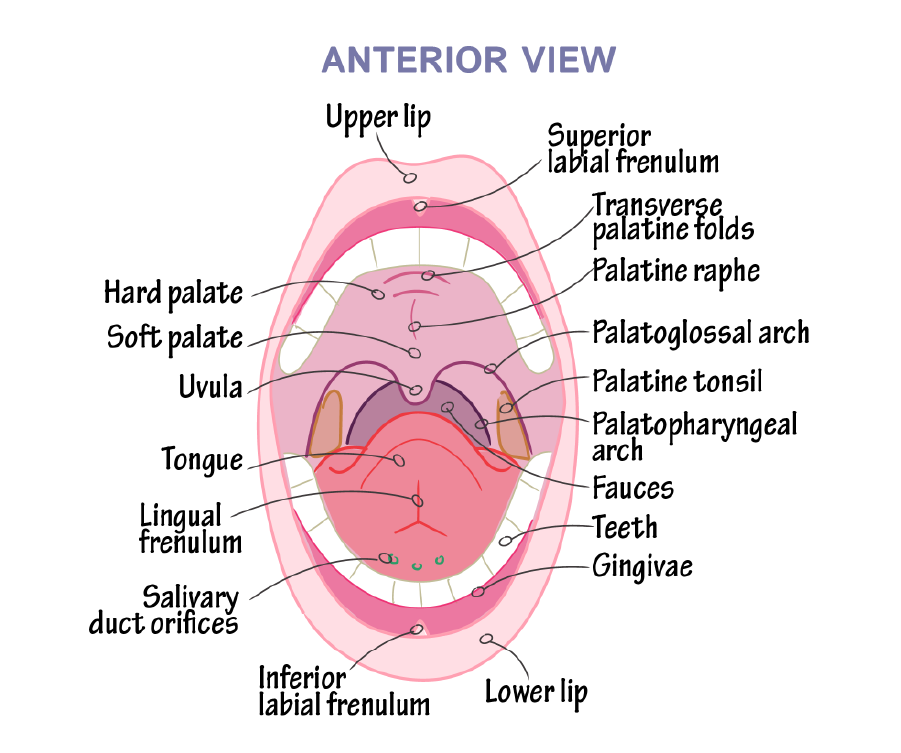
The mouth is the first organ in the digestive system, and it is a cavity in which the teeth and the tongue exist, and the salivary glands are opened. The function of the mouth is to cut and grind the food by the teeth, and It digests the starch into sugar.
What happens if your mouth doesn’t function properly? Poor chewing or low saliva production can lead to digestion problems، discomfort, and even nutrient absorption issues. Understanding how the mouth works can help you improve your eating habits and protect your digestive health—small changes here can make a big difference!
The mouth is the starting point of the digestive system, where both mechanical digestion and chemical digestion begin. Teeth break food into smaller pieces through chewing, making it easier to swallow and digest. At the same time, saliva produced by salivary glands contains enzymes like amylase, which start breaking down carbohydrates into simpler sugars. This process helps reduce the workload on the stomach and intestines.
In addition to digestion, the mouth plays an important role in taste, speech, and overall oral health. The tongue helps mix food with saliva, shapes it into a bolus for swallowing, and allows you to taste different flavors. Proper mouth function ensures that food is processed efficiently and safely before entering the esophagus, making it a crucial step in maintaining a healthy digestive system.
Functions of the Mouth
The mouth plays a crucial role in both digestion and communication. The mouth, or oral cavity, is a complex organ with several essential functions:
Primary Functions
- Eating:
- Ingestion: Taking in food and liquids.
- Mastication: Chewing food into smaller pieces to aid digestion.
- Taste: Detecting flavors through taste buds.
- Swallowing: The mouth moves food from the mouth to the esophagus.
- Speaking: The mouth can form words and sounds by moving the lips, tongue, and teeth.
Secondary Functions
- Breathing: Although the nose is the primary airway, the mouth can also be used for breathing, especially during physical exertion or nasal congestion.
- Sensory Perception: The lips and tongue contain numerous nerve endings, providing sensations of touch, temperature, and pain.
The mouth
The teeth
The number of teeth is 32 in adults. They exist in two jaws, which are the upper jaw and the lower jaw, and each jaw has 16 teeth divided into 10 molars (4 premolars and 6 molars), four incisors, and two canines.
The function of the four incisors and two canines is to cut and tear the food into small pieces, and the ten molars grind the food to make its swallowing easy.
The milk teeth are weak and formed through the childhood phase, and their number is 20 teeth, where each jaw has ten teeth.
The milk teeth are completely replaced by strong ones before the age of twelve, and they are divided into 4 incisors, 2 canines, and 4 molars.
Tongue
The tongue is an organ that has several functions. It is the speech organ, as it changes the sound coming from the larynx into understandable words.
The tongue mixes the food with the saliva to help in food swallowing. The tongue moves the food around inside the mouth cavity, and it is responsible for tasting the food.
Salivary glands
There are three pairs of salivary glands, which secrete a liquid saliva that contains digestive substances (the enzymes) that digest the starch into the simple substances called sugar.
The enzymes are the digestive substances that digest the food and convert it into simple substances.
Importance of the Mouth
The mouth is a gateway to the body, influencing both our physical and social well-being. The mouth is a vital part of our body, serving multiple essential functions.
- Digestion: The process of breaking down food begins in the mouth. Chewing (mastication) helps in mixing food with saliva, which aids in swallowing and digestion.
- Communication: The mouth is essential for speech, allowing us to express ourselves and interact with others.
- Breathing: While primarily done through the nose, the mouth can also be used for breathing, especially during physical exertion or when the nasal passages are blocked.
- Taste: Our taste buds, located primarily on the tongue, enable us to experience the flavors of food and drinks.
Impact on Overall Health
- Oral Health: Maintaining good oral hygiene is crucial for preventing dental problems like cavities and gum disease.
- Systemic Health: Research suggests a link between oral health and overall health conditions, such as heart disease, diabetes, and respiratory infections.
FAQ about the Mouth in the Digestive System
1. What is the main function of the mouth in digestion?
The mouth starts digestion by chewing food and mixing it with saliva, which contains enzymes that break down carbohydrates.
2. Why is saliva important in digestion?
Saliva moistens food and contains enzymes like amylase that begin chemical digestion.
3. How do teeth help in digestion?
Teeth break food into smaller pieces, making it easier for enzymes to act on it.
4. What role does the tongue play?
The tongue mixes food with saliva, helps in tasting, and pushes food for swallowing.
5. What happens if chewing is not done properly?
Poor chewing can slow digestion and cause stomach discomfort.
You can subscribe to Science Online on YouTube from this link: Science Online
Mouth Cavity divisions, anatomy, function, muscles, Contents of Soft palate and Hard palate
Digestion in man, Buccal digestion, and Gastric digestion (digestion in the Stomach)
Small intestine, Absorption of digested food, Metabolism, Large intestine and defecation
The function of the digestive system in the human body
Git function, Types of salivary secretion and Composition of saliva
Histological structure of salivary glands, Parotids, Sublingual and Submandibular glands
Norma lateralis features & anatomy, Mandible surfaces, nerves and ligaments
Tongue function, anatomy & structure, Types of lingual papillae and Types of cells in taste bud
Salivary glands function, shape, lobes, surfaces and Structures within the parotid gland