Function of Uterus in Female Reproductive System: 7 Amazing Functions You Should Know
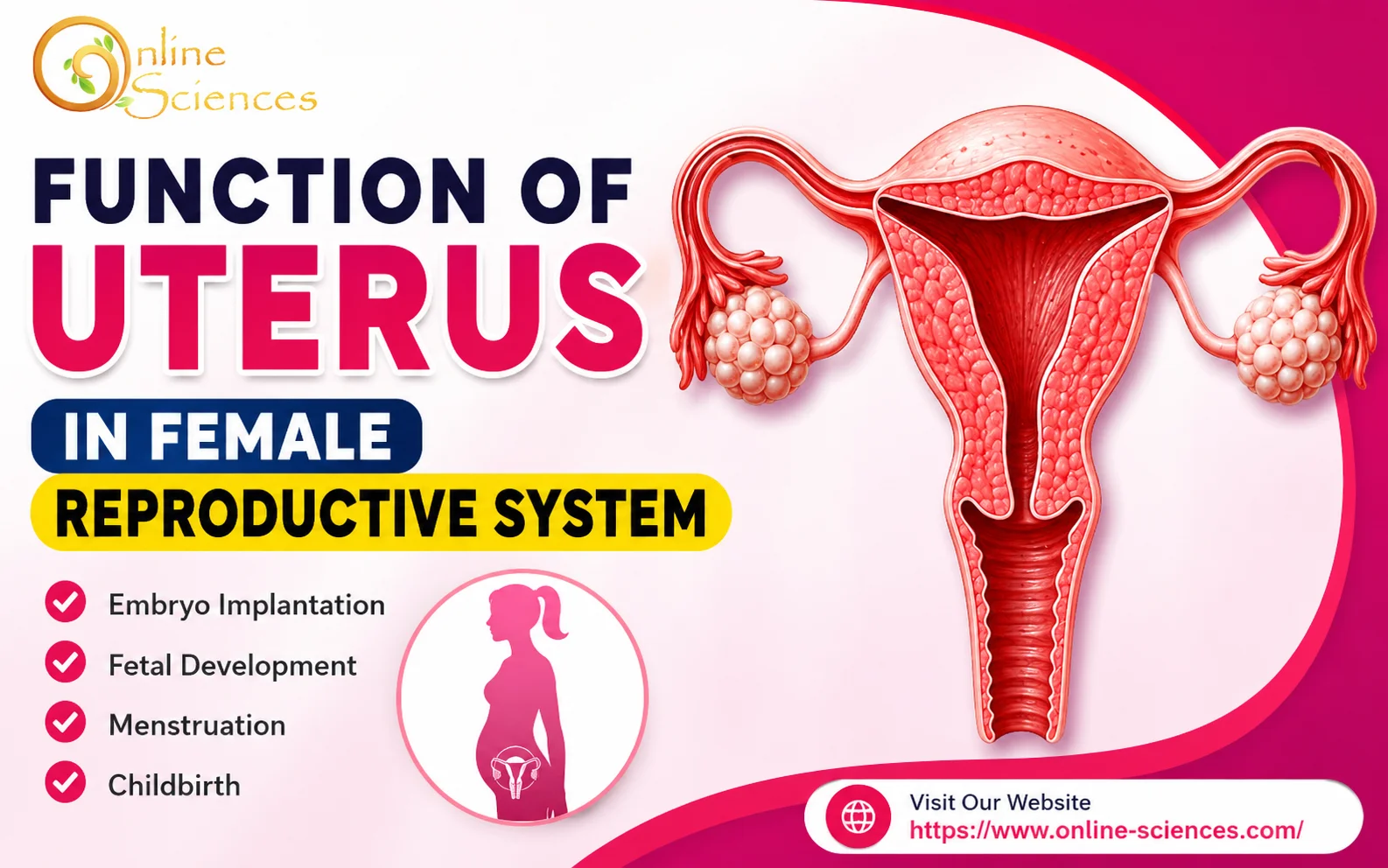
Function of uterus in female reproductive system includes supporting fertilization, implantation of the embryo, nourishing the developing fetus, regulating menstruation, and contracting during labor to deliver the baby. This remarkable organ changes in size and function throughout a woman’s life to support reproduction and overall reproductive health.
Function of Uterus in Female Reproductive System
The uterus
The uterus is a hollow, pear-shaped organ and it has a muscular wall that can expand as the fetus grows during pregnancy, the uterus is the largest and major organ of the female reproductive tract that is the site of fetal growth and it is hormonally responsive.
The uterus is lined with a mucus membrane rich in blood capillaries to form the placenta, which is responsible for the nourishment of the fetus during pregnancy through the umbilical cord.
The uterus lies in the pelvic cavity between the urinary bladder and the rectum. The uterus in the female reproductive system protects and nourishes the fetus during pregnancy until birth.
The uterus is a suitable organ for the growth of the embryo because it has a thick muscular wall that is rich in blood capillaries that feed the embryo and supply it with oxygen, and it also protects the embryo until birth.
The female reproductive system
The uterus is the part of the pathway for the sperm to reach the ovum. It is responsible for the menstruation, the implantation of the zygote, the development of the fetus, and then labor.
The uterus is responsible for the hormonal changes within the body, which allow the adaptation to the different stages of women’s reproductive life, and the reproductive function of the uterus is the menses, the implantation, the gestation, the labor, and the delivery.
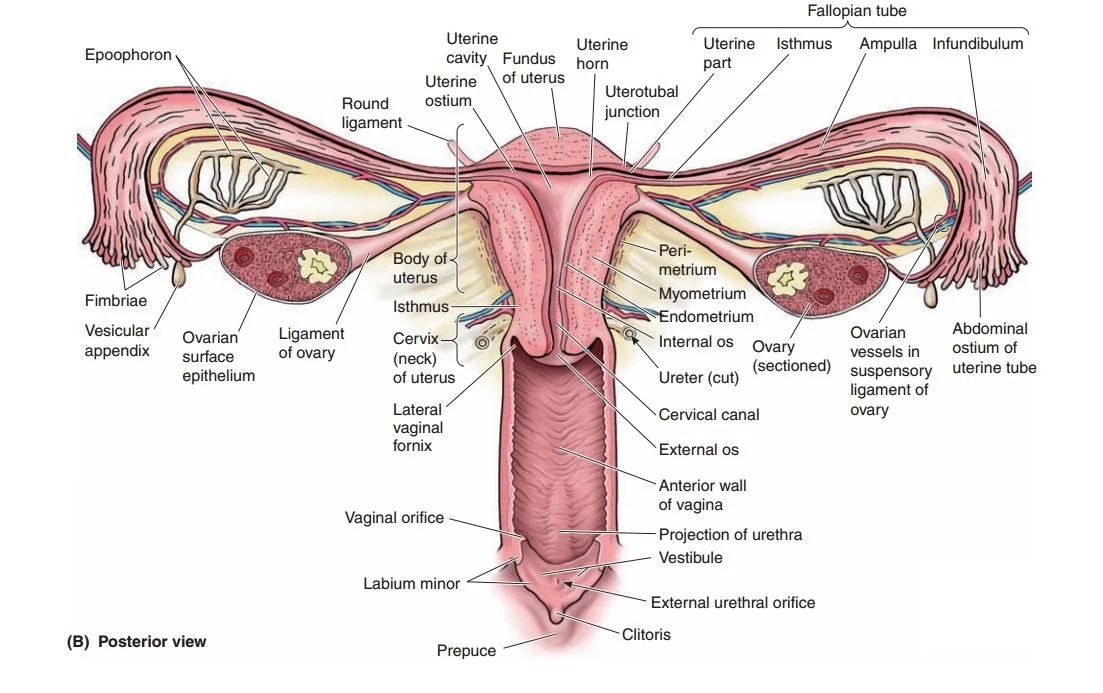
The uterus is divided into three parts. The first part is the cervix, which is the lower part that opens into the vagina. The second part is the main body of the uterus, which is called the corpus (the body). The corpus can easily expand to hold a developing baby, and the fundus, which is the domed upper portion.
Function of the uterus
The uterus has several key functions in the female reproductive system:
- Nurturing a fertilized egg: After fertilization, the embryo implants into the lining of the uterus (the endometrium), where it can grow and develop into a fetus.
- Supporting fetal development: The uterus expands and provides a protective environment for the fetus throughout pregnancy, supplying nutrients and removing waste via the placenta.
- Menstruation: If no fertilization occurs, the uterus sheds its lining during menstruation.
- Labor and childbirth: During labor, the uterus contracts to help push the baby out through the birth canal.
The vagina
The vagina extends from the uterus and ends in the external genital opening, and it is a muscular tube that expands during labour to deliver the baby.
The vagina receives the sperms during mating, and it is a passageway for childbirth as it is a canal that joins the cervix (the lower part of the uterus) to the outside of the body.
Function of Uterus in Female Reproductive System
The uterus is a hollow, pear-shaped muscular organ located in the female pelvis between the bladder and the rectum. It is one of the most important organs of the female reproductive system because it provides the environment necessary for pregnancy and fetal development. The uterus works closely with the ovaries, fallopian tubes, cervix, and vagina to support reproduction, menstruation, and childbirth.
Main Functions of the Uterus
- Site of Embryo Implantation: After fertilization occurs in the fallopian tube, the fertilized egg (zygote) travels to the uterus. The embryo implants into the thickened uterine lining (endometrium), where it begins to grow and develop.
- Supports Fetal Development: The uterus provides a safe and protective environment for the developing fetus throughout pregnancy. It protects the fetus from external injury. It supplies nutrients and oxygen through the placenta. It allows the fetus to grow until birth. It expands dramatically from the size of a pear to accommodate a full-term baby.
- Menstruation: If fertilization does not occur, hormone levels decrease, causing the thickened uterine lining to break down and shed. This process is known as menstruation (the menstrual period). A new uterine lining develops during each menstrual cycle in preparation for a possible pregnancy.
- Contracts During Childbirth: Powerful muscles in the uterine wall contract during labor. These contractions: Dilate the cervix. Push the baby through the birth canal. Help deliver the placenta after birth. Reduce bleeding after delivery by compressing blood vessels.
- Protects the Developing Baby: The muscular uterine wall cushions the fetus while the amniotic sac and fluid provide additional protection from injury and infection.
- Supports Placenta Formation: The placenta attaches to the uterine wall, allowing the exchange of oxygen, nutrients, antibodies, and waste products between the mother’s blood and the developing fetus.
- Plays a Role in Hormonal Response: Although the ovaries and placenta mainly produce hormones, the uterus responds to estrogen and progesterone by thickening the endometrium, preparing for implantation, maintaining pregnancy, and shedding the lining during menstruation if pregnancy does not occur.
Structure of the Uterus
The uterus consists of three major layers:
Endometrium
- Inner lining of the uterus.
- Thickens every menstrual cycle.
- Site of embryo implantation.
- Shed during menstruation.
Myometrium
- Thick middle muscular layer.
- Responsible for labor contractions.
- Expands greatly during pregnancy.
Perimetrium
- Thin outer protective covering.
- Helps support the uterus within the pelvis.
Parts of the Uterus
- Fundus: Rounded upper portion.
- Body (Corpus): The main central part where fetal development occurs.
- Isthmus: Narrow region connecting the body and cervix.
- Cervix: Lower narrow portion that opens into the vagina.
Importance of the Uterus
A healthy uterus is essential for:
- Successful pregnancy.
- Normal menstrual cycles.
- Embryo implantation.
- Fetal growth.
- Childbirth.
- Female reproductive health
Interesting Facts About the Uterus
- The average non-pregnant uterus measures approximately 7–8 cm long.
- During pregnancy, it can expand to hold a full-term baby weighing several kilograms.
- The uterus is one of the strongest muscles in the human body relative to its size.
- It undergoes remarkable monthly changes throughout the reproductive years.
- After childbirth, the uterus gradually shrinks back to nearly its original size in a process called involution.
Frequently Asked Questions (FAQ) about the function of the uterus
1. What is the primary function of the uterus?
The primary function of the uterus is to provide a safe environment for embryo implantation, fetal growth, and childbirth.
2. Where is the uterus located?
The uterus is located in the female pelvis between the urinary bladder and the rectum.
3. What happens to the uterus during pregnancy?
The uterus enlarges significantly to support the developing fetus, placenta, and amniotic fluid until delivery.
4. Why does the uterus shed its lining every month?
If pregnancy does not occur, the thickened uterine lining breaks down and is expelled during menstruation.
5. What muscle layer causes labor contractions?
The myometrium, the thick muscular layer of the uterus, produces the contractions needed for childbirth.
6. Can a woman become pregnant without a uterus?
No. Without a uterus, a pregnancy cannot develop because the embryo has no place to implant and grow.
7. How does the uterus protect the fetus?
The uterus surrounds the fetus with strong muscular walls, while the amniotic sac and fluid provide cushioning and protection.
8. What hormones affect the uterus?
Estrogen and progesterone regulate the growth of the uterine lining, menstrual cycles, implantation, and pregnancy maintenance.
You can subscribe to science online on YouTube from this link: Science Online
Female reproductive system organs, functions, anatomy and Histological structure of the uterus
Placenta importance in fetal development and the most common placental problems
Reproduction, Types of sexual reproduction (Conjugation, Reproduction by sexual gametes)
Reproduction in Human being, Structure of Male genital system and sperm
Structure of Female genital system and ovum, Oogenesis stages and Menstrual cycle