
Stages of embryo (fetus) development, 9 Amazing Stages Every Parent Should Know
Stages of embryo (fetus) development begin immediately after fertilization and continue through a remarkable series of changes until birth. During pregnancy, the developing baby progresses through the germinal, embryonic, and fetal stages, with each phase marked by rapid growth, organ formation, and increasing maturity. Understanding these developmental stages provides valuable insight into how a single cell transforms into a healthy newborn over approximately 40 weeks.
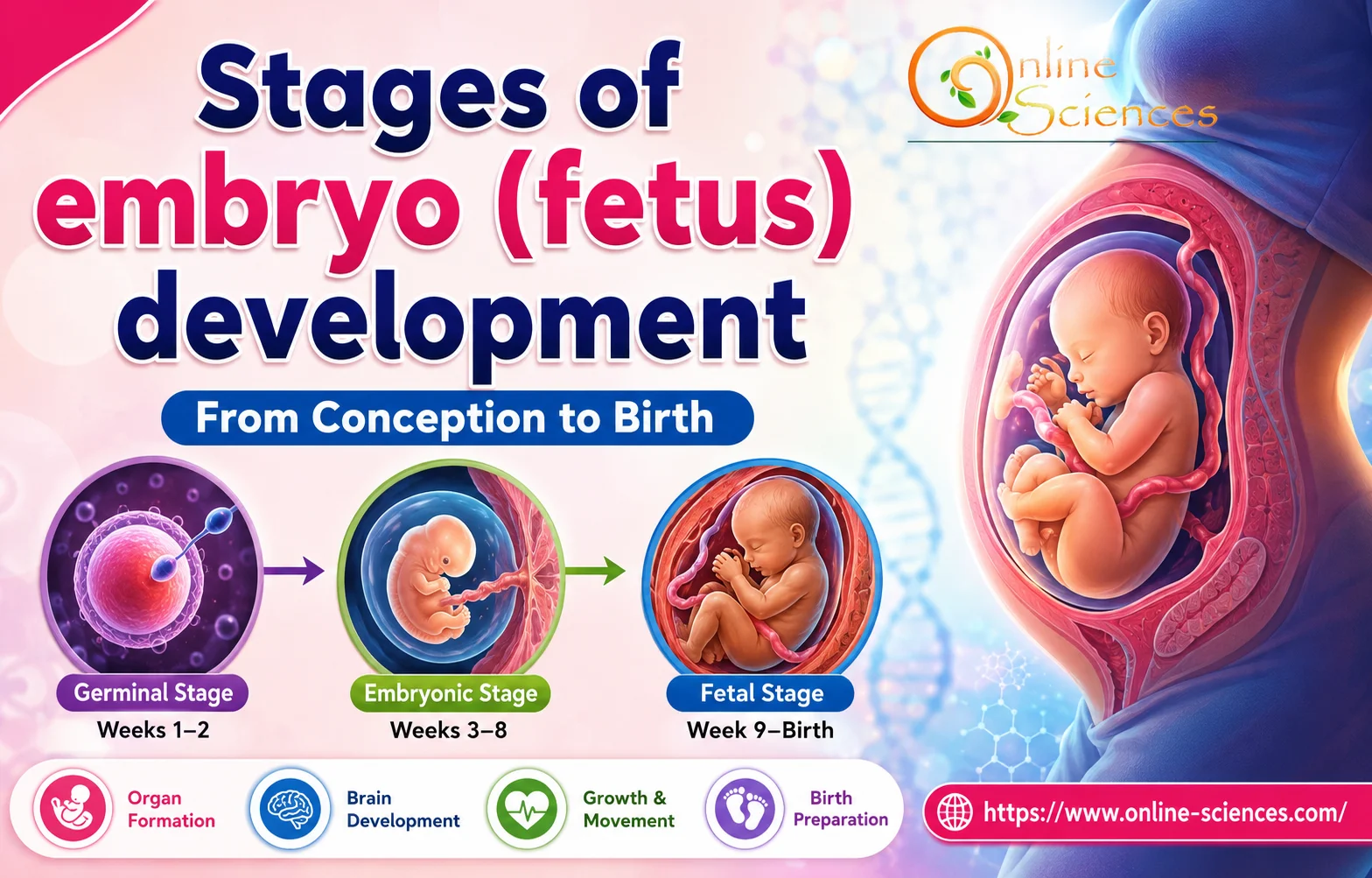
Stages of embryo (fetus) development
Fetus development
Fertilization occurs about two weeks after the first day of the last menstrual period when the sperm penetrates the egg, and within 24 hours after fertilization, the egg begins dividing rapidly into many cells.
The fertilized egg remains in the fallopian tube for about three days. The fertilized egg (called a blastocyte) continues to divide and passes through the fallopian tube to the uterus, where it is implanted in the uterine lining (a process called implantation).
The developing baby is called an embryo from the moment of conception to the eighth week of pregnancy, and from the eighth week until birth, the developing baby is called a fetus.
What are the stages of embryo (fetus) development?
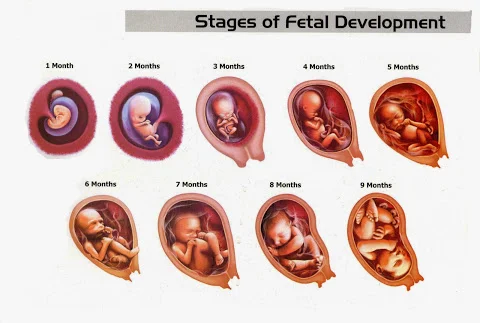
Stages of fetal development
The period of pregnancy (9 months) can be divided into 4 main stages, which are:
First stage:
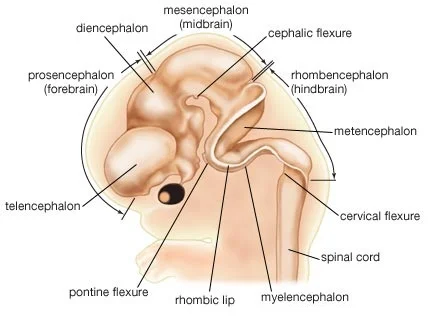
Fetal brain development
The first stage starts from the moment of zygote formation till the end of the sixth week. In this stage, the head starts to differentiate (it is similar to the reptiles head), and the eyes appear distinctly. In the sixth week, the heart can be seen and heard pulsating using the sonar.
Second stage:
The second stage starts from the beginning of the seventh week till the end of the twelfth week. In this stage, the facial features can be distinguished, the genital organs start to develop, and the appearance of the digits in the limbs.
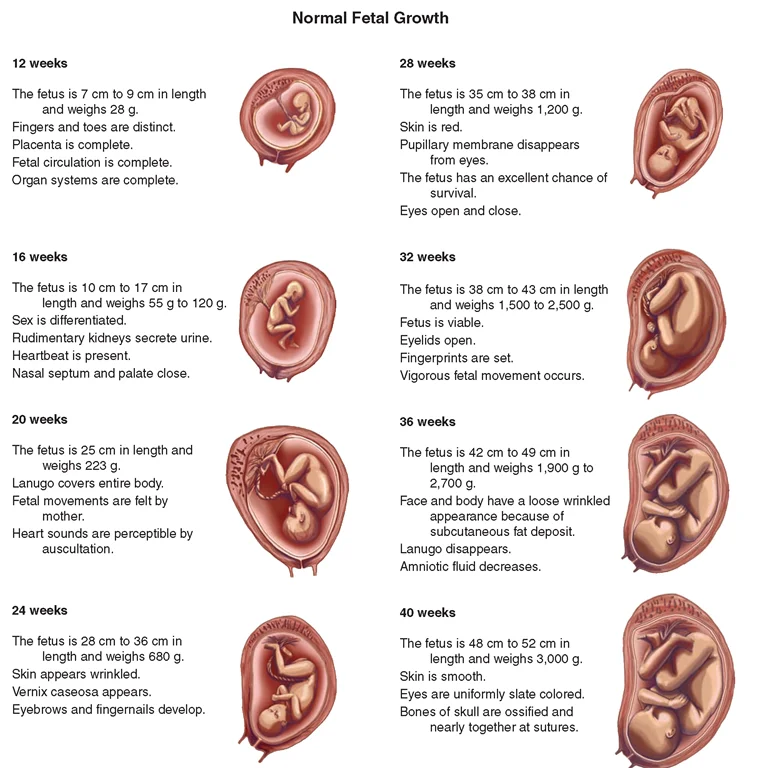
Normal fetal growth
Third stage:
The third stage starts from the beginning of the 13th week till the end of the 22nd week. In this stage, the bones start to develop, as well as the circulatory system. The sex of the embryo can be distinguished, and the mother can feel the movement of her fetus due to the strength of the embryo’s muscles, which help in the movement.
Fourth stage:
The fourth stage starts from the beginning of the 23rd week till the delivery (the birth), In this stage, the development of all body systems is completed, and the embryo can move its hands and feet.
Before the delivery, the embryo’s position changes gradually to be inverted, where the head is directed towards the cervix. The baby can be born in the 28th week, when his two lungs can respire, and all systems are completely developed.
Stages of Embryo (Fetus) Development
What are the stages of embryo (fetus) development? Human development begins with fertilization and continues through remarkable changes that transform a single fertilized egg into a fully developed baby. Each stage of embryo and fetus development is carefully coordinated, with organs, bones, muscles, and the nervous system developing in a precise sequence. Understanding these stages helps parents appreciate the incredible journey from conception to birth.
What Are the Stages of Embryo (Fetus) Development?
Embryo (fetus) development is divided into three main prenatal periods:
- Germinal Stage (Weeks 1–2).
- Embryonic Stage (Weeks 3–8).
- Fetal Stage (Week 9–Birth).
1. Germinal Stage (Weeks 1–2)
The germinal stage begins immediately after fertilization.
What happens?
- A sperm fertilizes an egg to form a zygote.
- The zygote divides repeatedly while traveling through the fallopian tube.
- It becomes a blastocyst.
- Around day 6–10, implantation occurs in the uterine lining.
- The placenta begins to form.
Major Milestones
- Fertilization.
- Cell division.
- Implantation.
- Beginning of placenta formation.
2. Embryonic Stage (Weeks 3–8)
This is one of the most important stages because nearly all major organs begin forming.
Week 3
- The neural tube starts developing.
- The primitive heart begins forming.
- Brain and spinal cord development start.
Week 4
Weeks 5–6
- Arms and legs lengthen.
- Facial features become visible.
- The brain grows rapidly.
Weeks 7–8
- Fingers and toes separate.
- Internal organs continue developing.
- Skeleton begins forming.
- The embryo starts making small movements.
Major Milestones
- Heartbeat.
- Brain development.
- Organ formation.
- Limb development.
- Facial formation.
By the end of week 8, the embryo measures about 2.5 cm (1 inch).
3. Fetal Stage (Week 9–Birth)
From week 9 onward, the embryo is called a fetus. This stage focuses mainly on growth and organ maturation.
First Trimester (Weeks 9–12)
During this period:
- Facial features become clearer.
- Fingernails begin developing.
- External genital organs begin forming.
- Kidneys start producing urine.
- The fetus begins moving, although the mother usually cannot feel it.
Second Trimester (Weeks 13–26)
This is often considered the fastest period of growth.
Weeks 13–16
- Bones become stronger.
- Hair begins growing.
- Facial muscles develop.
- Baby can suck its thumb.
Weeks 17–20
- Mother may feel the baby’s first movements (quickening).
- Hearing develops.
- Vernix and fine hair (lanugo) cover the skin.
Weeks 21–26
- Lungs continue developing.
- Eyelids open.
- Taste buds mature.
- Brain growth accelerates.
Third Trimester (Weeks 27–40)
This stage prepares the baby for life outside the womb.
Weeks 27–32
- Rapid weight gain.
- Brain becomes more complex.
- Eyes respond to light.
- Sleeping patterns develop.
Weeks 33–36
Weeks 37–40
- The baby is considered full-term.
- Fat accumulates under the skin.
- Most organs function normally.
- The baby prepares for birth.
Timeline of Embryo (Fetus) Development
- Germinal: Weeks 1–2, Fertilization, implantation.
- Embryonic: Weeks 3–8, Organ formation, heartbeat, limbs.
- Early Fetal; Weeks 9–12, Growth, facial features, movement.
- Mid Fetal: Weeks 13–26, Bones, muscles, hearing, movement.
- Late Fetal: Weeks 27–40, Brain growth, lung maturity, birth preparation.
Factors Affecting Healthy Fetal Development
Healthy development depends on several factors:
- Proper maternal nutrition.
- Folic acid intake.
- Regular prenatal care.
- Avoiding smoking and alcohol.
- Managing chronic diseases.
- Avoiding harmful medications unless prescribed.
- Maintaining a healthy lifestyle.
- Protection from infections.
Why Understanding Embryo Development Is Important
Knowing the stages of fetal development helps:
- Monitor normal pregnancy progress.
- Detect developmental abnormalities early.
- Understand ultrasound findings.
- Promote healthy prenatal habits.
- Prepare parents for each trimester.
Conclusion
The journey from a single fertilized egg to a newborn baby is one of nature’s most extraordinary processes. Embryo (fetus) development progresses through the germinal, embryonic, and fetal stages, with each phase contributing to the formation of organs, body systems, and overall growth. Regular prenatal care, balanced nutrition, and healthy lifestyle choices play essential roles in supporting optimal fetal development and giving the baby the best possible start in life.
Frequently Asked Questions (FAQ)
1. What is the difference between an embryo and a fetus?
An embryo refers to the developing baby from fertilization until the end of the eighth week. From the ninth week until birth, it is called a fetus.
2. When does the baby’s heart start beating?
The heart begins beating around the fifth week of pregnancy and can often be detected by ultrasound shortly afterward.
3. When do major organs develop?
Most major organs begin forming during the embryonic stage, between weeks 3 and 8.
4. When can the baby move?
Small movements begin around weeks 7–8, but most mothers first feel movement between weeks 16 and 20.
5. When does the brain develop?
Brain development begins in the third week and continues rapidly throughout pregnancy, especially during the third trimester.
6. When are the lungs fully developed?
The lungs continue maturing throughout pregnancy and are usually well developed by weeks 37–39.
7. What nutrients are most important during pregnancy?
Folic acid, iron, calcium, vitamin D, iodine, protein, and omega-3 fatty acids are among the key nutrients that support healthy fetal development.
8. Can fetal development be monitored during pregnancy?
Yes. Ultrasound examinations, prenatal screening tests, and regular prenatal checkups help monitor the baby’s growth and development.
9. What can negatively affect fetal development?
Smoking, alcohol, illicit drugs, uncontrolled diabetes, certain infections, nutritional deficiencies, and exposure to harmful chemicals can interfere with healthy fetal development.
10. When is a baby considered full-term?
A pregnancy is generally considered full-term between 39 and 40 weeks, when the baby’s organs, particularly the lungs and brain, are fully prepared for life outside the womb.
You can follow science online on YouTube from this link: Science online
Embryo Screening (PGD) for Genetic Diseases advantages and disadvantages
Placenta importance in fetal development and the most common placental problems
Structure of Female genital system & ovum, Oogenesis stages & Menstrual cycle
Fertilization process, Pregnancy and the stages of embryonic development




so we can say that bones developes first then muscles,correct me if i m wrong please
of course the bones are created first Then the muscles wrap around the bones that help in the embryo movement
thank you for your comment