20 powerful examples of energy transformations in daily life 2026, Forms of Energy & their Changes
Energy transformations are everywhere in modern life, from smartphones and electric vehicles to renewable power stations and smart homes. Understanding how energy changes from one form to another helps explain many scientific and technological advancements shaping the world in 2026.
Energy transformations
Energy
Energy is one of the most important concepts in science because it powers everything around us, from moving cars and running factories to lighting homes and charging smartphones. In 2026, scientists and engineers will continue to develop cleaner, smarter ways to use energy more efficiently. Understanding the forms of energy and how energy transformations occur helps students and readers explore how the modern world works. It is essential for transportation and communication systems.
What are the Main Forms of Energy?
There are several forms of energy found in nature and technology. Each type plays a major role in daily life and industrial development.
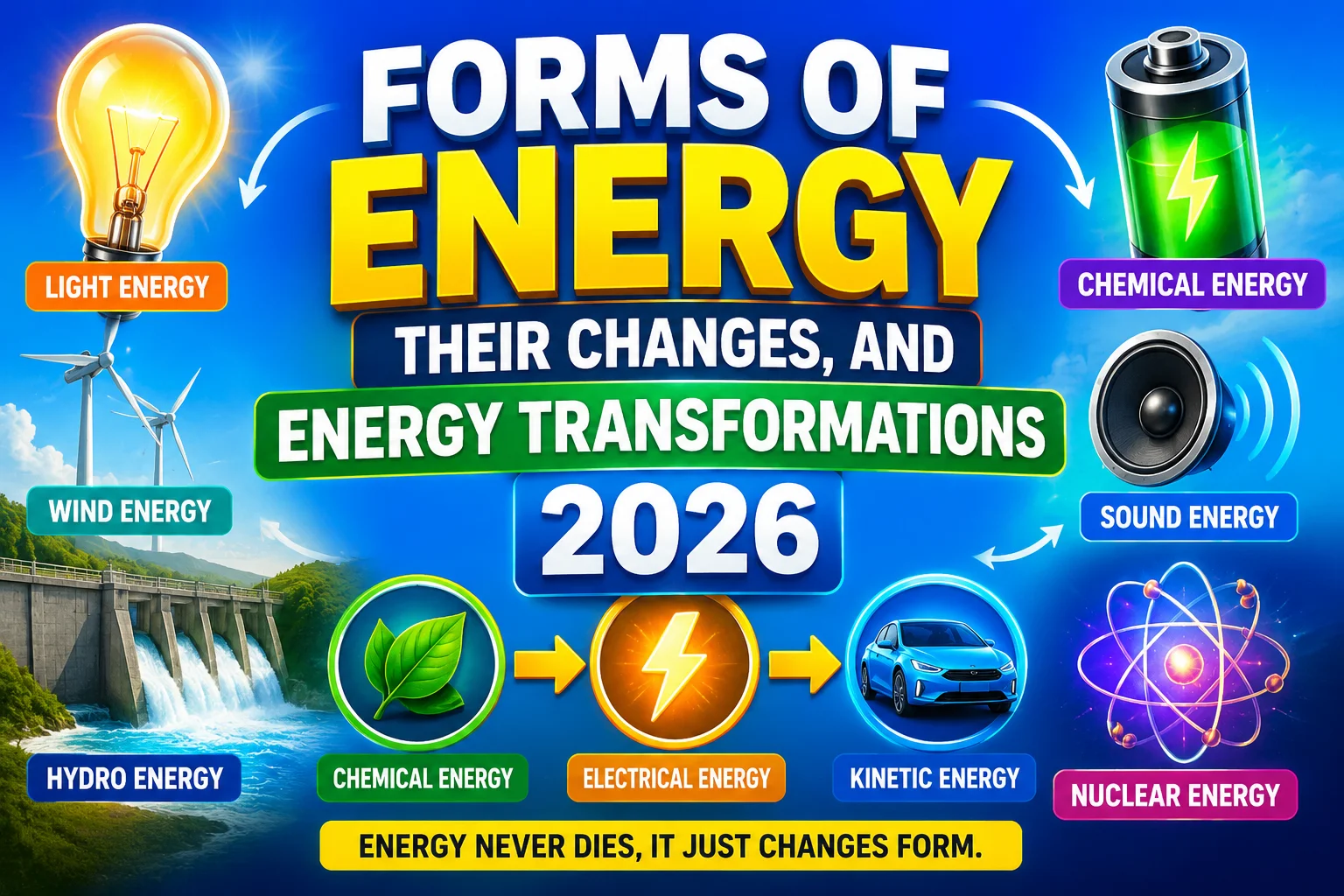
- Kinetic Energy: Kinetic energy is the energy of motion. Any moving object, such as a bicycle, airplane, flowing water, or running athlete, contains kinetic energy.
- Potential Energy: Potential energy is stored energy. A stretched rubber band, water behind a dam, or an object held above the ground stores potential energy.
- Thermal Energy: Thermal energy, also called heat energy, is produced by the movement of particles inside matter. The Sun, ovens, engines, and heaters generate thermal energy.
- Electrical Energy: Electrical energy is produced by moving electric charges. It powers computers, phones, smart homes, and electric vehicles in modern cities.
- Chemical Energy: Chemical energy is stored in food, fuels, and batteries. The human body converts food into usable energy for movement and growth.
- Light Energy: Light energy comes from the Sun, lasers, lamps, and digital screens. Solar panels transform light energy into electricity.
- Sound Energy: Sound energy travels through vibrations. Musical instruments, speakers, and human voices produce sound waves.
- Nuclear Energy: Nuclear energy is released from the nucleus of atoms. It is used in nuclear power plants to generate large amounts of electricity.
How Energy Changes from One Form to Another
Energy transformations happen when energy converts from one form into another. These changes occur constantly in everyday life and in advanced technologies.
Common Examples of Energy Transformations
- A flashlight changes chemical energy in batteries into light and thermal energy.
- A car engine converts chemical energy from fuel into kinetic and heat energy.
- Solar panels transform light energy into electrical energy.
- Hydroelectric dams convert the potential energy of water into electrical energy.
- The human body changes chemical energy from food into kinetic and thermal energy.
Energy Transformations in Modern Technology 2026
In 2026, energy transformation technologies will become more advanced and environmentally friendly.
- Renewable Energy Systems: Solar farms and wind turbines convert natural energy sources into electricity while emitting lower levels of pollution.
- Electric Vehicles: Modern electric cars transform electrical energy stored in batteries into kinetic energy with high efficiency.
- Smart Homes: Smart homes use advanced systems to reduce energy waste and improve energy transformation efficiency.
- Artificial Intelligence and Energy: AI-powered systems now monitor energy consumption and optimize electricity usage in homes and industries.
Importance of Energy Transformations
Energy transformations are essential because they allow humans to use natural resources effectively. They help in:
- Generating electricity for homes and industries.
- Operating transportation systems.
- Running factories and hospitals.
- Supporting communication technologies.
- Developing renewable energy solutions and supporting clean energy technologies.
- Efficient energy transformations also reduce pollution and help protect the environment.
- Improving energy efficiency and environmental protection.
- Power modern smart devices and advanced technologies.
- Reducing dependence on fossil fuels in 2026.
- Students understand practical science applications.
Future of Energy Transformations
Scientists are researching new energy technologies such as hydrogen fuel, advanced solar cells, and sustainable nuclear fusion. These innovations may provide cleaner and more powerful energy systems in the future. The world in 2026 is focusing more on green energy solutions to fight climate change and reduce dependence on fossil fuels.
20 Examples of Energy Transformation in Daily Life
- A light bulb converts electrical energy into light energy and heat energy.
- A solar panel transforms solar energy into electrical energy.
- A fan changes electrical energy into mechanical energy.
- A car engine converts chemical energy in fuel into mechanical energy and heat.
- A television transforms electrical energy into sound and light energy.
- A mobile phone battery converts chemical energy into electrical energy.
- A microwave oven changes electrical energy into heat energy.
- A wind turbine converts wind energy into electrical energy.
- A hydroelectric dam transforms water energy into electrical energy.
- The human body converts chemical energy from food into mechanical energy and heat.
- A candle changes chemical energy into light and heat energy.
- A loudspeaker transforms electrical energy into sound energy.
- A flashlight converts chemical energy in batteries into light energy.
- A blender changes electrical energy into mechanical energy.
- A toaster transforms electrical energy into heat energy.
- Photosynthesis in plants converts solar energy into chemical energy.
- A bicycle dynamo changes mechanical energy into electrical energy.
- An electric iron converts electrical energy into heat energy.
- A roller coaster transforms potential energy into kinetic energy during motion.
- A generator converts mechanical energy into electrical energy.
Energy and Environmental Protection and Clean Energy Transformation
Energy and environmental protection have become closely connected in 2026 as countries seek cleaner, safer ways to generate electricity and reduce pollution. Traditional energy sources such as coal and oil release large amounts of carbon dioxide and other harmful gases into the atmosphere, contributing to climate change and environmental damage.
Clean energy transformation focuses on replacing fossil fuels with renewable energy sources like solar power, wind energy, hydropower, and green hydrogen. This transition helps reduce greenhouse gas emissions, improves air quality, and supports sustainable economic development around the world.
Modern governments and international organizations are investing heavily in smart energy systems and environmentally friendly technologies to achieve carbon neutrality goals. Electric vehicles, smart grids, energy storage systems, and energy-efficient buildings are becoming more common in many countries.
Clean energy transformation also creates new job opportunities in engineering, manufacturing, and environmental sciences. As renewable energy technologies continue to improve, clean power is becoming more affordable and accessible for both developed and developing nations.
Advanced Energy Technologies in 2026
Advanced energy technologies in 2026 are transforming the global energy sector through innovation, efficiency, and sustainability. Artificial intelligence is now widely used to manage power consumption, predict energy demand, and improve the performance of renewable energy systems. Smart grids allow electricity networks to distribute power more efficiently while reducing energy waste. In addition, modern battery storage technologies make it possible to store solar and wind energy for use during periods of low production.
Hydrogen energy is also gaining attention as a clean fuel for transportation and heavy industries. Nuclear fusion research continues to develop as scientists work toward producing nearly unlimited clean energy in the future. Carbon capture and storage technologies are helping industries reduce harmful emissions by capturing carbon dioxide before it enters the atmosphere. These advanced technologies support global efforts to create cleaner, more reliable, and environmentally responsible energy systems.
Importance of Studying Energy Transformations
Studying energy transformations is important because it helps students understand how energy changes from one form to another in everyday life and industrial applications. Energy transformations occur in many devices and natural processes, such as converting solar energy into electrical energy through solar panels or transforming chemical energy into mechanical energy in car engines. Understanding these processes helps improve energy efficiency and supports the development of new technologies.
Learning about energy transformations also encourages environmental awareness and scientific thinking. Students can better understand how renewable energy systems work and how energy conservation reduces pollution and protects natural resources. In the future, knowledge of energy transformations will play a major role in solving global energy challenges and supporting sustainable development.
FAQ About Forms of Energy and Energy Transformations
1. What is the most common form of energy used today?
Electrical energy is one of the most widely used forms because it powers homes, industries, and digital devices.
2. What is an example of energy transformation at home?
A television converts electrical energy into light and sound energy.
3. Why are energy transformations important?
They make energy usable for transportation, communication, heating, lighting, and industrial production.
4. What are renewable energy transformations?
They are processes that convert natural resources like sunlight, wind, and water into usable electricity.
5. How does the human body use energy?
The body transforms chemical energy from food into movement, heat, and biological functions.
Forms of Energy & Their Changes
- Electrical Energy → Light Energy (LED lamps)
- Chemical Energy → Heat Energy (gas stoves)
- Solar Energy → Electrical Energy (solar panels)
- Electrical Energy → Mechanical Energy (electric fans)
- Chemical Energy → Kinetic Energy (car engines)
- Wind Energy → Electrical Energy (wind turbines)
- Sound Energy → Electrical Signals (microphones)
- Electrical Energy → Sound Energy (speakers)
- Gravitational Energy → Kinetic Energy (falling objects)
- Thermal Energy → Mechanical Energy (steam turbines)
You can subscribe to Science Online on YouTube from this link: Science Online