
20 Amazing Facts About the Importance of Heat Energy (Thermal Energy) & Light Energy in Our Daily Life (2026)
The importance of heat energy is evident in nearly every aspect of our daily lives, from cooking meals and keeping our homes warm to generating electricity and supporting industrial production. Together with light energy, thermal energy powers modern technology, improves healthcare, enables food production, and helps create a more sustainable future in 2026.
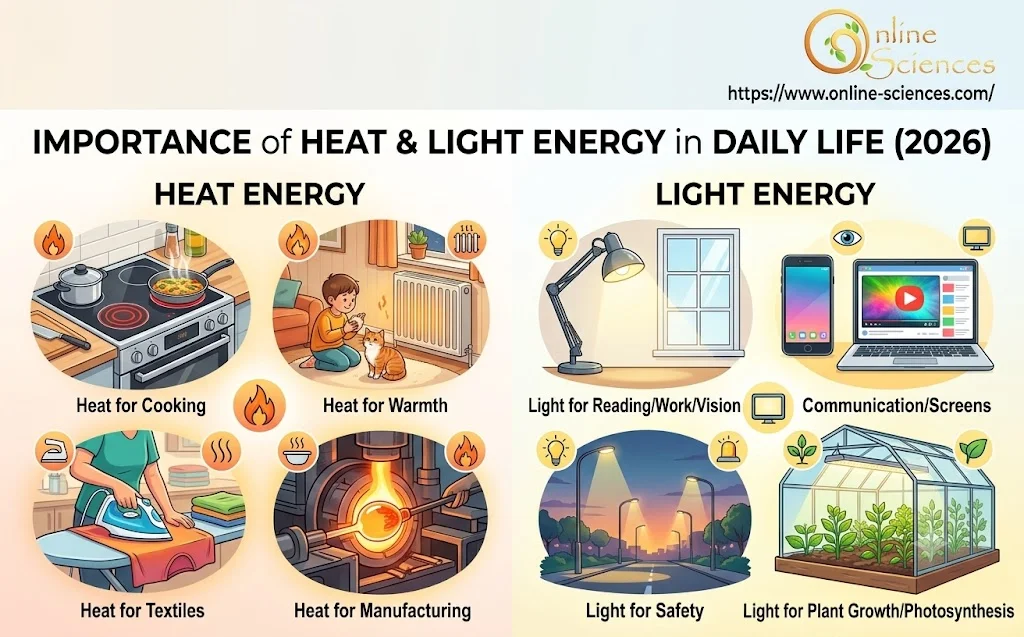
Importance of Heat Energy (Thermal Energy) and Light Energy
Heat energy
Heat is a form of energy that transfers from a higher-temperature object to a lower-temperature object and is transferred through conduction, convection, and radiation. Anything that produces warmth is referred to as a source of heat. Sources of heat include the sun, fire, electricity, and gas.
Heat is thermal energy that flows from the warmer areas to the cooler areas, and the thermal energy is the total of all kinetic energies within a given system. The temperature is the degree of hotness or coldness of a body. It is measured by three scales of measurement, which are Fahrenheit, Celsius, and Kelvin, and it is the average kinetic energy within a given object.
Thermal energy is a part of the total energy of any object. Its measuring unit is the joule, and it is related to the temperature of an object. Heat energy can be transferred in three ways: convection, conduction, and radiation. Heat and temperature are not the same thing because temperature is related to how hot or cold something is. The measuring devices for temperature are the thermometers.
Heat is a form of energy crossing the boundary of the thermodynamic system by a temperature difference across the boundary in thermodynamics. It transfers to or from the thermodynamic system via mechanisms involving microscopic atomic modes of motion or their corresponding macroscopic properties.
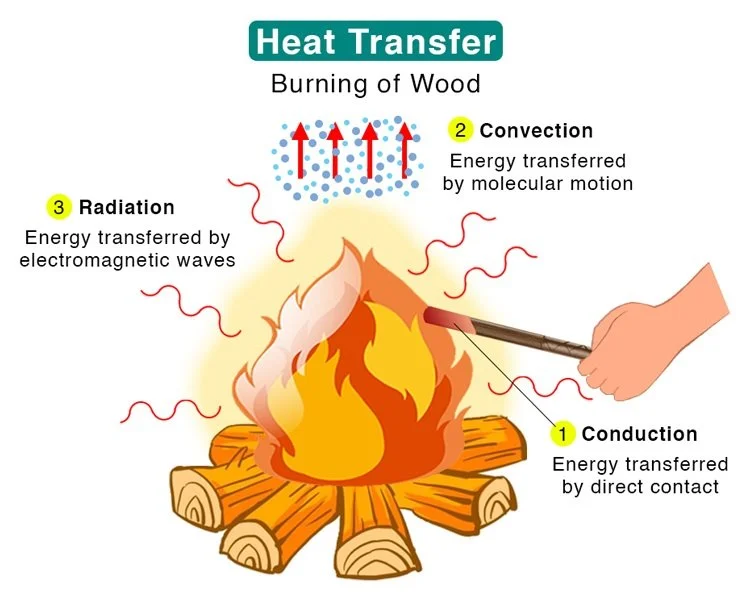
Heat energy
The measurement of energy transferred as heat is called calorimetry, performed by measuring its effect on the states of interacting bodies. Heat energy has the unit joule (J) in the International System of Units (SI), and many applied branches of engineering use other, traditional units, such as the British thermal unit (BTU) and the calorie.
Importance of the heat
Heat is vital in our daily life in warming the house, heating the water, and drying the washed clothes. Heat has many usages in the industry, such as making and processing food and manufacturing glass, paper, textiles, ………etc. Heat can be used for ironing clothes and providing power to move cars, ships, and hot air balloons. Heat is used in welding and cutting metals.
The steam has a high specific heat (more than water). It is used to carry a lot of heat energy at high pressures to run the rail engines or the rotors in AC generators. The water in the swimming pool remains cool even in summer, and people enjoy staying inside the pool because the water has high specific heat. We use heat in cooking food. We use utensils for making tea or coffee, or cooking vegetables or rice. Heat is used to warm our bodies in winter.
Heat is used in Engines: Various engines, such as rail engines, work on heat. All electrical appliances need heat. Heat energy is used to generate electricity. Heat is used as a simple yet effective way to manage pain and joint or muscular stiffness. The deep and penetrating heat not only relieves the pain but also enhances the recovery process.
Heat is a form of energy that exists naturally. It quickly changes into different forms of energy like light, electricity, etc., Life on this earth depends on heat energy for survival. Heat energy, unlike other forms, can be felt by the sense of touch. Light energy from the sun is converted to heat energy that helps plants perform the photosynthesis process.
Heat is used in enzyme reactions. Heat plays a vital role in health care. The heat can counter inflammation and reduce pain, so, heat is used in the treatment of inflammatory and pain-related problems. Heat is used in the water cycle. It is used in chemical reactions, and the electrons and atoms in the substances that are in the stable state are set into vibration.
All the vehicles that run on petrol and coal operate due to the generation of heat energy within. The heat energy helps the pistons to move, which is conveyed into cyclic motion, and thus, the wheels rotate. Sterilization is a process to kill any microbes in drugs and other healthcare materials; heat is used for Incubation to grow birds in eggs.
Heat is crucial in our world, playing a vital role in many aspects of our lives and the environment. Heat is essential for most living organisms. It drives biological processes in plants and animals, like enzyme activity and metabolism, which are necessary for growth, reproduction, and survival.
Heat causes changes in the state of matter. We use heat for cooking, boiling water, and melting metals for various purposes. Heat is a fundamental form of energy. We can convert heat from various sources like sunlight, fossil fuels, or geothermal energy to generate electricity, powering our homes and industries.
Heat is essential for most living organisms. It provides the energy for biological processes in plants and animals. Plants rely on sunlight, a form of heat energy, for photosynthesis, the process by which they produce food. Warmth is necessary for many animals to maintain internal body temperature, which is crucial for survival.
Heat causes changes in the state of matter; it can melt solids into liquids and vaporize liquids into gases. This property is used in various applications, like cooking food (boiling water, frying), shaping metals (melting them for manufacturing), and generating electricity in power plants.
Heat is undeniably woven into our daily lives. We use it for essential tasks like cooking, keeping warm (heating systems), and drying clothes. Many industrial processes also rely on heat for various purposes. Heat energy is a fundamental source of power generation. We use heat from burning fossil fuels or nuclear reactions to create steam, which drives turbines to generate electricity in power plants.
Heat is a key player in many natural phenomena. It influences weather patterns, ocean currents, and the formation of clouds. The uneven distribution of heat around the globe drives wind patterns and contributes to the diversity of climates on Earth.
Heat is essential for most living organisms. It provides the energy for biological processes in plants and animals, allowing them to function and survive. Heat causes changes in the state of matter. We use heat for cooking, boiling water, and melting metals for various purposes.
Heat is used in countless ways in our daily lives. From warming our homes in cold weather to drying clothes and running various appliances, heat plays a significant role in our comfort and daily routines. It plays a role in geological processes like the formation of rocks and the movement of tectonic plates.
Heat is a fundamental form of energy. It’s important for both natural processes and human civilization. It sustains life, drives physical changes, and has numerous applications in our daily lives and the natural world. Heat is vital in our world, playing a crucial role in many aspects of our lives and the natural world around us.
How do heat and light energy affect your daily life?
Heat and light energy play a huge role in daily life.
Heat Energy:
- Comfort & Climate Control – Heaters keep us warm in cold weather, and air conditioners remove excess heat to keep us cool.
- Cooking – Stoves, ovens, and microwaves use heat energy to cook food.
- Transportation – Cars, buses, and airplanes rely on heat energy (from combustion) to function.
- Body Temperature Regulation – Our bodies generate heat to maintain a stable internal temperature.
- Industrial & Technological Uses – Factories use heat energy to produce goods, from metalworking to food processing.
Light Energy:
- Visibility & Safety – Sunlight and artificial lights help us see and move safely, whether at home, on the road, or outdoors.
- Photosynthesis & Food Production – Plants use light energy to grow, providing the food we eat.
- Technology & Communication – Devices like TVs, smartphones, and fiber optics use light for display and data transmission.
- Health & Well-being – Sunlight helps our bodies produce vitamin D and boosts mood.
- Energy Generation – Solar panels convert light energy into electricity for homes and businesses.
Both heat and light energy are essential for life, making modern living comfortable, efficient, and sustainable.
FAQ about the Importance of Heat
What is thermal (heat) energy?
Thermal energy is the energy related to temperature. It comes from the motion of particles in matter and flows from hotter objects to cooler ones.
Why is heat (thermal energy) important in daily life?
Heat energy is essential because it helps us:
- Cook food and boil water.
- Stay warm in cold weather.
- Run engines and power plants.
- Sterilize tools and kill germs.
- Produce electricity (in many power stations).
What is light energy?
Light energy is a form of electromagnetic energy that allows us to see. The main natural source is the Sun, and artificial sources include lamps and LEDs.
Why is light energy important in daily life?
Light energy is vital because it:
- Enables vision and daily activities.
- Supports photosynthesis in plants (food + oxygen).
- Powers solar panels to generate electricity.
- Helps in communication (optical fibers).
- Improves safety and productivity with lighting.
How do heat and light energy come from the Sun?
The Sun produces energy through nuclear reactions. This energy reaches Earth as light and heat, warming our planet and supporting life (weather, climate, plant growth).
Can we convert light energy into other forms of energy?
Yes. Solar panels convert light energy into electrical energy, which we can use to power homes, charge devices, and run appliances.
Can heat energy be converted into electricity?
Yes. In thermal power plants, heat turns water into steam, which spins turbines to generate electricity.
What is the difference between heat energy and light energy?
Heat energy mainly relates to temperature and warmth and moves from hot to cold. Light energy is visible electromagnetic energy that lets us see and can travel through space (like sunlight reaching Earth).
How do heat and light energy help living organisms?
Light energy helps plants make food via photosynthesis. Heat energy helps maintain body temperature and supports chemical reactions necessary for life.
How can we use heat and light energy safely and efficiently?
- Use LED lights to save electricity.
- Insulate homes to reduce heat loss.
- Use solar heaters and solar panels.
- Avoid touching hot surfaces and use protective tools when dealing with heat.
Why is heat energy important in everyday life?
Heat energy is important because it helps us:
- Cook food and boil water.
- Stay warm in cold weather.
- Heat homes and water.
- Run engines and generate electricity in power plants.
- Sterilize tools and kill harmful germs.
Without heat energy, many daily activities and industries would not work properly.
How is light energy useful to humans?
Light energy is useful because it:
- Allows us to see and perform daily tasks.
- Helps plants make food through photosynthesis (which supports our food chain).
- Is used to generate electricity using solar panels.
- Improves safety through street lighting.
- Supports communication through optical fiber technology.
What are real-life examples of thermal energy?
Common real-life examples of thermal (heat) energy include:
- Boiling water on a stove.
- Cooking food in an oven.
- Water heaters at home.
- Heating systems in winter.
- Steam is produced in power stations to generate electricity.
How do solar panels work?
Solar panels work by converting light energy from the Sun into electrical energy. They contain special cells (photovoltaic cells) that produce electricity when sunlight hits them. This electricity can be used directly, stored in batteries, or sent to the power grid to run homes and devices.
Can we store heat or light energy?
We cannot store light energy directly, but we can store the energy converted from light:
- Solar energy can be stored in batteries as electrical energy.
- Heat energy can be stored in hot water tanks, molten salts, or thermal storage systems and used later for heating or electricity generation.
These storage methods help us use energy even when the Sun is not shining.
Heat (thermal energy) and light energy are two essential forms of energy we use every day. From cooking food and staying warm to seeing our surroundings and generating clean electricity from sunlight, both types of energy play a key role in modern life and in supporting living organisms on Earth.
20 Amazing Facts About the Importance of Heat and Light Energy
1. Heat Energy Keeps Us Warm: Thermal energy maintains comfortable indoor temperatures during cold weather and protects people from extreme environmental conditions.
2. Cooking Depends on Heat: Everyday cooking methods such as boiling, baking, frying, roasting, and grilling rely on heat energy to prepare safe and nutritious food.
3. Sunlight Makes Life Possible: Light energy from the Sun enables plants to perform photosynthesis, producing oxygen and food for nearly all living organisms.
4. Solar Panels Generate Clean Electricity: Modern solar panels convert sunlight into electrical energy, reducing dependence on fossil fuels and lowering carbon emissions.
5. Heat Produces Electricity: Many power stations generate electricity by using heat to produce steam that spins turbines connected to electric generators.
6. Light Improves Vision: Natural and artificial light allow people to read, work, drive safely, and perform everyday activities.
7. Heat Supports Manufacturing: Industries use thermal energy to melt metals, produce glass, manufacture cement, and process chemicals.
8. Light Powers Fiber Optic Communication: Light signals travel through fiber optic cables, providing high-speed internet and reliable global communication.
9. Medical Equipment Uses Light: Doctors use lasers and specialized light technologies for eye surgery, skin treatments, medical imaging, and cancer therapies.
10. Heat Sterilizes Medical Instruments: Hospitals use high-temperature steam in autoclaves to eliminate harmful bacteria and viruses from surgical equipment.
11. Agriculture Depends on Sunlight: Crops require light energy for healthy growth, while heat influences seed germination, flowering, and harvest quality.
12. Heat Dries Clothes and Food: Thermal energy removes moisture from fabrics and preserves food by reducing water content.
13. Light Enhances Safety: Streetlights, traffic signals, vehicle headlights, and emergency lighting improve safety during nighttime and poor weather.
14. Heat Powers Household Appliances: Electric irons, ovens, water heaters, kettles, and space heaters all rely on thermal energy.
15. Light Creates Renewable Energy Opportunities: Solar farms provide sustainable electricity for homes, businesses, and communities worldwide.
16. Heat Drives Weather Patterns: Differences in Earth’s heating create winds, rainfall, ocean currents, and seasonal climate changes.
17. Light Supports Scientific Research: Microscopes, telescopes, spectroscopy, and optical sensors use light to study tiny particles and distant galaxies.
18. Thermal Energy Improves Recycling: Many recycling processes require heat to melt plastics, metals, and glass so they can be reused.
19. Heat and Light Improve Comfort: Modern heating systems and efficient LED lighting increase comfort while reducing energy consumption.
20. Heat and Light Will Shape the Future: Advances in renewable energy, smart buildings, electric vehicles, energy-efficient lighting, and sustainable technologies continue to increase the importance of heat and light energy in 2026 and beyond.
You can follow Science Online on YouTube from this link: Science Online
Solar energy (Sun), Ways of heat transfer (conduction, convection, and radiation)
Heat therapy (Thermotherapy) & What are the clinical uses of heat?
Importance of heating in Agriculture, Horticulture, and the greenhouse





why heating is important to horticulture
You can read this article about
Importance of heating in Agriculture, Horticulture and the greenhouse
what are the clinical uses of heat
You can read this article about Heat therapy ( Thermotherapy ) & What are the clinical uses of heat ?
what are the benefits of heat in day to day life
You can read this articles about
Heat therapy ( Thermotherapy ) & What are the clinical uses of heat ?
heat in agriculture
hey, thank you, good post
You are welcome