How to Keep Your Respiratory System Healthy: 10 Simple Tips for Better Breathing Every Day
Maintaining a healthy respiratory system is essential for overall well-being, as it ensures the body receives enough oxygen to function properly. The lungs and airways work continuously to filter air, exchange gases, and support vital organs. By adopting healthy lifestyle habits and avoiding harmful exposures, you can significantly improve lung function and protect your respiratory system from diseases.
Overview of the Respiratory System
The respiratory system is a network of organs and tissues responsible for breathing and gas exchange. It includes the nose, trachea, bronchi, and lungs, all working together to bring oxygen into the body and remove carbon dioxide. The lungs contain tiny air sacs called alveoli, where oxygen enters the bloodstream, and carbon dioxide is expelled. This continuous process ensures that every cell in the body receives the oxygen it needs to produce energy.
Beyond gas exchange, the respiratory system also plays a role in protecting the body from harmful substances. The nose filters dust and microbes, while mucus and tiny hair-like structures trap and remove particles from the airways. Additionally, the respiratory system helps regulate blood pH and supports voice production.
Keeping this system healthy is essential for maintaining energy levels, preventing disease, and ensuring overall quality of life. Any changes in our lifestyle and environment are responsible for poor respiratory system health. It is very important to keep our respiratory system healthy to keep away from diseases that affect our health.
How to Keep Your Respiratory System Healthy
How can you keep the respiratory system healthy?
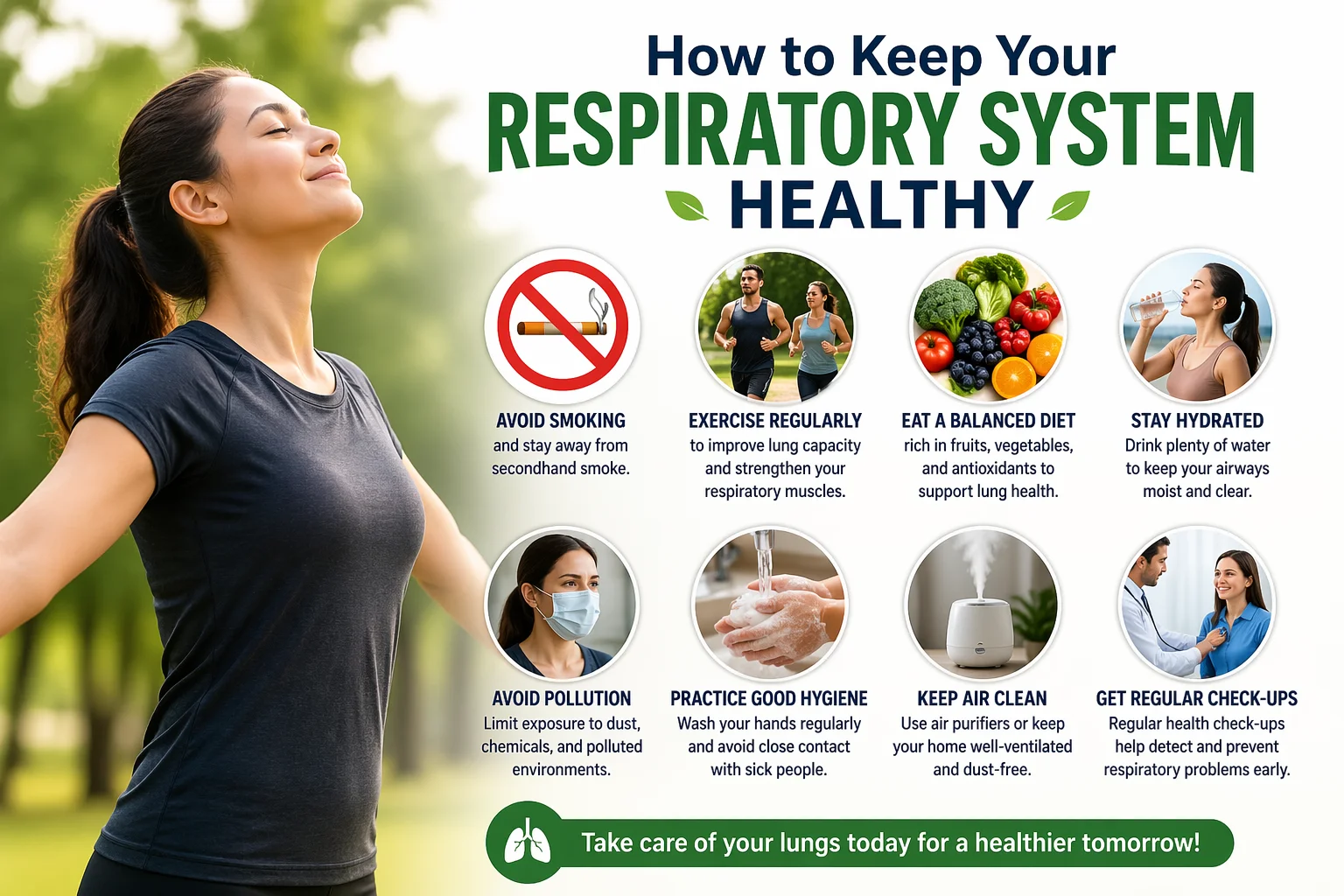
Keeping your respiratory system healthy is essential for ensuring efficient breathing and overall well-being. This can be achieved by avoiding smoking and exposure to air pollution, engaging in regular physical activity to strengthen lung capacity, and maintaining a balanced diet rich in vitamins and antioxidants.
Staying well-hydrated also helps keep the airways clear, while practicing good hygiene reduces the risk of respiratory infections. By adopting these simple habits, you can support your lung function and breathe more easily and effectively every day.
We must protect ourselves against pollution, keep away from polluted places, and avoid being in crowded or poorly ventilated places to protect ourselves from dangerous diseases.
You should stop smoking or being a passive smoker, as smoking causes great damage to your respiratory system, and it damages the lungs and respiratory health by inducing inflammation.
We must eat fruits rich in vitamin C, such as oranges and guava, to protect ourselves from cold, and we should avoid severe cold.
You should eat healthy food rich in vitamins A, C and E and the minerals zinc, potassium, selenium and magnesium to strengthen your defenses to help your respiratory system to have the ability to fight diseases.
We should wash our hands to prevent infections that travel from our mouth to the rest of the body, and we must drink plenty of water every day, which helps us maintain a healthy weight.
You should maintain a healthy weight as excess weight puts more stress on your lungs and compresses all respiratory muscles, making them work harder and less efficiently.
We should exercise regularly, and check with the doctor before beginning exercise, especially if we already have any respiratory system diseases.
You should exercise in cleaner conditions, and do not exercise on heavily polluted days, as walking or jogging on the side of busy streets is very harmful and makes you breathe harmful fumes.
It is very important to add house plants to your house as indoor plants can improve the quality of the air in your home by removing chemical vapors that can harm the respiratory system.
FAQ About Keeping the Respiratory System Healthy
1. How can you keep your respiratory system healthy?
You can keep your respiratory system healthy by avoiding smoking, exercising regularly, eating a balanced diet, and staying hydrated. Breathing clean air and maintaining good hygiene also play key roles.
2. Why is avoiding smoking important for lung health?
Smoking damages lung tissues, reduces oxygen exchange, and increases the risk of chronic respiratory diseases such as bronchitis and lung cancer.
3. How does exercise improve respiratory health?
Regular physical activity strengthens the lungs and improves their capacity to take in oxygen and remove carbon dioxide efficiently.
4. What foods support a healthy respiratory system?
Foods rich in antioxidants, such as fruits and vegetables, help reduce inflammation and protect lung tissues from damage.
5. How does hydration help the lungs?
Drinking enough water keeps the mucosal lining in the lungs thin, making it easier to breathe and helping the lungs function more efficiently.
6. Why is clean air important for respiratory health?
Clean air reduces exposure to pollutants, allergens, and harmful particles that can irritate the airways and cause respiratory problems.
7. How can hygiene protect the respiratory system?
Washing hands regularly and avoiding close contact with sick individuals can prevent infections that affect the respiratory system.
8. When should you see a doctor for respiratory issues?
You should consult a doctor if you experience persistent coughing, shortness of breath, chest pain, or wheezing.
Mechanics of ventilation, Structures of Respiratory system & Functions of conducting zone
Respiratory system function, organs, structure, anatomy & conducting portion
Cellular respiration, Structure of ATP and types of fermentation
Role of the respiratory system in the excretion process in man & Respiration in plant
Human Transport System, Structure of the human circulatory system (heart, blood vessels & blood)