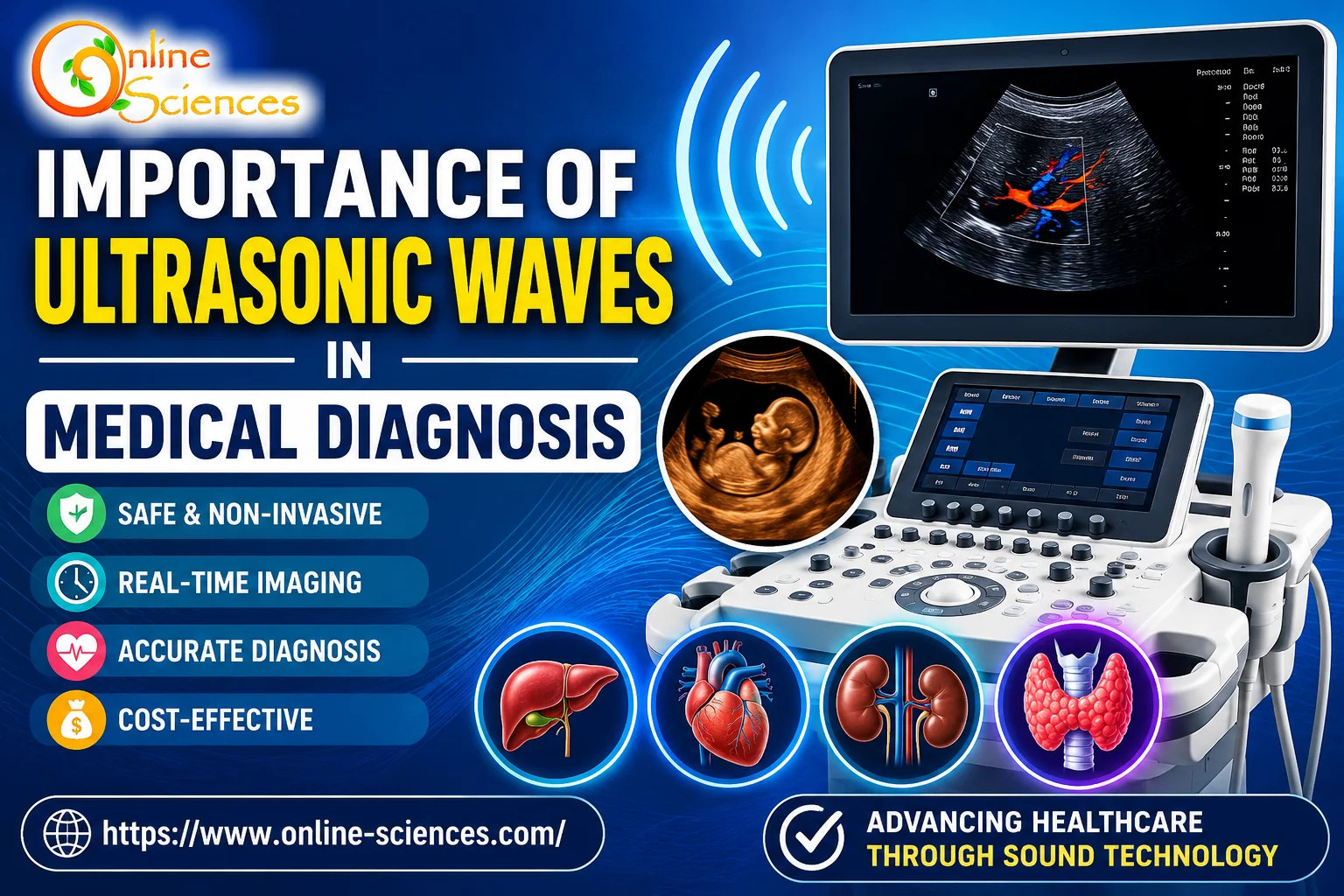
Importance of Ultrasonic Waves in Medical Diagnosis: 10 Essential Benefits in Modern Healthcare
Importance of Ultrasonic Waves in Medical Diagnosis lies in their ability to provide safe, non-invasive, and real-time imaging without exposing patients to ionizing radiation. Ultrasound is widely used to examine internal organs, monitor pregnancy, assess heart function, evaluate blood flow, detect tumors and cysts, and guide minimally invasive procedures. Its affordability, portability, and diagnostic accuracy make it an indispensable tool in modern healthcare, helping physicians diagnose diseases quickly while improving patient safety and treatment outcomes.
Importance of ultrasonic waves in medical diagnosis
Medical diagnosis
Ultrasonic waves are used nowadays in many medical investigations and laboratory tests, such as detecting the sex of the embryo and its health state. This process depends on the ability of different parts of the body to reflect ultrasonic waves.
Ultrasonic waves are used to examine the heart and the circulatory system, and they provide important information about their structure and function. Ultrasonic waves are used to determine soft-tissue injury such as nerve damage, and they can be used to determine tumors growing on a tendon.
Medical diagnosis
Ultrasonic wave images can measure the chambers of the heart, and they can visualize valve abnormalities as well as evaluate the efficiency of the heart in pumping blood to the rest of the body.
Ultrasonic waves can help in early detection by determining the presence or risk of heart disease. Ultrasonic waves are used to detect hydrocephaly (water on the brain). and intracranial hemorrohage ( bleeding in the skull).
The physician may use ultrasonic waves to examine a child’s gastrointestinal tract for signs of appendicitis or a baby’s bone structure for alignment problems like congenital hip dislocation.
Ultrasonic waves are used to visualize internal body structures, including muscles, tendons, joints, vessels, and internal organs. Ultrasonic waves are used in examining pregnant women, which is called obstetric sonography, to check on the development of the fetus.
Ultrasonic waves are used as an alternative to X-ray imaging in detecting fractures of the wrist, elbow, and shoulder for patients up to 12 years (Fracture sonography).
Importance of Ultrasonic Waves in Medical Diagnosis
Ultrasonic waves in medical diagnosis have transformed modern healthcare by allowing doctors to examine internal organs, tissues, muscles, blood vessels, and developing babies without surgery or harmful radiation. Ultrasound technology is fast, painless, safe, and cost-effective, making it one of the most widely used diagnostic tools in hospitals and clinics worldwide.
What are Ultrasonic Waves?
Ultrasonic waves are sound waves with frequencies above 20,000 Hz (20 kHz), which are beyond the range of human hearing. Medical ultrasound typically uses frequencies between 2 MHz and 18 MHz to create detailed images of structures inside the body.
These sound waves travel through body tissues and reflect differently depending on the type of tissue they encounter. The returning echoes are converted into real-time images by an ultrasound machine.
Importance of Ultrasonic Waves in Medical Diagnosis
Ultrasonic waves play a vital role in diagnosing and monitoring numerous medical conditions.
1. Safe Medical Imaging
Unlike X-rays and CT scans, ultrasound does not use ionizing radiation. This makes it one of the safest imaging methods for patients, including pregnant women and children.
2. Real-Time Imaging
Ultrasound provides live images of moving organs, muscles, tendons, and blood flow, helping physicians observe body functions as they occur.
3. Pregnancy Monitoring
One of the most common applications of ultrasound is monitoring fetal development. It helps physicians evaluate:
- Baby growth.
- Heartbeat.
- Placenta position.
- Amniotic fluid.
- Congenital abnormalities.
- Multiple pregnancies.
4. Diagnosis of Internal Organ Diseases
Ultrasound helps diagnose diseases affecting:
It can detect cysts, tumors, inflammation, stones, and infections.
5. Cardiovascular Assessment
Echocardiography uses ultrasonic waves to examine:
- Heart chambers.
- Heart valves.
- Blood pumping efficiency.
- Congenital heart defects.
- Heart muscle diseases.
6. Blood Flow Evaluation
Doppler ultrasound measures blood circulation and helps detect:
- Blood clots.
- Narrowed arteries.
- Blocked veins.
- Peripheral artery disease.
- Deep vein thrombosis (DVT).
7. Cancer Detection
Although ultrasound alone cannot diagnose every cancer, it helps identify suspicious masses in:
It is also frequently used to guide biopsies.
8. Guidance During Medical Procedures
Doctors use ultrasound guidance for procedures such as:
- Needle biopsies.
- Fluid drainage.
- Joint injections.
- Tumor ablation.
- Catheter placement.
This improves precision and reduces complications.
9. Emergency Medicine
Portable ultrasound machines allow emergency physicians to rapidly evaluate:
- Internal bleeding.
- Abdominal injuries.
- Cardiac emergencies.
- Lung conditions.
- Trauma patients.
10. Cost-Effective Diagnostic Tool
Compared to MRI and CT scans, ultrasound is generally:
- Less expensive.
- More accessible.
- Faster.
- Portable.
- Suitable for bedside examinations.
How Ultrasound Works
The ultrasound transducer emits high-frequency sound waves into the body. These waves reflect from tissues and organs, creating echoes. The machine measures the time taken for echoes to return and converts them into detailed images displayed on a monitor.
Advantages of Ultrasonic Waves in Medical Diagnosis
- No ionizing radiation.
- Safe for repeated examinations.
- Non-invasive procedure.
- Painless imaging.
- Real-time visualization.
- Fast results.
- Portable equipment available.
- Relatively low cost.
- Excellent for soft tissue imaging.
- Useful for guiding minimally invasive procedures.
Limitations of Ultrasound
Despite its many benefits, ultrasound has some limitations:
- Difficulty imaging structures behind bone.
- Limited penetration through air-filled organs.
- Image quality depends on operator experience.
- Obesity may reduce image clarity.
- Cannot replace CT or MRI in all situations.
Medical Fields That Use Ultrasonic Waves
Ultrasound is widely used in:
- Obstetrics and Gynecology.
- Cardiology.
- Radiology.
- Emergency Medicine.
- Urology.
- Gastroenterology.
- Endocrinology.
- Orthopedics.
- Vascular Medicine.
- Pediatrics.
Future of Ultrasound Technology
Modern ultrasound systems are becoming increasingly advanced through:
- Artificial intelligence-assisted diagnosis.
- 3D and 4D imaging.
- Portable handheld ultrasound devices.
- Contrast-enhanced ultrasound.
- Elastography for tissue stiffness evaluation.
- High-resolution imaging.
- Telemedicine integration.
These innovations continue to improve diagnostic accuracy while making medical imaging more accessible worldwide.
Frequently Asked Questions (FAQ) about ultrasonic waves
1. What are ultrasonic waves?
Ultrasonic waves are sound waves with frequencies higher than 20 kHz that are used in medicine to create images of internal body structures.
2. Is ultrasound safe?
Yes. Ultrasound is considered one of the safest medical imaging techniques because it does not use ionizing radiation.
3. Why are ultrasonic waves important in medicine?
They allow doctors to diagnose diseases, monitor pregnancies, evaluate organs, assess blood flow, and guide medical procedures safely and non-invasively.
4. What diseases can ultrasound detect?
Ultrasound can help detect gallstones, kidney stones, liver disease, thyroid nodules, cysts, tumors, blood clots, heart diseases, and many other conditions.
5. Can ultrasound detect cancer?
Ultrasound can identify suspicious masses and guide biopsies, but additional tests are often needed to confirm a cancer diagnosis.
6. What is Doppler ultrasound?
Doppler ultrasound measures blood flow through arteries and veins, helping diagnose vascular diseases and circulation problems.
7. Does an ultrasound scan hurt?
No. Ultrasound is painless and generally requires only a handheld probe placed on the skin with a small amount of gel.
8. Can ultrasound replace CT or MRI?
Not always. Ultrasound is excellent for many soft tissue examinations, but CT and MRI provide more detailed imaging for certain conditions.
Conclusion
The Importance of Ultrasonic Waves in Medical Diagnosis cannot be overstated. Ultrasound has revolutionized healthcare by providing a safe, accurate, real-time, and non-invasive method for diagnosing countless medical conditions. From monitoring fetal development and evaluating heart function to detecting tumors and guiding minimally invasive procedures, ultrasonic waves remain one of the most valuable technologies in modern medicine. As innovations such as AI-powered imaging, portable ultrasound devices, and advanced 3D imaging continue to evolve, ultrasound will play an even greater role in improving patient care and diagnostic accuracy.
You can follow science online on YouTube from this link: Science online
The advantages and disadvantages of ultrasonic waves in detecting industrial defects
The echo (the sound reflection) and conditions necessary for hearing the echo
The effect of echo in locating the position of surfaces and barriers
The concentration of sound and importance of echo (sound reflection) in our life